Introduction: Understanding the Real-World Impact of Alkoxy vs. Oxime Cure in 1-Part Silicone for Metal Bonding
When you’re selecting a 1-part silicone for metal bonding, one of the first choices you’ll face is between alkoxy and oxime curing chemistries. These two systems may both fall under the “neutral cure silicone” category, but their differences can dramatically affect adhesion, flexibility, odor, corrosion resistance, and speed of production. In this comprehensive guide, we’ll compare Alkoxy vs. Oxime Cure: 1-Part Silicone Differences and explain how their chemistry shapes your real-world results in electronics, construction, and industrial assembly.
Alkoxy vs. Oxime Cure: 1-Part Silicone Differences—A Deep Dive into Neutral Cure Chemistry
To understand Alkoxy vs. Oxime Cure: 1-Part Silicone Differences, you first need to grasp how each curing mechanism works. 1-part silicones cure at room temperature by reacting with moisture in the air, but the chemical byproducts and reactivity pathways differ for the two systems. Alkoxy silicones liberate small alcohols (like methanol or ethanol) during cure, while oxime silicones release methyl ethyl ketoxime. This key difference sets the stage for unique profiles in odor, toxicity, metal compatibility, and mechanical performance.
How the Chemistry Shapes Performance: Curing Reactions and Byproducts
The curing reaction dictates much more than just open time and fixture speed. Alkoxy cure systems, with their low-odor, non-corrosive alcohol byproducts, are particularly suited for sensitive metal surfaces and electronics. In contrast, oxime cure systems produce ketoxime, which has a characteristic smell and—depending on substrate—can lead to localized corrosion, especially with copper, brass, and some galvanized materials. This distinction is crucial for engineers prioritizing metal bonding reliability.
Adhesion to Metals: How Alkoxy and Oxime Formulas Interact with Substrates
Adhesion depends on the chemical compatibility between the silicone and the metal surface. Many alkoxy-cure silicones feature enhanced wetting agents and lower water uptake, leading to superior adhesion and long-term performance on aluminum, steel, and coated metals. Some oxime-cure products, however, can match or even exceed alkoxy adhesion on less reactive surfaces and offer faster initial skin formation.
Environmental Resistance: Weather, Chemicals, and Heat Exposure
When it comes to UV, temperature extremes, and chemical exposure, both systems are built on the robust silicone backbone. However, alkoxy-cured silicones tend to outperform oxime types in long-term weathering and resistance to acid rain or high-humidity environments, making them the default for architectural metals and outdoor electrical enclosures. For fast-moving production lines where speed and cost are king, oxime systems may offer a better value proposition.
Odor, VOCs, and Worker Safety: What You Need to Know
One underappreciated aspect of Alkoxy vs. Oxime Cure: 1-Part Silicone Differences is the impact on work environment. Alkoxy types are prized for their nearly odorless cure (as only alcohols are released), making them ideal for enclosed spaces or sensitive assembly areas. Oxime systems, releasing methyl ethyl ketoxime, have a noticeable odor and carry stricter exposure limits in some geographies—an important factor to consider for factories and field installations alike.
Corrosion and Compatibility: Why Metal Types Change the Math
From an engineering viewpoint, subtle corrosion can undermine a critical metal-to-metal bond. Alkoxy-cure silicones exhibit inherently non-corrosive behavior on aluminum, copper, brass, steel, and galvanic couples. Oxime types may cause greenish or brownish discoloration and even pitting—especially problematic in electronics cabinets and structural joints. For a broad analysis of structural metal bonding, see our detailed metal-to-metal bonding guide.
Flexibility and Mechanical Properties: Longevity Under Stress
One of the big perks of silicone sealants—regardless of cure—is their flexibility and low modulus. Alkoxy-cure silicones typically maintain their flexibility and recovery properties longer under thermal cycling and vibration, which is why they’re often chosen for exterior curtain wall joints and vibration-prone enclosures. Oxime-cure formulas may provide a slightly harder set, which is useful for thin-bond electronics or assemblies where high hardness is valued over elongation.
Cure Speed, Tack-Free Time, and Production Throughput
Cure speed impacts line productivity. Oxime-cure silicones usually “skin over” more quickly, letting parts be handled or moved sooner—an advantage for high-speed industrial environments. Alkoxy formulas may require longer skin times but return the favor with greater depth-cure uniformity and less risk of incomplete bonding at thick sections.
Electrical, Electronic, and EMI Shielding Applications
Alkoxy-cure silicones shine in electrical potting, component encapsulation, and EMI shielding adhesives, thanks to their insulative properties and absence of ionic or corrosive byproducts. Electronic designers often favor alkoxy types for sensor glands, terminal seals, and microelectronics protection.
Real Production Constraints: Surface Prep, Primers, and Application Tips
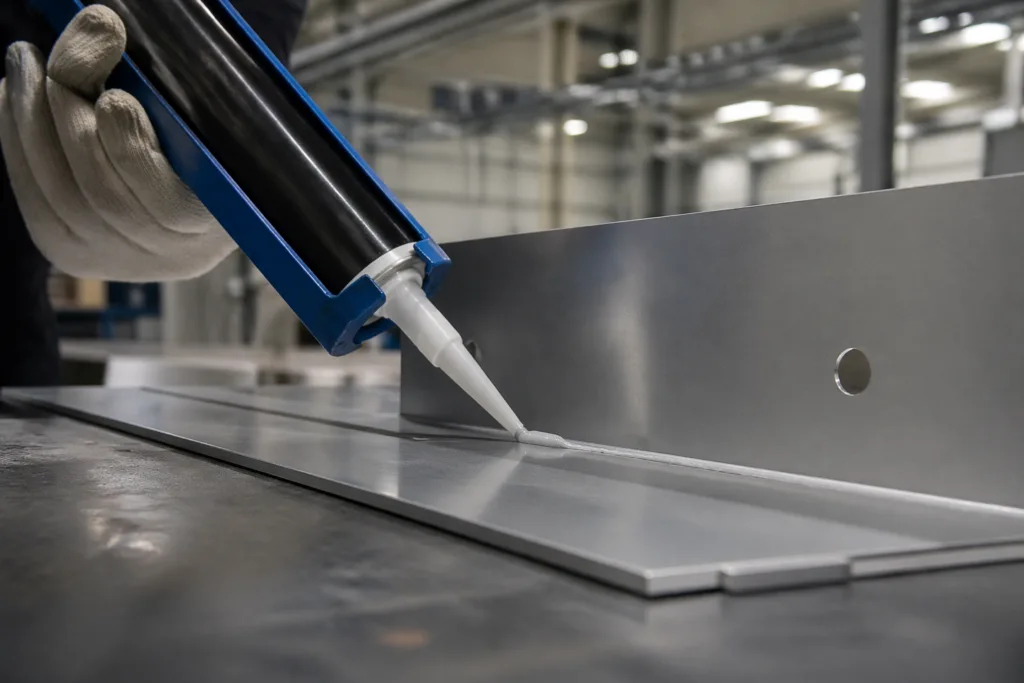
Regardless of cure type, 1-part silicones perform optimally with clean, dust-free metal. A swipe with isopropyl alcohol (avoid acetone on some plastics) preps the surface. For hard-to-bond metals or oily substrates, primer may be necessary. See tips for prepping oily or zinc-treated metals in our pro guide. Gunnable silicones should be applied from caulking guns at angles that minimize air traps, and beads should “wet out” onto the metal—especially at corners or overlap seams.
Choosing the Right Cure: Application Scenarios and Selection Checklist
Selecting between alkoxy and oxime cure 1-part silicones depends on your application, production environment, and performance priorities. Use alkoxy-cure for:
- Metal bonding in sensitive electronics, control panels, and smart sensors
- Exterior sealing of curtain walls, windows, and architectural façades
- High-humidity or chloride environments (marine, food, or chemical plants)
Choose oxime-cure for:
- General assembly where initial handling speed and low cost drive decision
- Non-critical metal substrates with adequate corrosion resistance
- High-throughput production where odor and workplace restrictions are less critical
Case Study: 1-Part Silicone Performance in Outdoor Power Enclosures
A major electronics OEM needed to seal outdoor metal power enclosures against rain, UV, and industrial exhaust. Initial runs with oxime-cure silicone revealed discoloration on copper lugs and reduction in electrical continuity at the ground bar. Switching to an alkoxy-cure formula eliminated the problem, lowered enclosure odor post-assembly, and extended cycle times due to steadier skin formation—validating the need to match silicone types to substrate and environment.
Practical Tips for Bonding Metal with 1-Part Silicone
Follow these tips for consistent results in Alkoxy vs. Oxime Cure: 1-Part Silicone Differences:
- Test for compatibility before full production—especially with mixed metals or coatings
- Consider primer for anodized, powder-coated, or oily metals
- Verify that bead geometry allows for cure-through; thick sections require careful selection
- For rapid handling, oxime-type skin times can be leveraged, but monitor for any corrosion risk
- For electronics or high-value metal assemblies, default to alkoxy where possible
Regulatory, Safety, and Compliance Implications
Safety data sheets (SDS) and compliance certifications may differ between alkoxy and oxime systems. Some jurisdictions have specific restrictions on oxime-related VOCs or workplace exposure. Ensure your selected product meets local and international requirements before scaling up production. For broader industrial adhesive compliance guidance, consult our report on industrial sealants vs adhesives.
Key Takeaways: Maximizing Reliability and Efficiency in Metal Bonding
Understand your application, metal type, and environment before choosing between alkoxy and oxime cure silicones. The chemistry drives performance—alkoxy types lead for corrosion-sensitive, high-reliability applications, while oxime types deliver for high-speed, general assembly. Matching the cure system to your production realities will minimize failures, extend equipment life, and keep your bonding process stable and safe.
Alkoxy vs. Oxime Cure: 1-Part Silicone Differences
| Feature | Alkoxy Cure | Oxime Cure |
|---|---|---|
| Odor | Very low; nearly odorless | Noticeable, characteristic oxime smell |
| Corrosivity (metals) | Non-corrosive to most metals | Potentially corrosive, esp. copper/brass |
| Skin time (initial set) | Moderate | Faster |
| Weathering/UV resistance | Excellent long-term stability | Generally good, not premium |
| Cost | Higher | Lower |
| Regulatory constraints | Minimal | May face stricter limits |
Summary Table: Alkoxy vs. Oxime—When to Use Each
| Scenario | Recommended Cure | Reason |
|---|---|---|
| Outdoor electrical cabinets | Alkoxy | Non-corrosive, better long-term weathering |
| HVAC ductwork (non-critical metal) | Oxime | Faster skin time, lower cost |
| High-value electronic modules | Alkoxy | No conductive byproducts, safety |
| Fast assembly lines, robust metals | Oxime | Speed, cost |
From Factory Floor Experience: Minimizing Failures by Matching Silicone Chemistry to Application Needs
ZDS Adhesive, an industrial adhesive manufacturer, cautions after years of line trials: “Even a small mismatch between metal substrate and cure chemistry can cause recurring failures over thousands of cycles. Always qualify with real lap shear, humidity aging, and thermal cycling, especially for outdoor or high-current bonded metals.” When in doubt, align curing system choice with the application’s most stringent demand—corrosion resistance, flexibility, or speed of cure. Repeat testing under simulated plant conditions to ensure that environmental or workplace variables don’t override the lab results.
Conclusion: Making Confident, Informed Choices for Reliable Metal Bonding

The choice between alkoxy and oxime curing in 1-part silicones rests on recognizing their impacts on odor, corrosion risk, flexibility, and application speed. By understanding these Alkoxy vs. Oxime Cure: 1-Part Silicone Differences and aligning them to your metal bonding challenges, you set your assemblies up for long-term performance and production success.
Frequently Asked Questions
Which silicone is better for bonding copper terminals?
Alkoxy-cure silicones are preferred, as they are non-corrosive and provide stable electrical performance on copper and other sensitive metals.
Do oxime-cure silicones cause metal discoloration?
Yes, some oxime-cure silicones can cause corrosion or discoloration, especially on copper, brass, and galvanized metals due to ketoxime byproducts.
Which cure system is safer for enclosed workspaces?
Alkoxy-cure systems are better suited for tight spaces, given their low odor and minimal volatile organic compound (VOC) release during curing.
Can 1-part silicones be used for electronic potting?
Yes, especially alkoxy-cure formulations, which avoid corrosive byproducts and offer excellent insulation for electronic components.
Do I always need primer with 1-part silicones on metal?
Not always—properly cleaned metals often bond well, but primers may be required for coated, anodized, or very low-energy metals.
How fast do oxime-cure silicones set compared to alkoxy?
Oxime-cure silicones generally form a skin faster, making them suitable for rapid assembly when initial set time is critical.
Related Reading
- Boosting Battery Swap Durability with Structural Bonding Strategies
- Plastic-to-Metal Bonding Pro Techniques: Engineer-Tested Tips for 2026
- The New Standard in Moisture Protection: PCB Coating for EV Charging
- Weather-Resistant Adhesives: Unraveling Reliability in Plug Assemblies
- Choosing Optimal Plastics Adhesives: 2026 Buyer’s Guide