Introduction: Why Contact Cement Still Matters
Contact cement adhesive, often known as contact glue, remains a practical bonding solution in industrial manufacturing and assembly. Despite advances in structural adhesives and sealants, contact cement continues to play a vital role—especially where fast set-up, flexible materials, easy process handling, and large-surface bonding are required. Understanding when to use contact cement in industrial manufacturing and assembly is essential for optimizing both workflow and product reliability.
Core Principle: What Is Contact Cement?
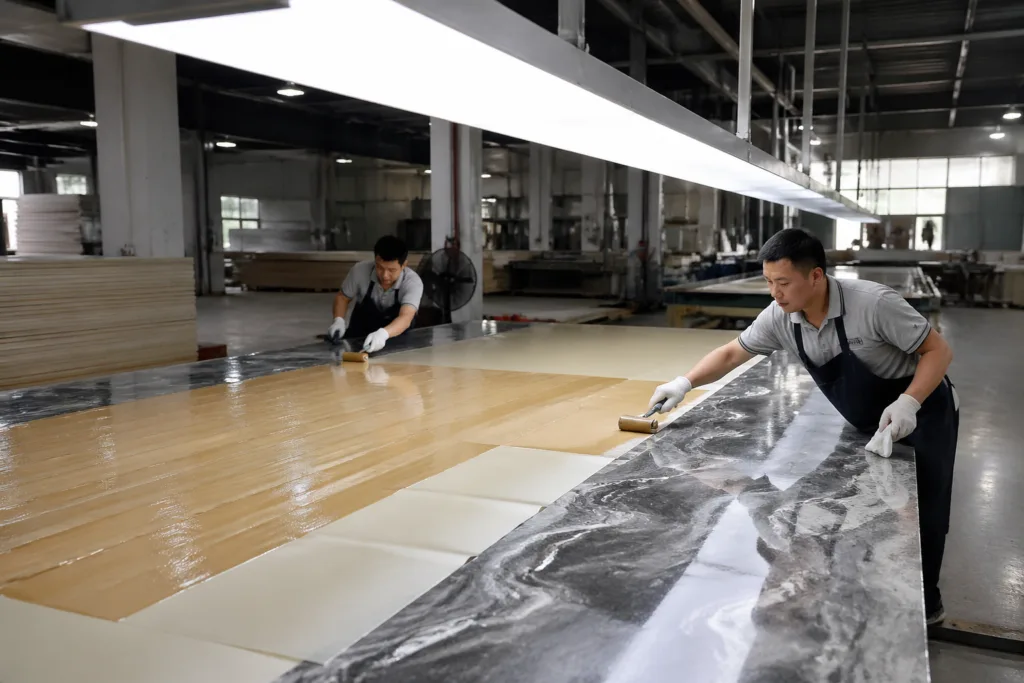
Contact cement is a solvent-based adhesive that forms an instant bond when two coated surfaces are pressed together. Unlike most glues, it doesn’t require sustained pressure or clamping. It’s particularly suited for laminates, plastics, rubber, and flexible substrates that cannot easily be joined by slow-curing or rigid adhesives.
Where Contact Cement Excels in Manufacturing
In industrial production, contact cement is the first choice for:
- Laminates and veneers (especially in cabinetry and panel assembly)
- Flexible plastics (for instance, bonding sheets to metal frames)
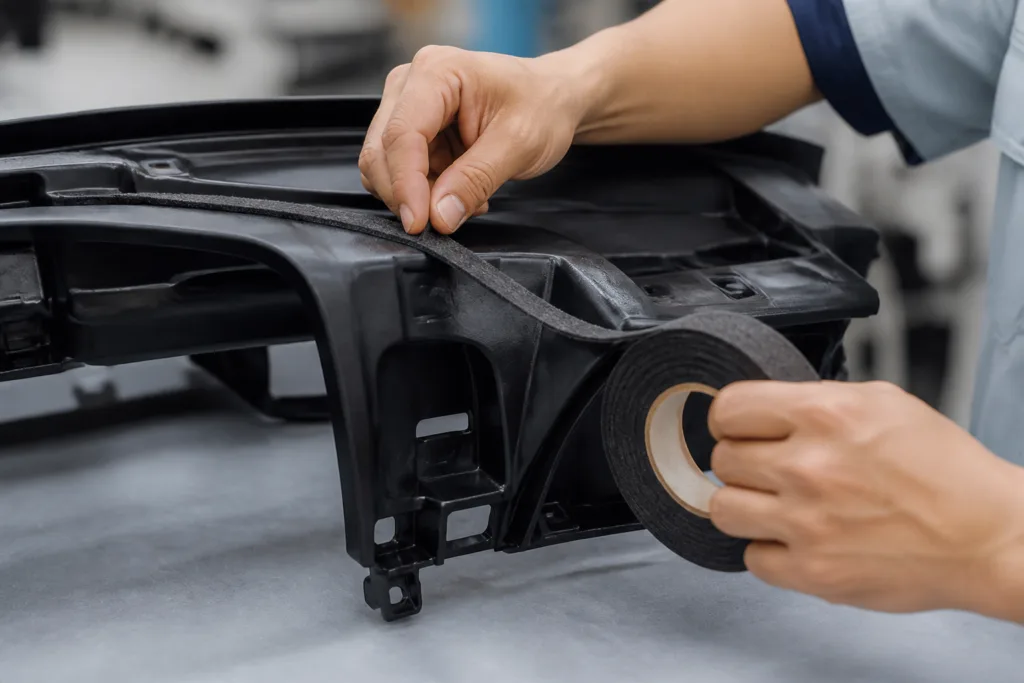
- Foams, rubbers, and textiles (when used for lining or layering)
- Large-surface bonding, where curing speed and uniform adhesion are critical
- Projects needing rapid handling times and minimal fixturing
Material Compatibility: Which Substrates Work?
Contact cement is compatible with high-surface-energy substrates such as wood, metals, ceramics, and some plastics. It’s especially useful for materials where uniform surface coverage matters. However, for polyolefins (like polypropylene and polyethylene), bonding is unreliable without pre-treatment. For more guidance, see the best adhesive for plastic guide.
Open Time and Working Window
One of contact cement’s core features is its open time—the period after both surfaces are coated and allowed to dry before joining. Typical open times range from 10 minutes up to 1 hour depending on ambient conditions and formulation. Unlike slow-setting adhesives, this creates a flexible window where large panels or sheets can be positioned precisely before the final bond.
Application Techniques: Brush, Roller, Spray
Contact cement is versatile in application. Most industrial workflows use:
- Brush—best for small areas, edges, and detailed work
- Roller—suited for wide panels and laminates
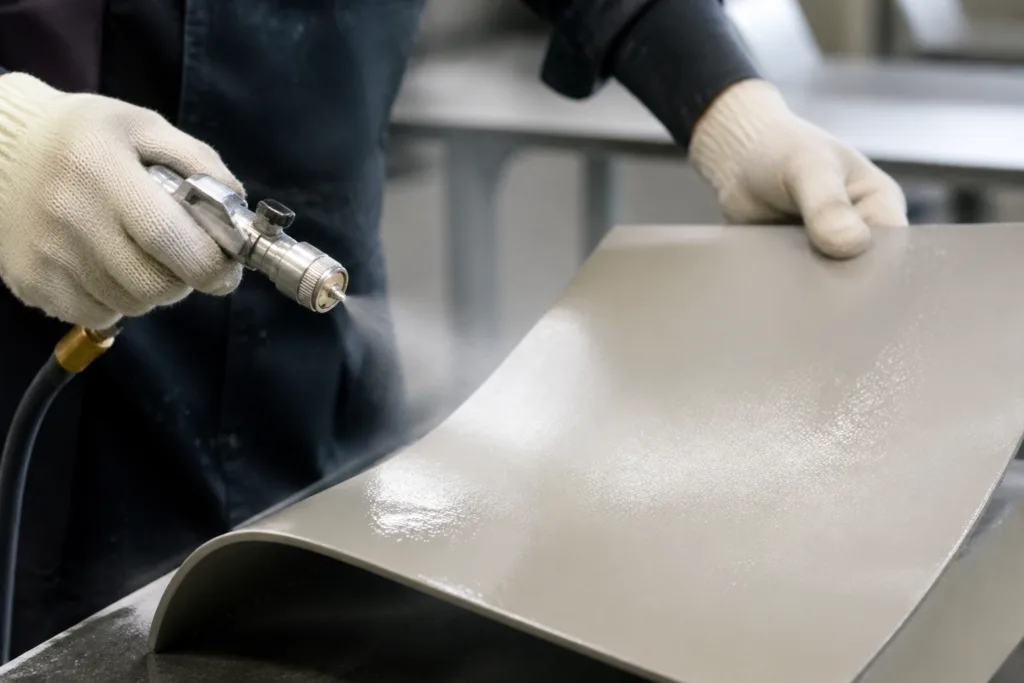
- Spray—common for textiles, foams, and large surfaces where rapid, uniform coverage is essential
Consistency in layer thickness—and coverage on both surfaces—directly affects bond strength and process stability.
Surface Preparation: The Make-Or-Break Step
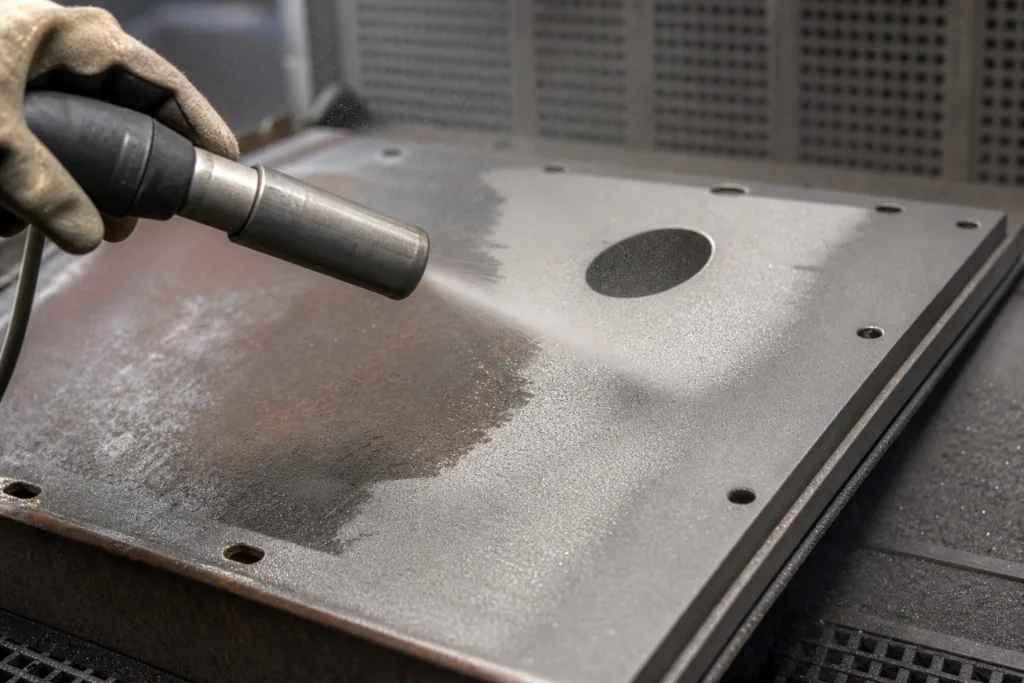
Effective bonding always starts with surface preparation. Industrial users should:
- Remove dust, oil, and debris (abrasion or solvent wipe recommended)
- Ensure surfaces are dry and free from corrosive agents
- Avoid over-priming—contact cement is meant for direct bonding
From an assembly-line viewpoint at ZDS Adhesive, an industrial adhesive manufacturer, adherence to surface preparation protocols is the single most controllable factor in preventing bond failures and production downtime.
Health, Safety, and Environmental Considerations
Contact cement notably contains strong solvents (such as toluene, acetone, or naphtha). Industrial usage requires:
- Proper ventilation systems
- PPE—respirators, gloves, eye protection
- Fire safety—solvents are flammable, and handling must comply with local regulations
Low-VOC or water-based contact cements are increasingly available, but typically offer reduced open time and bond strength compared to traditional formulas.
Process Limitations: When Not to Use Contact Cement
Contact cement is not a universal solution. Avoid it when:
- Structural bonding is required (e.g., parts subjected to high shear or peel forces)
- Bonds must resist prolonged exposure to heat, UV, or moisture
- Bonds will be exposed to chemicals or solvents (as these may degrade the adhesive)
For demanding structural joints, consider acrylic adhesives for fast fixture, or epoxies for chemical and thermal resistance. Learn more about acrylic vs epoxy adhesives.
Contact Cement for Laminates and Veneers
Laminate assembly is perhaps the most classic use case for contact cement. It enables rapid, gap-free bonding of decorative surfaces to MDF, plywood, or metal without clamps. Operators benefit from immediate handling, fast turnaround, and uniform adhesion without bubbles.
Bonding Flexible Plastics with Contact Cement
Plastic contact cement is used where flexibility and rapid handling matter more than structural strength. Examples include lining trays, bonding plastic sheets to metal, or assembling display panels. For high-strength metal–plastic bonds, see the how to bond plastic to metal guide.
Contact Cement for Metal Fabrication: Specific Scenarios
In metalworking, contact cement is preferred for lining, insulation, and decorative skins—where the joint is not subject to heavy loads. It cannot replace structural adhesives in load-bearing situations or where peel resistance is critical.
Large-Surface Bonding: Advantage and Risk
Large-surface bonding is where contact cement shines, but also where uniformity becomes critical. Misalignment or poor coverage leads to weak spots, delamination, and process defects.
| Bonding Method | Handling Time | Typical Use |
|---|---|---|
| Contact Cement | Immediate | Laminates, foams, flexible plastics |
| Acrylic Adhesive | 5–15 min (fixture) | Metal–plastic, structural |
| Epoxy | 20–60 min (curing) | High-strength, rigid assemblies |
Fast Handling Needs in Assembly Lines
Contact cement enables almost instant handling after the bond is formed. This minimizes fixture time, increases throughput, and is critical for high-volume assembly operations. It’s one reason contact cement is favored in furniture, display, and sign manufacturing workflows.
Alternatives: Structural Adhesives and Their Advantages
While contact cement is unmatched for speed and flexibility, alternatives like structural acrylics, polyurethane, or epoxies outperform in durability. Choosing the right adhesive means matching bond strength, environmental exposure, and cure speed to production needs.
Quality Control and Testing: Ensuring Reliable Bonds
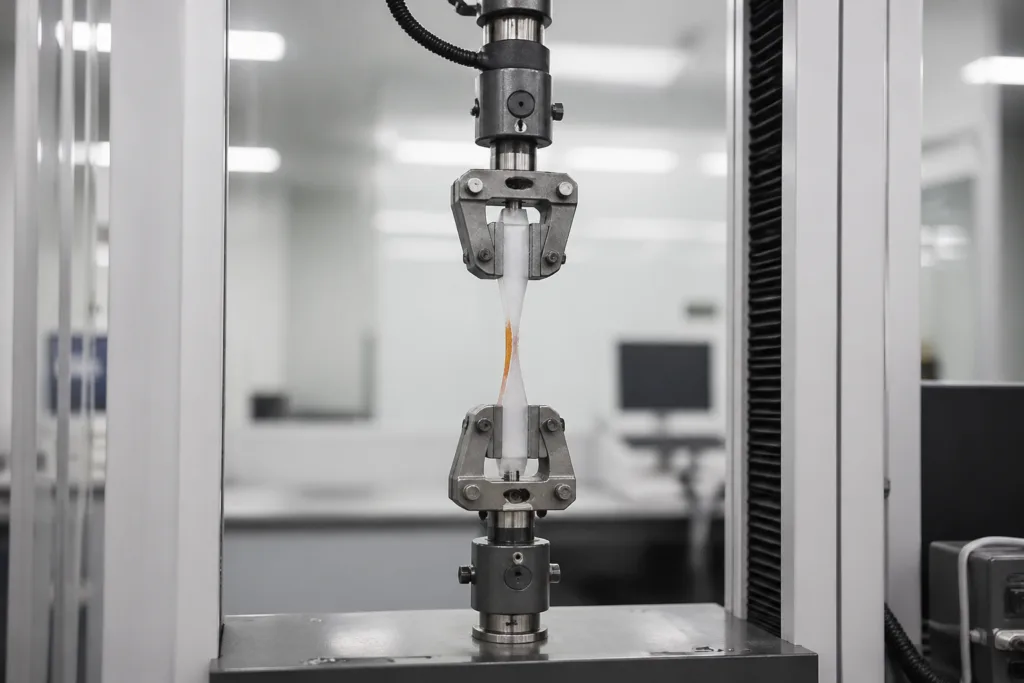
Industrial users should regularly conduct lap shear and peel testing to verify bond integrity. Humidity aging and thermal cycling tests are recommended for new materials or process changes.
Process Integration: Contact Cement in Composite Manufacturing
In composites, contact cement is useful for layering fabric, foam, or decorative skins—where thickness uniformity and chemical compatibility are managed. Solvent interaction can affect certain resins, so always test for compatibility before scaling up.
Long-Term Durability: Environmental Performance
Contact cement generally performs well in indoor environments, but degrades faster outdoors under UV, moisture, or extreme heat. Water-based variants offer improved indoor air quality, but may not match solvent-based performance.
Equipment and Dispensing Solutions
For high-volume processes, pneumatic sprayers and automated roller systems are common. Consistency and coverage can be monitored using inline vision systems or by regular manual inspection.
Sustainability Trends: Eco-Friendly Contact Cements
Industrial manufacturers are adopting low-VOC and water-based contact cements for compliance and worker safety. These are best suited to low-demand applications or indoor assemblies. For more on process-level sustainability, see custom adhesive solutions explained.
Health and Process Limits: Practical Observations
Contact cement excels in rapid, uniform assembly but must be used with care—considering solvent handling, ventilation, and correct surface prep. Its limits in strength and environmental resistance mean it is best for non-structural, flexible, or large-area bonds where speed and ease override ultimate durability.
When to Use Contact Cement in Industrial Manufacturing and Assembly
To clarify, contact cement is right for:
- Bonding large, flexible, or composite surfaces
- Processes demanding immediate handling and fast throughput
- Non-structural assemblies with stable environmental conditions
It should not replace structural adhesives for critical joints, high-stress applications, or outdoor exposure. Always match adhesive choice with process needs, material compatibility, and production goals.
Conclusion
Contact cement remains an indispensable adhesive in industrial manufacturing and assembly when used smartly. Its strengths lie in fast, flexible, large-area bonding—especially for non-structural laminates, foams, and plastics. However, its process limits and health concerns require careful workflow design and ongoing quality control. The smartest manufacturers know: contact cement is a powerful tool, but not a universal fix. Match the adhesive to the job, test regularly, and build reliability from the ground up.
Frequently Asked Questions
What materials can contact cement effectively bond?
Contact cement works best with flexible laminates, plastics, rubber, foam, veneers, and sometimes metals. High-surface-energy substrates are most reliable.
Is contact cement suitable for structural joints?
No. It lacks high shear and peel resistance and should not be used for joints subjected to heavy loads, prolonged tension, or critical safety requirements.
How should industrial surfaces be prepared before applying contact cement?
Clean surfaces thoroughly, removing oil, dust, and residues. Abrade if needed, and ensure surfaces are dry before adhesive application.
Can contact cement be used outdoors or in harsh environments?
It is not recommended for outdoor, humid, or chemically exposed environments—most contact cements degrade rapidly under UV, moisture, and solvents.
Are there safety concerns with handling contact cement?
Yes. The solvents are flammable and can affect respiratory health. Use proper ventilation, PPE, and ensure compliance with local safety standards.
How does contact cement compare to acrylic or epoxy adhesives?
Contact cement offers instant handling and bonding for large, flexible surfaces but falls short in chemical, heat, and structural strength compared to acrylics and epoxies.
Related Reading
- How to Purposely Choose Between Adhesives & Sealants for Leak-Proof Joints
- Expert Comparison: Industrial Sealants vs Adhesives and Their Unique Strengths
- Industrial Strength Bonding: Mastering Metal-to-Metal Connections
- How Vacuum Impregnation Resins Boost Copper Winding Reliability
- The Secrets Behind Industrial Adhesive Testing and Manufacturing Success