Introduction: The Science of Polyurethane (PUR) Moisture Curing Mechanism
Polyurethane (PUR) adhesives and sealants are critical to modern manufacturing, especially where efficiency, reliable bonding, and durability are required. Understanding the Polyurethane (PUR) moisture curing mechanism means grasping how these materials transform from liquid to solid in the presence of atmospheric moisture. This transformation is at the heart of why PUR systems are widely used in industries ranging from automotive and electronics to metal fabrication and construction. In this article, we’ll examine how humidity drives polyurethane cure, key chemical processes, performance benefits, and best practices for flawless results in real production environments.
What Is Polyurethane (PUR) Moisture Curing Mechanism?
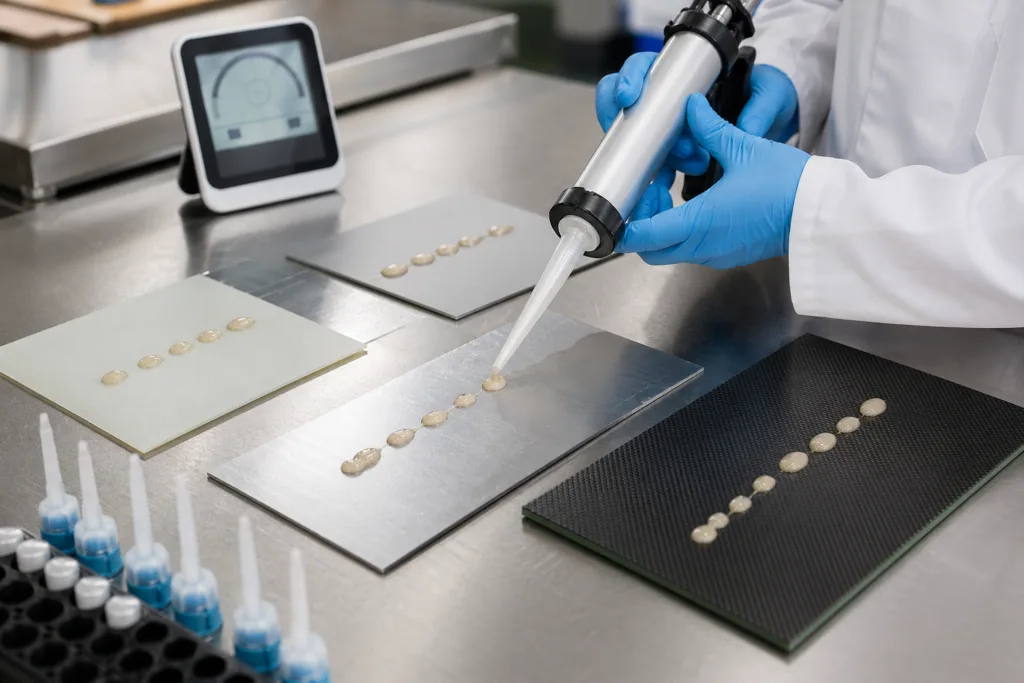
The moisture curing mechanism of polyurethane (PUR) refers to a chemical reaction where water vapor initiates and completes the hardening of the polymer. This process is distinct from heat, UV, or two-part systems since it capitalizes on ambient humidity. When exposed to air, isocyanate-terminated prepolymers in PUR systems react with water molecules, forming a tough, resilient polymer network. This is the science that gives PUR adhesives their unique edge for many assembly scenarios.
How Polyurethane Moisture Curing Works: Step-by-Step
Essential Ingredients in Moisture-Cure PUR
Moisture-curing polyurethanes are typically comprised of isocyanate-functional prepolymers and various additives for processing, stability, and application-specific performance. The magic starts when these prepolymers encounter moisture from the air or substrates.
The Chemical Reaction: Isocyanate Meets Water
At its core, the moisture-curing reaction occurs as follows:
- Isocyanate group (-NCO) reacts with water (H2O).
- This generates unstable carbamic acid.
- Carbamic acid rapidly decomposes, releasing carbon dioxide (CO2), and results in the formation of a polyurea crosslink network (with urea linkages).
- The growing polymer chains lock together, developing strength and elasticity as the cure progresses.
Stages of Curing: From Liquid Flow to Final Strength
- Open Time: Phase when PUR is still workable.
- Skin Formation: Surface solidifies as a result of immediate moisture contact.
- Through-Cure: Bulk material cures as moisture diffuses inward from the surface.
- Final Properties: Achieved as all isocyanate is reacted and the polymer matrix fully sets.
Critical Role of Humidity in PUR Cure
Moisture in the environment is more than a passive ingredient—it directly controls cure speed and final performance. High humidity accelerates PUR curing, while low humidity slows the reaction and can even impact ultimate strength or flexibility. Efficient processes rely on knowledge of atmospheric conditions, making humidity control essential, especially in industrial applications and when bonding large surfaces or deep sections.
Advantages of Moisture Curing Versus Other Mechanisms
PUR adhesives exist alongside hot melt, UV, addition-cure silicone, two-component epoxy, and anaerobic chemistries. Moisture cure offers several unique advantages:
- Single-Component Simplicity: No mixing—ready to use off-the-shelf
- Room Temperature Processing: Saves energy; reduces equipment needs
- Wide Substrate Compatibility: Bonds to metals, plastics, glass, composites, and more
- Outstanding Flexibility and Toughness: Maintains integrity under vibration or thermal cycling
For a comprehensive look at industrial adhesive options, see our Ultimate Guide to Industrial Glue.
Common Applications of PUR Moisture Curing Systems
Because of their versatility, moisture-cure PUR adhesives and sealants power a range of real-world assembly and sealing operations. Key sectors include:
- Metal Bonding & Sealing: Used for bodywork, frame assembly, and seam sealing in automotive and appliance markets.
- Flexible Laminates: Employed in panels, glass, and composites where some movement is expected.
- Electronic Component Encapsulation: PUR’s insulating properties protect delicate circuitry, often in combination with other resins. See related recommendations on conformal coating for charging stations.
- Flooring and Construction: One-part sealants cure with ambient humidity, simplifying installation.
- General Industrial Assembly: From filter manufacturing to heavy equipment, PUR is chosen for dynamic, load-bearing applications.
Moisture Curing in Metal Bonding: Key Insights
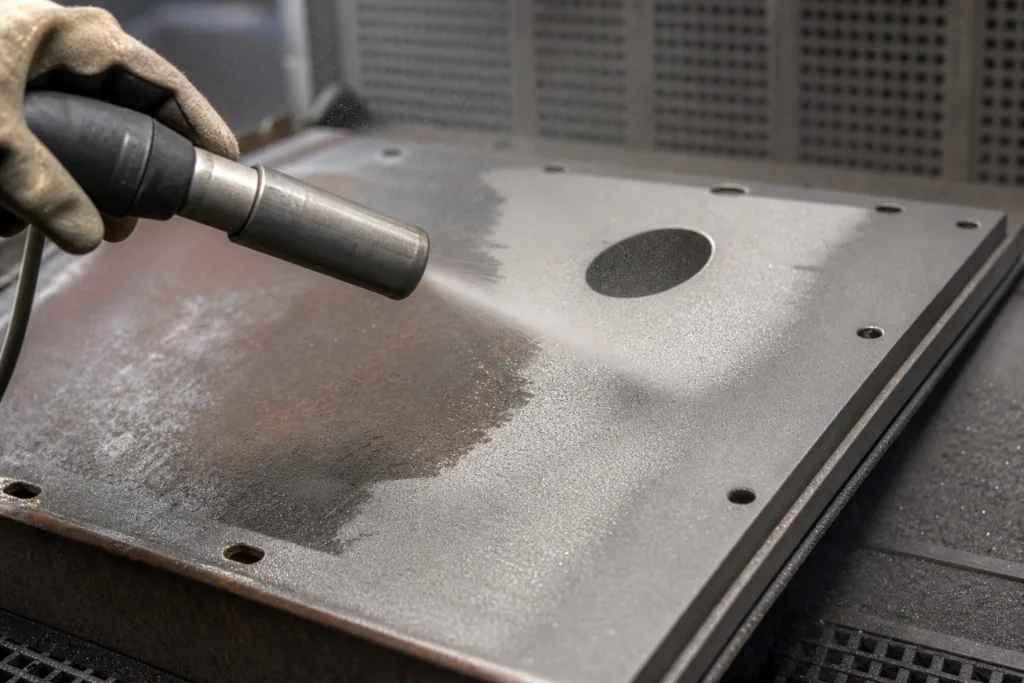
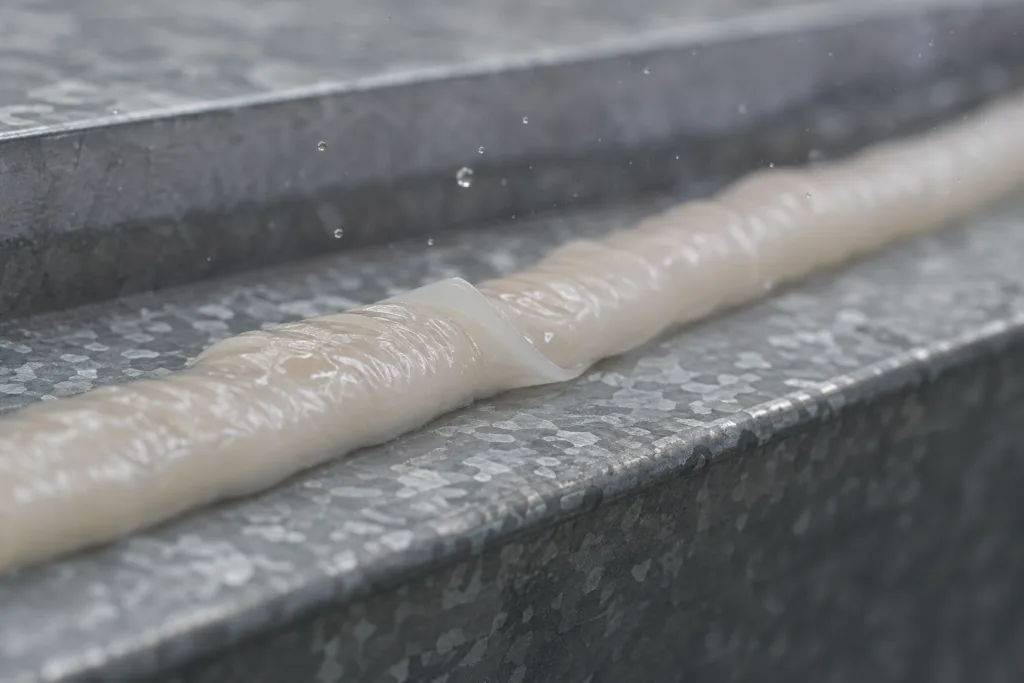
Metal substrates pose unique challenges: surface energy, oxide layers, and potential for corrosion under certain conditions. Moisture-cure PUR adhesives, with their strong adhesion and flexibility, are well-suited for bonding steel, aluminum, and galvanized metals. However, ensuring cleanliness and proper surface preparation (such as abrasion or primer application) is often essential for long-term reliability. You can deepen your understanding of adhesive choices for demanding assemblies in our Metal-to-Metal Bonding Guide.
Environmental Factors Impacting PUR Moisture Curing
Humidity Level: The Deciding Factor
Relative humidity directly sets the pace of skin time and through-cure. High humidity (>60% RH) can shorten open time and accelerate skin-over; low humidity (<40% RH) extends open time but may slow or even halt through-cure, risking underperformance.
Temperature: Speeds and Slows Reaction
As with most chemical reactions, higher temperatures increase reaction rates—up to the recommended application range. Very high heat may cause blistering, while low temperatures (<10°C) cause sluggish cure, especially in thick beads or enclosed geometries.
Substrate Porosity and Moisture Content
Porous surfaces (e.g., wood, concrete) absorb moisture and can supply additional water for cure. Non-porous metals rely almost entirely on atmospheric moisture. Consistent arrival of humidity at the joint interface is necessary for full reaction, especially for deep-bonded joints.
Tips for Achieving Optimal PUR Moisture Cure
- Monitor Application Conditions: Keep track of ambient temperature and humidity during application and curing.
- Surface Prep: Clean and dry substrates thoroughly unless using primers or specialty grades designed for contaminated surfaces. For plastic-to-metal or metal-to-metal situations, see Expert Bonding Strategies.
- Bead Size and Cure Depth: Thicker beads cure slower; for depths >10 mm, ensure adequate moisture access (either from substrate or increased humidity).
- Fixture Time Discipline: Hold joints undisturbed until skin-over and early strength targets are reached to prevent bond-line movement.
- Storage: Reseal unused product quickly to prevent premature cure in the container due to humidity ingress.
From a Process Engineer’s Perspective: Experience in Real-World PUR Application
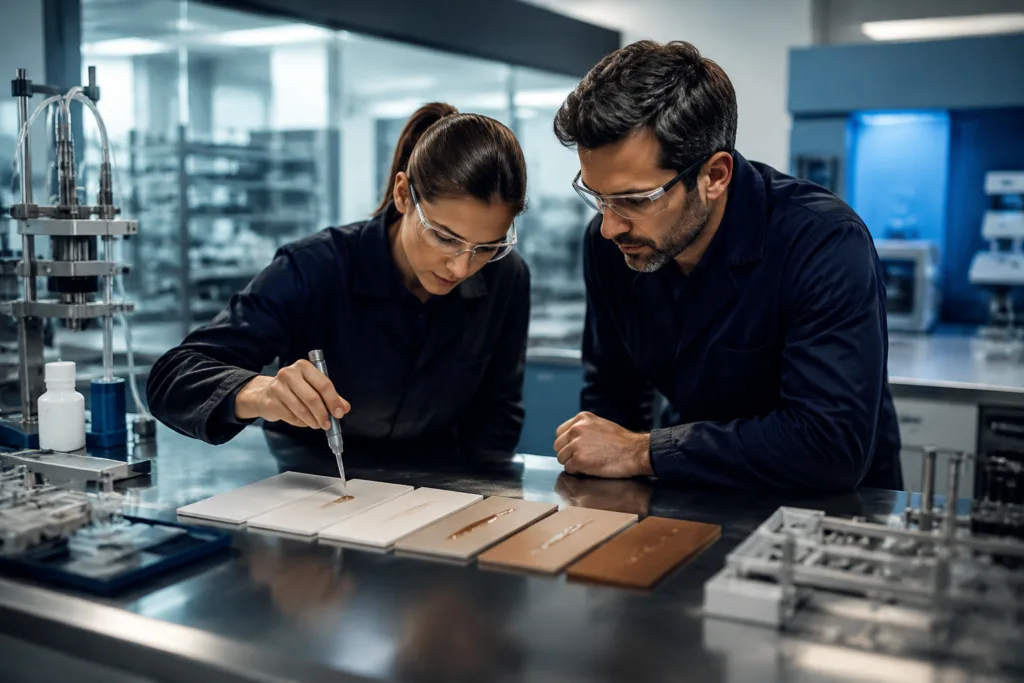
At ZDS Adhesive, an industrial adhesive manufacturer, we often test moisture-cure PURs across different metals (galvanized, anodized, bare) for lap shear, peel, and fatigue. Critical lessons:
- If open time is too short, humidity is usually high—reduce bead size or adjust workstation climate.
- Failed skin formation typically means low humidity; targeted humidification can resolve incomplete cure issues.
- Excess residue or foaming signals excess substrate moisture or product aging—tight warehouse control matters.
Application-specific checklists and fixture tests are best practice for every new material or process change.
PUR Moisture Curing vs. Other Curing Mechanisms
| Attribute | Moisture-Cure Polyurethane | 2-Part Epoxy | Hot Melt | UV Cure |
|---|---|---|---|---|
| Mixing Required | No | Yes | No | No |
| Typical Open Time | 5–30 min | 10–90 min | Seconds | Instant |
| Full Cure Speed | Hours–Days | 12–48 hrs | Seconds–Minutes | Seconds |
| Environmental Sensitivity | Humidity | Mix Ratio & Temp | Cooling Required | Line of Sight |
| Flexibility | High | Low–Med | Med | Varies |
Case Example: Polyurethane Moisture Cure in Electronics Potting
For electronics, moisture-cure PUR offers lower exothermic heat, excellent gap-filling, and electrical insulation. However, potting deep sections (>10mm) may require controlled humidity environments or staged pouring. For optimal results, pair with testing protocols such as humidity aging and cross-section evaluation to confirm full cure.
Innovations in PUR Moisture Cure Technology
Recent advances include low-emission isocyanate chemistries, fast-cure variants for assembly lines, and hybrid PUR-silicone systems that bond metals, plastics, and composites even faster. These improvements align with trends toward rapid prototyping and increased safety in industrial environments.
Practical Checklist: Avoiding Failure Modes
- Always confirm humidity range (above 40% RH ideal) before application.
- Store PUR products in airtight containers—dispensing equipment must be humidity-tight.
- Make use of test data (lap shear, peel, fatigue) for every critical substrate combo.
Polyurethane (PUR) Moisture Curing Mechanism
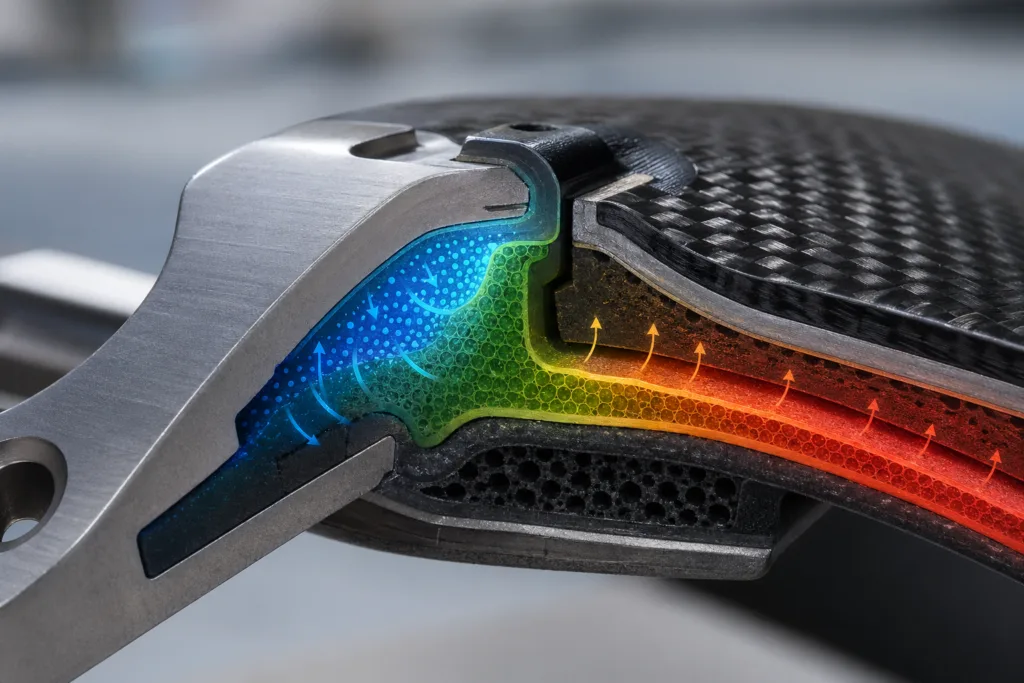
Summarizing, the Polyurethane (PUR) moisture curing mechanism harnesses ambient humidity for a unique, clean, and reliable path from liquid to powerful bond. By controlling environmental factors and understanding the core reaction, manufacturers can ensure that every joint, seal, and potted part meets performance goals—or exceeds industry standards. For precise, repeatable results, apply the principles and checklists in your next PUR adhesive or sealant process.
Frequently Asked Questions
How does humidity affect polyurethane moisture curing?
Humidity accelerates PUR curing by supplying water molecules necessary for the isocyanate reaction. Higher humidity reduces open time and speeds up skin formation, while low humidity can slow or even prevent full curing.
What happens if the substrate is wet or humid?
Excess substrate moisture can cause too rapid cure or foaming, weakening the bond. Moderate moisture assists cure, but puddled water or condensation should always be removed before application.
Can PUR adhesives bond to metals reliably?
Yes, when surfaces are properly cleaned and, if necessary, primed to overcome low surface energy. PUR’s flexibility and toughness make it suitable for vibration-prone or thermally cycled metal assemblies.
What are typical cure times for moisture-cure PURs?
Skin formation can begin in 5–30 minutes depending on conditions. Full cure occurs in 24–72 hours for thin beads; thicker sections or low humidity can extend cure times significantly.
Is moisture-cure PUR safe for electronic applications?
Yes, it’s often used for electronic potting and encapsulation. Proper humidity control is crucial to avoid incomplete cure in deep or enclosed electronic parts.
What is the best storage method for unused PUR adhesive?
Seal the container airtight immediately after use. Store in a dry, cool place. Avoid prolonged exposure to air, as humidity can initiate curing inside the cartridge or pail.