Solvent based adhesive systems are still part of modern manufacturing because some jobs are not defined by low odor or minimal emissions alone; they are defined by wet-out, fast handling, strong initial tack, and dependable bonding on difficult surfaces. In production environments where large-area lamination, contact bonding, or uneven substrates are involved, a well-chosen solvent system can still solve problems that slower or more sensitive adhesive chemistries may not handle as efficiently.
industrial contact cement selection guide is a useful starting point for buyers comparing where contact-bonding chemistry fits in production. From our manufacturing and formulation perspective, the real question is not whether solvent systems are old or new, but whether the process needs predictable tack build, controllable flash-off, and robust handling speed. That is where we support sampling, viscosity matching, packaging options, and OEM or ODM development for industrial teams that need a practical fit rather than a generic product recommendation.
Why Solvent-Based Adhesives Still Matter in Modern Industrial Manufacturing
A solvent based adhesive is typically a polymer system dissolved in a volatile solvent so it can be applied smoothly, spread thinly, and then develop bond strength as the solvent leaves the film. That basic mechanism makes solvent systems different from water-based systems, hot melt products, UV-curable materials, and many reactive adhesives. Each chemistry has a place, but solvent-borne adhesives remain relevant because they can combine workable open time with fast surface development and strong wetting behavior on many industrial substrates.
In selection discussions, we often see a simple mistake: buyers compare only final bond strength and ignore how the adhesive behaves during the first minutes of assembly. In many factories, that early-stage behavior matters more than the laboratory number. If a panel, lining, trim part, or flexible laminate must be positioned quickly and pressed before the assembly moves down the line, the adhesive has to create enough initial grab to hold shape without waiting for a long cure window. Solvent systems can be attractive exactly because the process window is practical for production work.
It is also important to separate “solvent based” from “solvent heavy” in the loose way those terms are sometimes used in purchasing. Some formulas are contact cements with high tack and immediate handling strength; others are more general purpose bonding systems designed for brushing, spraying, or roll coating. The correct choice depends on coating weight, substrate porosity, flash-off time, and whether the operation needs a fully dry-to-touch film before mating or a shorter open window.
How solvent evaporation creates tack, open time, and bond formation
The performance logic is straightforward: after application, the solvent begins to evaporate, the polymer concentration rises, viscosity effectively increases in the film, and tack starts to develop. That is why open time and flash-off control are so important. Too little flash-off and the bond may trap solvent, which can weaken initial handling strength or create blisters later. Too much flash-off and the film can lose its ability to wet the substrate properly, reducing adhesion.
From a production standpoint, this gives solvent based adhesive systems a useful process advantage: the user can often control bond behavior through coating amount, substrate temperature, ventilation, and pressing schedule. That makes them practical in plants where operators need consistent visual and timing cues rather than complex activation equipment. The approach is simple, but it still requires discipline. If flash-off varies from shift to shift, bond quality will vary too.
Where solvent systems excel in industrial assembly
Solvent-based adhesives are still widely used in applications that depend on strong wetting, high initial tack, or the ability to bond large surfaces with moderate pressure. Common examples include lamination, trimming, contact bonding, upholstery, footwear, appliance components, vehicle interiors, and general assembly. These are not niche uses; they are recurring production tasks where a stable film and quick fixture can matter more than a long, fully reactive cure.
One reason they remain useful is their ability to make contact bonding possible on broad or uneven surfaces. A solvent based contact adhesive can be especially valuable when both sides need a uniform coated film and when the parts must align quickly without clamping for long periods. That is one reason buyers still evaluate them for foam, leather, rubber, textiles, wood composites, and certain coated materials where a flexible bond line is preferred.
We also see solvent systems used when applicators need strong immediate wet-out on parts that are difficult to clamp or difficult to keep perfectly flat. In those cases, the adhesive does not just bond materials; it reduces manufacturing friction. That is a valuable function in busy lines where a few extra seconds per part can turn into a major throughput issue.
How solvent based adhesive compares with other adhesive families

To choose correctly, procurement and engineering teams should compare process behavior, not just chemical category. Water-based adhesives usually reduce odor and VOC burden, but they often depend more heavily on substrate porosity, drying conditions, and air movement. The same is true in different ways for hot melt, UV, and reactive systems: each one solves a different manufacturing problem and introduces its own constraints. For a broader overview of where water-based adhesive performance boundaries can become important, it helps to compare drying dependence, line speed, and substrate sensitivity early in the project.
Hot melts can offer very fast set, but they are not always the best option for large-area flexible lamination or surfaces that require extended repositioning. UV systems can be excellent where the bond line is accessible to light and the parts are transparent or translucent enough for exposure, but they are less forgiving in shadowed or opaque assemblies. Reactive systems such as epoxies or polyurethanes are strong and durable, but they often require mixing, metering, cure time, or equipment discipline that changes the economics of a simple assembly step. Solvent systems sit in a useful middle ground for many buyers: they are relatively simple to apply, yet still capable of delivering the tack and wetting profile that production teams need.
| Adhesive family | Typical process strength | Typical limitation | Best fit scenarios |
|---|---|---|---|
| Solvent based adhesive | Good wet-out, strong initial tack, flexible film control | VOC, odor, flammability, flash-off sensitivity | Contact bonding, lamination, trim, flexible substrates |
| Water-based adhesive | Lower odor and better emission profile | Drying dependence and substrate sensitivity | Porous materials, lower-emission workflows |
| Hot melt | Very fast set and simple application | Heat sensitivity and limited repositioning | High-speed packaging and simple assembly |
| UV-curable | Fast cure when light access is available | Shadowing and opacity limits | Clear parts and controlled exposure stations |
| Reactive epoxy or PU | High durability and structural performance | Mixing, cure time, and process complexity | Structural bonding and demanding service conditions |
Substrate compatibility is often the deciding factor
One of the most common sourcing mistakes is treating the adhesive as the main decision and the substrate as a secondary detail. In reality, the substrate pair is usually the decisive factor. Rubber, leather, foam, plastics, composites, metal, and coated surfaces each interact differently with solvents and polymer films. Surface energy, porosity, plasticizer content, and contamination level all influence whether the adhesive will wet out or struggle.
For example, plastic-to-metal joints may need a very different approach than foam-to-fabric lamination. If you want a more detailed view of surface and primer strategy, the plastic-to-metal bonding strategies article is a useful reference point because it shows why substrate compatibility and surface preparation matter as much as chemistry selection. In our own work, we often evaluate whether a solvent system should be adjusted for viscosity, solids content, or brushability depending on the actual production surface condition, not just the material name on the drawing.
Some materials also present process risks that are easy to underestimate. Low-energy plastics may resist wetting. Plasticized PVC or coated materials can raise migration or softening concerns. Foam can absorb adhesive too aggressively if the film is too thin or too rich in solvent. Metal parts may be clean one day and slightly oily the next. When those variables are ignored, the bond may appear fine during trial assembly and fail later in aging or heat exposure.
Process controls that make solvent systems work on the line
The practical value of a solvent based adhesive depends heavily on application discipline. Surface preparation is the first control point. Oils, release agents, dust, oxidation, and moisture all interfere with wetting. The second control point is coating method. Brush, spray, roller, and knife application each create a different film profile, and that film profile affects flash-off and final bond line behavior. The third control point is timing. Flash-off time, pressing pressure, and mating sequence all influence whether the joint develops high initial grip or simply traps solvent inside the interface.
Ventilation is also part of process control, not just safety compliance. If the air exchange is too weak, solvent release can be inconsistent. If it is too aggressive, the film may skin too quickly and lose wetting. The goal is controlled evaporation, not maximum evaporation at any cost. That is one of the reasons these systems still reward hands-on manufacturing experience.
In lines where operator consistency varies, we recommend simplifying the assembly window as much as possible. That may mean using a sprayable formula for even coverage, standardizing coat weight, defining a precise tack test, or adjusting solvent blend to better match room conditions. At ZDS Adhesive, our formulation work often starts with those practical questions because an adhesive that looks impressive in a lab vial can still fail in a real line if the application window is not realistic.
Performance factors buyers should review in the TDS
A technical data sheet should help answer more than “what is the peel strength?” For a solvent based adhesive, buyers should look at viscosity, solids content, tack development, open time, recommended substrate types, heat resistance guidance, and any storage or application temperature limits. If the formula is intended for contact bonding, the TDS should also make the dry-time or flash-off expectation clear enough for production use.
Heat resistance and aging resistance are especially important in industrial assembly because a bond that works on day one may soften, creep, or embrittle over time. The material must be checked in the context of the actual service environment: cabin heat in vehicles, appliance warm-up cycles, warehouse storage swings, or intermittent exposure to cleaning chemicals. If the end user expects long life, the evaluation cannot stop at initial grab.
Bond strength should also be interpreted with care. A strong number on a test coupon is useful, but it does not automatically mean the adhesive will behave well on porous foam, flexible laminates, or textured coatings. We encourage buyers to review failure mode, not just strength value. Adhesive failure, cohesive failure, and substrate failure each tell a different story about the fit between chemistry and material pair.
Safety, odor, VOC, and compliance tradeoffs
Solvent systems remain useful, but they carry real operational tradeoffs. VOC emissions, flammability, odor, and worker exposure considerations all matter. The regulatory environment also continues to push many industries toward lower-emission formulations, which means solvent-based systems must justify themselves with process value rather than habit. For an authoritative overview of workplace solvent risks and control concepts, OSHA’s solvent hazard overview is a helpful reference for teams planning ventilation, exposure monitoring, and safety procedures.
That does not mean solvent systems are obsolete. It means they need a managed environment: proper storage, grounded equipment where applicable, controlled ignition sources, adequate ventilation, PPE, and clear operating procedures. Procurement teams should ask whether the line can safely support the chemistry before they ask whether the chemistry is cheap or fast. In many factories, the answer is yes—but only if the controls are already part of the production discipline.
Regional regulations can also shape the answer. A formula that is acceptable in one market may require changes in another due to VOC limits or workplace requirements. When buyers source internationally, they should not assume that a product description is enough. They should ask for a current TDS, SDS, and packaging description for the exact market they plan to serve.
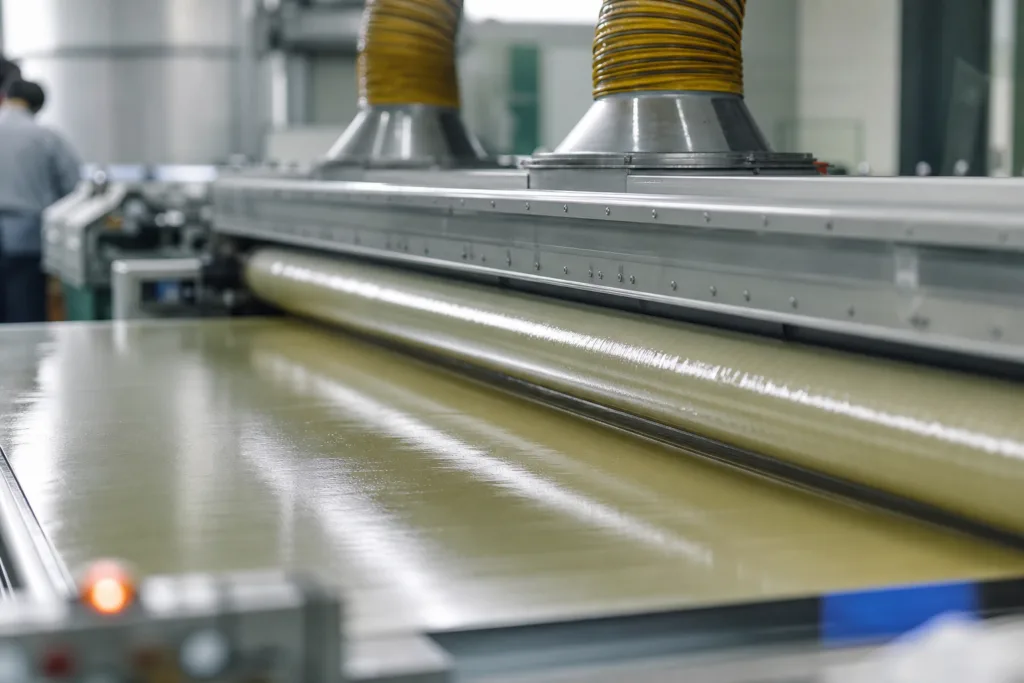
When solvent based glue is the better choice
There are still situations where solvent systems are the most practical option. If the parts require fast handling but the process cannot support hot melt equipment or UV exposure, solvent may be the best fit. If the substrate is difficult to wet and the bond area is large, solvent contact bonding can offer a useful combination of spreadability and tack. If the product needs a flexible bond line with good surface conformity, solvent systems often remain competitive.
There are also cases where the alternative looks safer on paper but increases production friction in practice. Water-based adhesive systems may need longer drying or more careful humidity control. Reactive systems may require metering and mixing. UV systems may need line-of-sight curing. Solvent systems avoid some of those constraints by using a simpler application and evaporation sequence, provided the plant is set up to manage the related safety and compliance requirements.
That is why it is a mistake to ask only whether a solvent based adhesive is “modern.” The better question is whether the adhesive fits the workflow. Modern manufacturing is not one process; it is a mix of throughput targets, labor constraints, environmental controls, and service expectations. A chemistry that supports those realities is still modern, even if it has been used for decades.
How to evaluate brands and suppliers from a sourcing perspective
Supplier evaluation should focus on repeatability and support, not just catalog wording. A serious manufacturer should be able to discuss sample testing, substrate trials, recommended application method, packaging size, shelf life, and storage conditions. They should also be willing to explain what can be customized and what cannot. In solvent systems, small changes in solids content, rheology, and solvent balance can significantly change spray behavior, flow, and flash-off, so a clear development process matters.
If your project involves metal substrates, coatings, or corrosion-sensitive surfaces, it can help to review related bonding behavior in advance. For example, bonding galvanized steel reliably highlights why surface condition and interfacial chemistry can change real-world results. The same evaluation mindset applies when solvent systems are used on coated metals or mixed-material assemblies.
We advise buyers to ask for trial quantities that match the actual process, not just a tiny sample that is easy to ship. If the end use is spray application, the sample should be sprayable. If the line uses a brush or roller, the sample should behave that way. If packaging will be bulk pails or drums, the viscosity and handling should match that reality. Good supplier support reduces surprises after scale-up.
What to ask before moving to production
Before approving a solvent based adhesive for production, buyers should ask a focused set of questions:
- What substrates were tested, and what surface preparation was used?
- How long is the open time at the expected shop temperature and humidity?
- What flash-off window is recommended before mating?
- What is the best application method for uniform coat weight?
- How does the bond behave after heat aging or moisture exposure?
- Are there packaging options that match the plant’s consumption rate?
- What shelf life is expected under recommended storage conditions?
- Can the formula be adjusted for viscosity, tack, or odor control?
These questions are useful because they turn a generic product search into a process discussion. That is the level at which adhesive selection becomes manufacturing-relevant rather than theoretical. We often find that a buyer already knows the chemistry family they want, but not the exact working window needed for their line. That is where technical evaluation saves time and prevents rework.
For cases where the project also touches on metal assemblies, it can be helpful to compare performance expectations with a dedicated metal-to-metal bonding selection guide. Not every solvent system is suitable for structural metal bonding, but the guide is still valuable for understanding when a flexible surface-bonding approach is enough and when a structural adhesive is the better decision.
Common problems and how to avoid them
Three failure patterns appear often in solvent adhesive trials. First is blistering or bubbling, usually tied to trapped solvent, too-heavy coating, or insufficient flash-off. Second is weak initial tack, which can result from over-dilution, poor substrate wetting, or a film that dried too far before mating. Third is solvent entrapment, where the bond appears tacky at first but never fully stabilizes because the assembly was closed too early or the airflow was inadequate.
Another problem is assuming that one recipe will work across all substrates. For instance, a formulation that performs well on leather may not behave the same on a coated composite or a low-energy plastic. If galvanized or plated metal is involved, the surface can add another layer of complexity. In those cases, it is often worth comparing the bond design with a targeted material strategy, such as plastic bonding adhesive selection when plastics are part of the stack-up. The point is not to over-specialize; it is to recognize that substrate families do not all respond the same way.
For troubleshooting, we usually recommend a simple sequence: confirm the substrate, confirm the surface condition, confirm the coating weight, confirm the flash-off time, and confirm the pressing method. That order solves more problems than changing chemistry immediately. When a chemistry change is needed, the best path is usually a controlled sample evaluation rather than a rushed line change.
Selection checklist for engineers and procurement teams
To choose a solvent based adhesive responsibly, review the following points before purchase approval:
- What is the primary substrate pair and surface finish?
- Does the process need high initial tack, repositioning, or both?
- Is the part large, flexible, porous, coated, or difficult to clamp?
- Can the line support ventilation and solvent safety controls?
- Is the required bond flexible, heat resistant, or mainly assembly-grade?
- Do coating method and viscosity fit existing equipment?
- Will the product be supplied in trial packs, pails, or bulk containers?
- Is the supplier prepared to adjust the formula after sample evaluation?
In many projects, this checklist helps teams decide whether solvent chemistry should be the final answer or simply one option among several. If the goal is a broader design review that includes bonding, sealing, and service environment decisions, the article on adhesive versus sealant selection rules can help clarify the difference between structural bonding, flexible sealing, and mixed-use needs.
The final choice should balance process reliability, worker safety, regulatory pressure, and end-use durability. That balance is the real reason solvent systems still matter. They are not universal, but they remain highly effective where their process profile matches the production need.
Conclusion
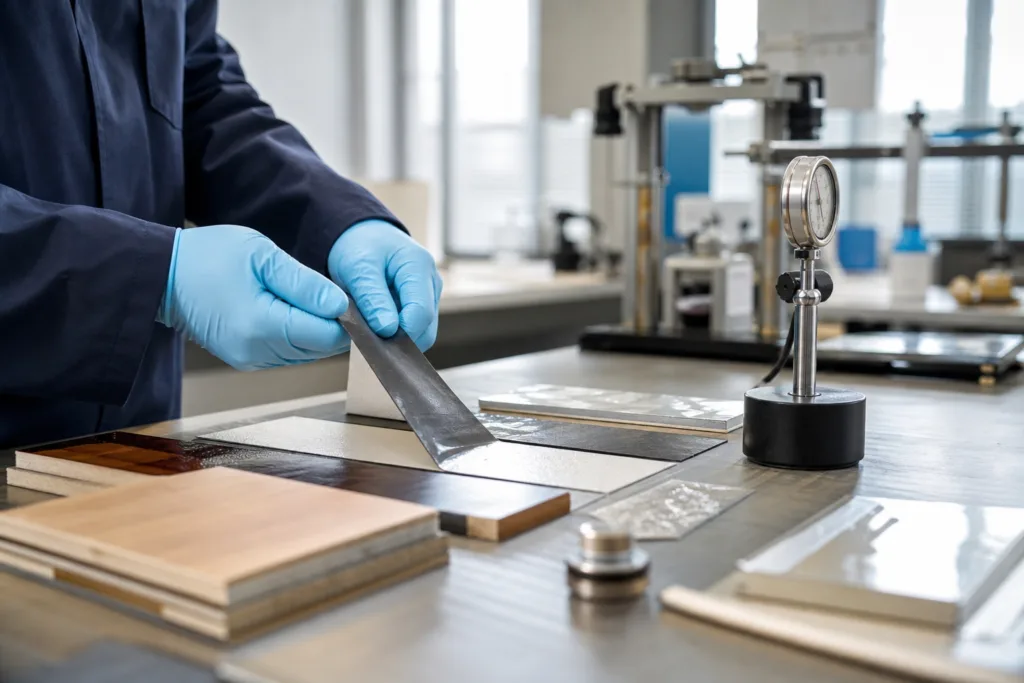
Solvent based adhesive systems continue to matter because manufacturing is still full of jobs that need quick wet-out, strong initial tack, large-area bonding, and practical handling speed. They are not the answer for every program, especially where emissions or fire risk are tightly constrained, but they remain a valuable option when the workflow rewards controlled evaporation and dependable contact bonding.
For engineers and buyers, the right approach is to evaluate the substrate, the assembly window, the safety requirements, and the production environment together. When that is done well, solvent systems can outperform newer options in real factory conditions, not because they are old, but because they are well matched to the process.
From our adhesive manufacturing perspective, the best results come from sample testing, process review, and honest discussion about tradeoffs. That is how we support industrial buyers who need an adhesive choice that performs on the line, not just on paper.
FAQs
What is a solvent based adhesive used for?
A solvent based adhesive is commonly used for contact bonding, lamination, trimming, upholstery, footwear, appliance parts, and other assembly tasks that need strong initial tack and good wetting. It is especially useful when the process benefits from fast handling and a flexible bond line.
Is solvent based adhesive still used in modern factories?
Yes. It is still used where process speed, wet-out, and contact bonding behavior are important and where the plant can manage ventilation, flammability, and VOC requirements. Many modern factories continue to use it alongside water-based, hot melt, UV, and reactive systems.
What are the main drawbacks of solvent based adhesive?
The main drawbacks are VOC emissions, odor, flammability, and the need for proper ventilation and safety controls. It can also be sensitive to flash-off timing, so poor process control may cause blistering, weak tack, or trapped solvent.
How do I know if a solvent based adhesive fits my substrate?
The safest way is to test it on the exact material pair, surface condition, and production method you plan to use. Substrate type, contamination, porosity, coating, and surface energy all affect performance, so a good lab result alone is not enough.
Can solvent based adhesive be customized for production needs?
Yes. In many cases the formula can be adjusted for viscosity, tack development, open time, odor profile, or application method. Customization should be based on real sample trials and the actual line conditions, not just a generic specification sheet.
What should buyers ask a manufacturer before ordering?
Buyers should ask for TDS data, sample testing support, recommended surface preparation, flash-off guidance, shelf life, storage conditions, packaging options, and MOQ details. These questions help confirm whether the adhesive fits both the technical requirement and the production plan.