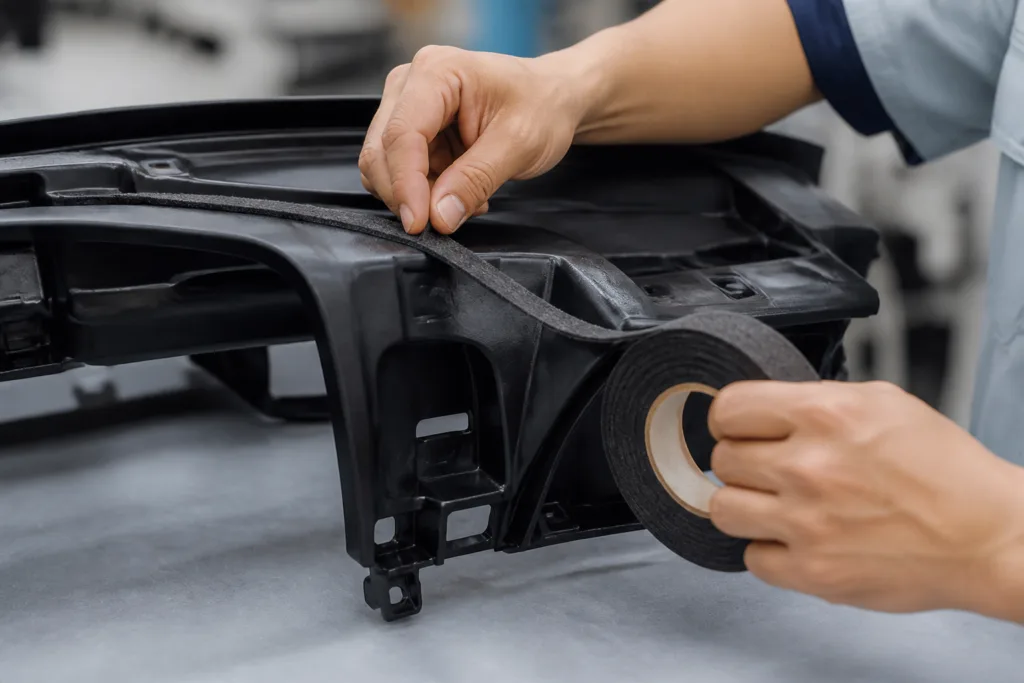
Silicone rubber is a useful material when a design needs heat resistance, elasticity, weatherability, and long-term movement tolerance, but it is also one of the most difficult surfaces to bond reliably. That is why many projects that start with a simple request for rubber silicone glue end up needing a broader process review: substrate compatibility, surface contamination, cure mechanism, and whether the bond must survive vibration, moisture, or thermal cycling in production.
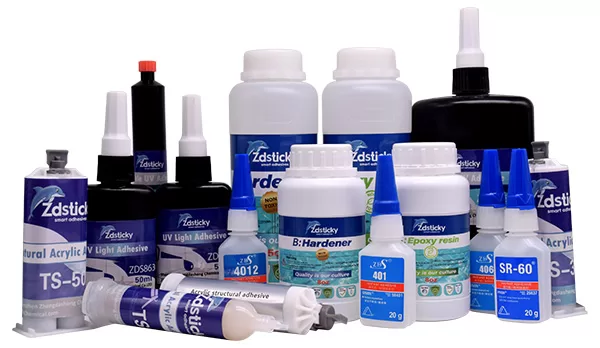
For teams facing recurring silicone bonding failures, our primer-assisted bonding strategies discussion is a useful starting point because the same manufacturing logic applies: when a surface resists wetting or chemical interaction, the solution is often a combination of preparation, primer, and adhesive family selection rather than a single product choice. At ZDS Adhesive, we approach these projects with formulation support, sample evaluation, and production-minded testing so buyers can move from trial bonds to a stable process window.
What Makes Silicone Rubber Difficult to Bond
Silicone rubber is flexible, chemically stable, and often low in surface energy. Those traits are valuable in service, but they make adhesion harder during assembly. Many conventional adhesives wet silicone poorly, especially if the part carries mold release, processing oils, dust, or fingerprints. Even when an adhesive initially appears to grab the surface, the bond may fail later under peel, temperature swing, or cyclic movement because the interface never developed enough true adhesion.
The practical challenge is that silicone is not only “hard to stick” in a generic sense. It is hard to bond for specific physical reasons:
- Low surface energy: liquid adhesive may bead instead of spreading.
- Flexible substrate behavior: the joint can peel apart more easily than a rigid joint.
- Contamination sensitivity: small amounts of release agent can defeat bonding.
- Wide service conditions: silicone is often used where heat, humidity, or motion are high, which exposes marginal bonds quickly.
From a manufacturing perspective, this means the best adhesive for silicone is not chosen by chemistry name alone. It is chosen by substrate, joint design, cleaning method, movement level, and whether the process can tolerate primer or surface treatment.
Where Silicone Bonding Is Commonly Used in Industry
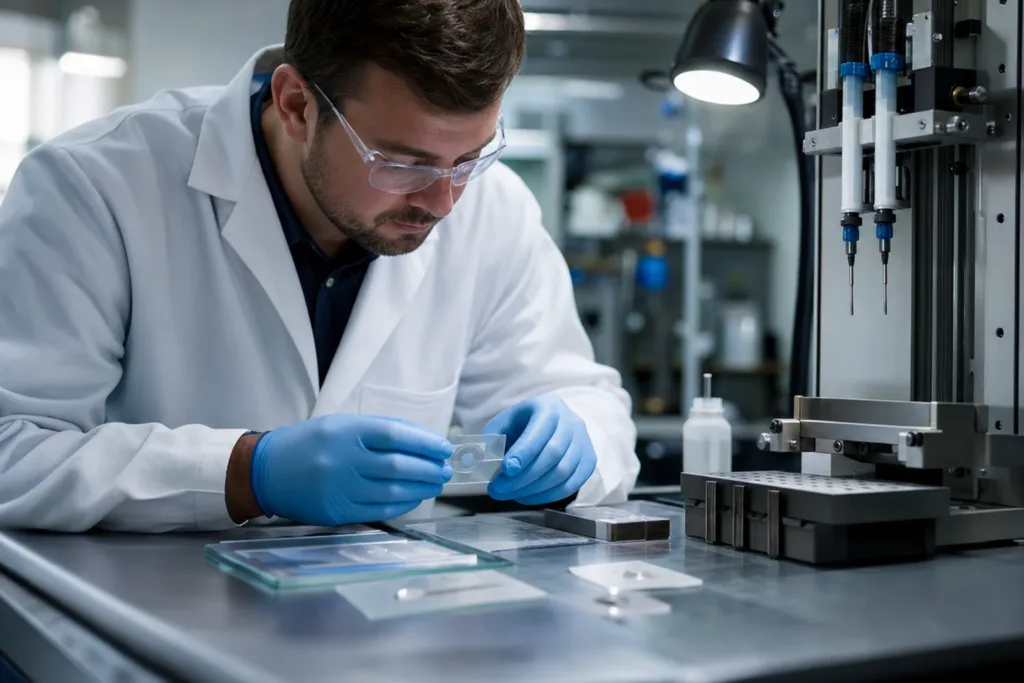
We see silicone rubber bonding requirements across electronics, appliance, lighting, automotive components, industrial enclosures, and general equipment assembly. Typical examples include sealing silicone gaskets, attaching silicone pads, bonding soft-touch parts, fixing cable management features, and joining silicone to glass, metals, plastics, or coated substrates.
In electronics and protection applications, the bond often must remain flexible while also resisting heat, moisture, and electrical stress. In those cases, adhesive choice cannot be separated from the service environment. A product that works in a room-temperature prototype may fail in a warmed, enclosed assembly that sees long dwell times or repeated expansion and contraction. For component protection workflows, our silicone-based protection materials article shows how silicone systems can be engineered for cushioning and environmental stability rather than only for structural strength.
Some silicone joints are structural enough to support load, but many are primarily functional: they seal, isolate, cushion, or locate parts. That difference matters because a flexible bond that survives service may look unimpressive in a quick bench test. We encourage buyers to define whether they need peel resistance, gap filling, sealing, or durable load transfer before comparing products.
What the Best Glue for Silicone Really Depends On
There is no universal “best glue” for silicone rubber. A better question is which adhesive family, surface preparation method, and cure profile fit the application. Silicone rubber glue selection usually depends on five practical factors:
| Decision Factor | Why It Matters | Typical Engineering Question |
|---|---|---|
| Substrate pair | Silicone-to-silicone behaves differently from silicone-to-metal or silicone-to-plastic. | What are we bonding to the silicone? |
| Movement requirement | Flexible joints need adhesives that tolerate peel and elongation. | Will the joint flex, twist, or vibrate? |
| Service environment | Heat, humidity, chemicals, and UV exposure change bond durability. | What will the joint see in use? |
| Processing window | Viscosity, open time, and fixture time affect production speed. | Can the line dispense and cure this adhesive? |
| Validation method | Real testing is needed to confirm the process, not just the chemistry. | How will we prove the bond is stable? |
If the answer to those questions is unclear, adhesive trial failure is common. In our formulation and production work, we often find that the “wrong adhesive” was actually the wrong combination of prep, cure, and joint design for the part being assembled.
Comparing Adhesive Families for Silicone Rubber Bonding
Different adhesive families can bond silicone in different ways, but each comes with trade-offs. For example, cyanoacrylates may cure quickly and look attractive for small repairs, yet they often offer limited flexibility and may be sensitive to peel stress. Epoxies can provide strong bonding to many rigid substrates, but they are usually less forgiving on flexible silicone joints unless the design minimizes movement. Polyurethanes can balance toughness and flexibility, while acrylic systems can offer process advantages in some industrial assemblies. Silicone adhesives, in turn, often match silicone’s movement and thermal behavior better than rigid chemistries.
When buyers ask for rubber silicone glue, we usually start by clarifying whether they need a true silicone adhesive, a general-purpose structural adhesive with a primer, or a flexible sealant-style bond. The answer depends on the required balance of peel resistance, cure speed, and temperature tolerance.
For higher temperature service, the chemistry choice becomes even more important. Our high-temperature RTV silicone applications article is relevant because RTV silicone systems are often selected when the joint must remain flexible after cure and continue performing in elevated temperature environments. That is a different design goal from a rigid structural bond.
Silicone Adhesives vs Epoxy, Polyurethane, Acrylic, and Cyanoacrylate
Silicone adhesives are usually the most natural fit when flexibility, heat resistance, and long-term movement are priorities. They are often preferred for sealing, gasketing, and bonding surfaces that expand and contract.
Epoxy can be useful when the silicone is only one part of a hybrid assembly and the bond line can be designed to reduce peel. Epoxy is less forgiving when continuous flexing is involved.
Polyurethane often offers a useful middle ground for toughness and flexibility, especially in assemblies that need impact resistance or moderate movement.
Acrylic can support fast industrial assembly in some cases, but compatibility with silicone is not automatic. Adhesion promoter use may be needed, and trial testing is essential.
Cyanoacrylate is useful for quick repair-style bonds or small contact areas, but it can become brittle and may not hold up well where silicone flexes repeatedly.
For low-surface-energy substrates and difficult interfaces more broadly, our adhesion promoters for low-surface-energy substrates article explains why promoters can change the success rate of a bond by improving wetting and interfacial interaction. That principle matters on silicone too, especially where the substrate has been molded, released, or handled before bonding.
How Surface Preparation Affects Silicone Adhesion
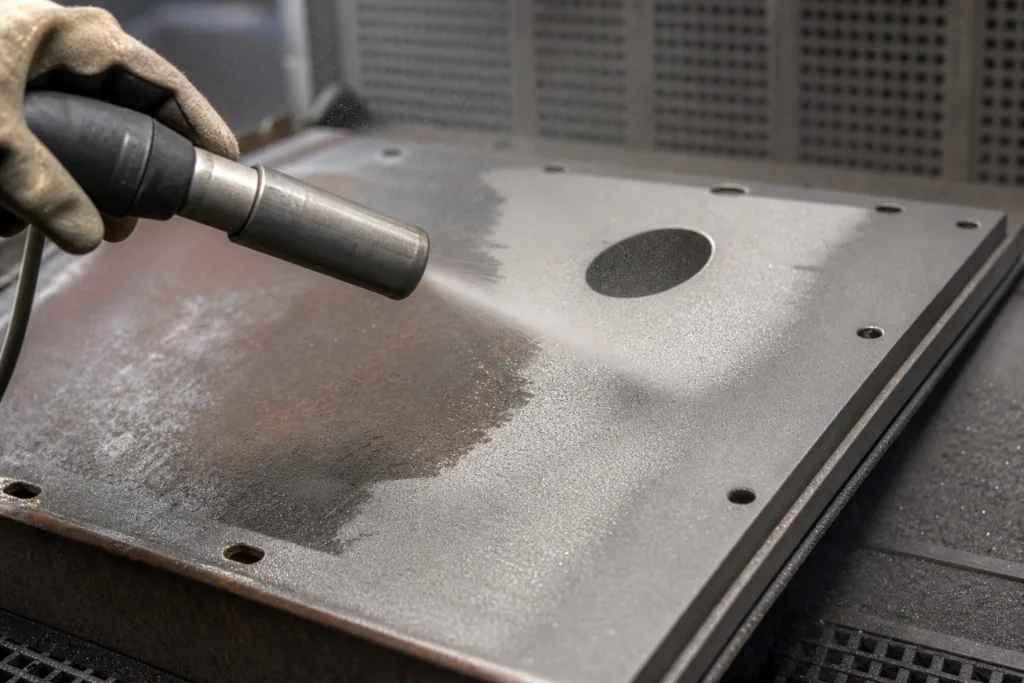
Surface preparation is often the biggest variable in silicone bonding. If a silicone part is not clean, dry, and free from release agents, no adhesive family can fully compensate. This is why surface prep should be treated as a manufacturing step, not a cleanup step.
At minimum, the surface should be inspected for visible dust, oils, mold release, and any residue from previous processing. Solvent wiping may help, but only if the solvent is appropriate, the cloth is clean, and contamination is not redistributed. In some cases, abrasion can improve mechanical keying, but abrasion alone does not solve low surface energy. It can even create debris if the process is not controlled.
Surface treatment is important because it changes how the adhesive wets the substrate. A well-prepared surface typically gives the adhesive a better chance to spread uniformly and create a more stable interface. In our application support experience, the strongest silicone bond improvements often come from a combination of cleaning plus activation, not from either step alone.
For a deeper practical explanation of cleaning and pretreatment, the Surface Preparation before Bonding Silicone guidance from 3M is useful because it reinforces a basic production truth: contamination control and pretreatment discipline matter as much as adhesive choice.
Cleaning, Degreasing, Plasma Treatment, Corona Treatment, and Abrasion
Cleaning and degreasing remove oils and processing residue. For silicone, this is essential because invisible contamination is often enough to cause bond failure.
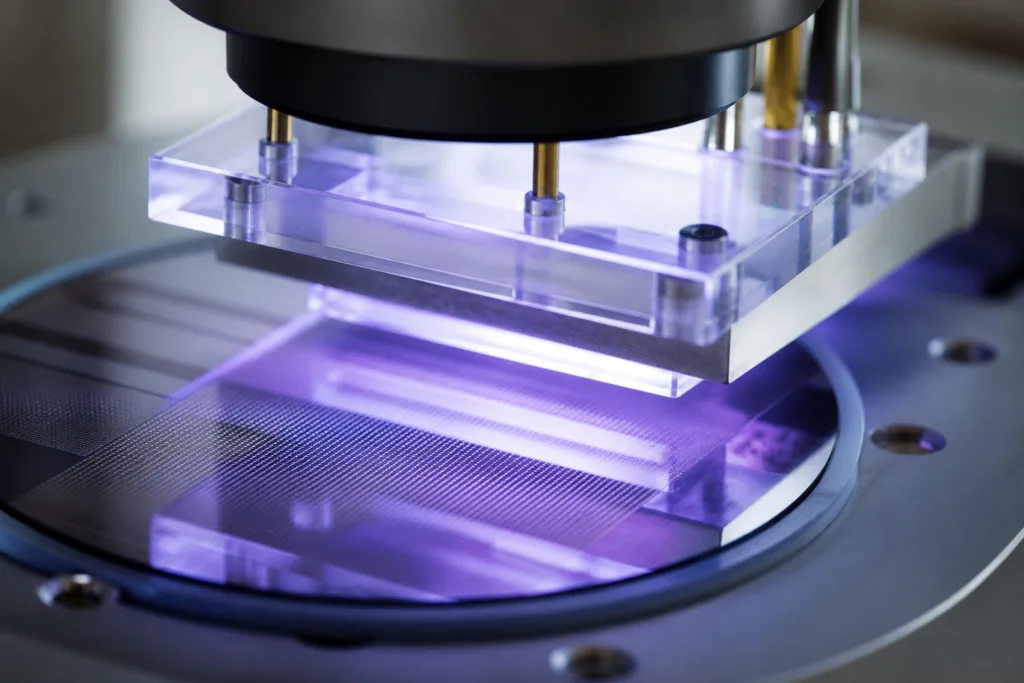
Plasma treatment and corona treatment can improve surface chemistry, not just texture. They are valuable when the production line can support the equipment and when the substrate geometry allows even treatment. Research from How Plasma Treatment Improves Bondability shows the broader principle that activation can introduce polar functional groups and improve interfacial adhesion on low-energy polymer surfaces.
Abrasion can help when the joint allows it, but on soft silicone it must be done carefully to avoid damaging the part or creating uneven contact. Abrasion is usually a support step, not a standalone solution.
From a process-control standpoint, the goal is repeatability. One part that bonds well does not prove the process is good. The line needs a repeatable prep method that can be performed at the same quality over many cycles.
When and Why Silicone Primers Improve Bond Strength
Primers are often used when the base surface is difficult, when long-term reliability is required, or when the adhesive chemistry needs help establishing a strong interface. A primer is not a universal cure, but it can expand the adhesive’s usable window and make bonding more consistent.
Primers are especially important when bonding silicone to metal, glass, or certain plastics, or when the part may see heat and humidity over time. They are also useful when a line needs to stabilize performance across batches with slight variations in molding or cleaning quality.
In practical terms, primer selection should be treated as part of the adhesive system. We recommend evaluating adhesive plus primer together rather than separately, because a good adhesive can underperform if the primer is mismatched, overapplied, or not fully flashed before assembly.
For some substrate combinations, the need for primer is obvious only after real testing. Visual inspection can be misleading because a joint may look fine right after cure and then fail after aging, heat exposure, or repeated flexing.
How to Choose the Right Silicone Rubber Glue Adhesive for Your Application
The right product depends on whether the joint is structural, sealing, insulating, cushioning, or repair-oriented. In our project reviews, we usually ask buyers to clarify six things before recommending a direction:
- What is the substrate pair? Silicone to silicone is not the same as silicone to aluminum, glass, PCB, or plastic.
- How much movement will the joint see? Higher movement usually favors flexible chemistries.
- What is the temperature range? Elevated heat may rule out some fast-bonding options.
- Will the joint see moisture or chemicals? This changes the long-term durability target.
- How fast must production move? Open time and fixture time affect throughput.
- Is the bond visible or cosmetic? Clarity, bloom risk, and appearance may matter.
That is why the phrase “best glue for silicone” is only meaningful after the application is defined. A repair adhesive for a consumer part may be entirely different from an industrial bond for an enclosure or sensor module. In a production setting, the right answer often involves balancing cure time against line speed and service durability.
When the joint includes glass or transparent surfaces, visual appearance can become just as important as adhesion. Our clear silicone adhesive selection guide is relevant for those cases because optical clarity, bubble control, and edge appearance can influence product acceptance as much as bond strength.

Silicone Repair Adhesive vs Industrial Bonding Adhesive
A repair adhesive is usually chosen for convenience, speed, or spot fixing. It may be acceptable for maintenance use, noncritical sealing, or small consumer repairs. An industrial bonding adhesive, by contrast, must support repeatability, shelf-life control, packaging consistency, and production QC.
For procurement teams, this distinction matters. A product that works for manual repair may not be suitable for automated dispensing or high-volume assembly. Likewise, an adhesive that looks attractive on price may create hidden cost through rework, poor yield, or process delays.
Application Methods That Improve Bonding Success
Even a suitable adhesive can fail if the application method is inconsistent. Silicone bonding success depends on how the adhesive is dispensed, how much is applied, whether the joint traps air, and whether the cure is allowed to complete without disturbance.
We recommend a controlled process with defined bead size, defined assembly timing, and a consistent cure environment. If the adhesive is too thin, it may not bridge gaps effectively. If it is too thick, it may trap air or slow cure. If the parts are moved before fixture strength develops, the bond interface may be weakened before the chemistry has fully established.
For production lines, dispensing control is often as important as formula choice. Our dispensing setup for silicone adhesives article is useful for manufacturers planning nozzle selection, flow control, and automated application. Stable dispensing reduces operator variation and helps the line achieve more consistent bond lines.
For repeatable bonding, the same idea applies to equipment setup. When a process requires exact bead placement or volume control, our precision dispensing equipment for repeatable bonding content shows why controlled delivery is a quality issue, not just a convenience issue.
Dispensing, Gap Filling, Cure Conditions, and Fixture Time
Dispensing should match the adhesive’s viscosity and the part geometry. A low-viscosity adhesive may spread well but run on vertical surfaces. A higher-viscosity adhesive may hold shape better but need more force to dispense.
Gap filling matters because silicone parts are often flexible and not perfectly flat. A small, controlled gap can improve wetting and reduce stress concentration, while an oversized gap can reduce effective bond quality if the adhesive is not designed for it.
Cure conditions must be matched to the chemistry. Room-temperature cure systems are convenient, but they need enough time and suitable environment. Heat-cure systems can improve throughput but require oven access and thermal stability of the assembly. Moisture-cure systems may be practical for certain sealants, but they need a realistic understanding of cure depth and ambient humidity.
Fixture time should be based on actual handling needs. If the part will be moved, stacked, or packaged too early, the bond can be compromised even if the final cure would have been adequate.
Testing Methods to Validate Silicone Adhesion
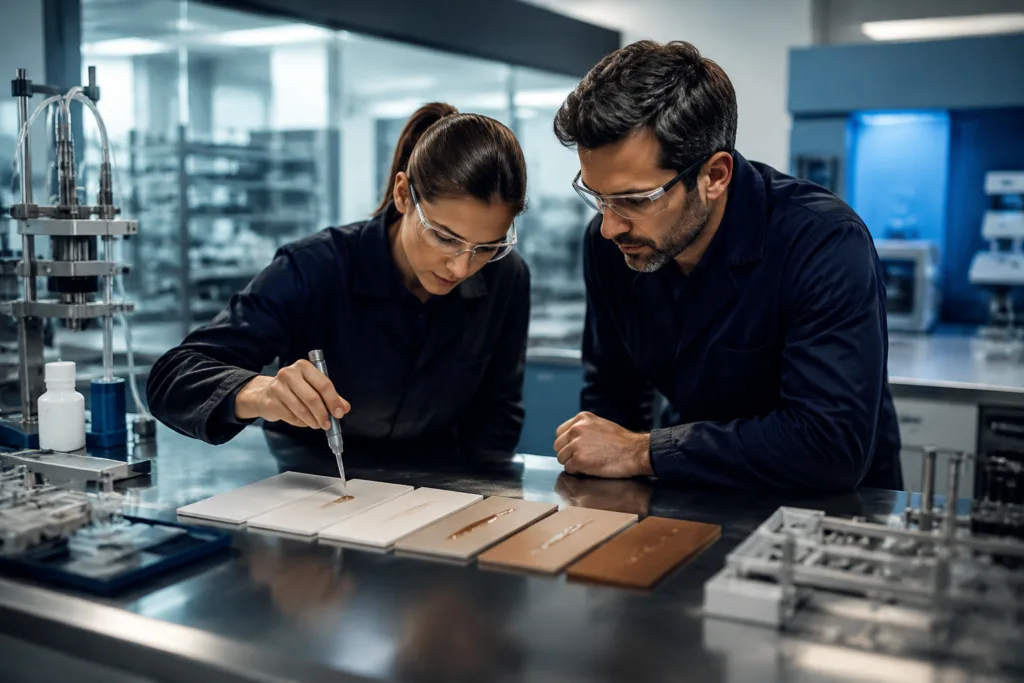
Validation should be built into the project from the beginning. We do not recommend approving silicone bonding based only on a quick finger test or a simple visual check. Instead, use tests that reflect the actual failure mode you care about.
A peel-oriented test is often more informative for silicone because flexible substrates frequently fail by peeling rather than by clean tensile break. Standardized testing helps compare formulations, primers, and surface treatments on an apples-to-apples basis. For that reason, the ASTM peel frameworks such as How to Validate a Silicone Bond and Primer and Sealant Qualification Testing are useful references when teams want a controlled qualification path instead of informal evaluation.
In our view, testing should cover both initial bond and aged bond. A strong fresh bond is useful, but the real question is whether the joint remains stable after heat exposure, moisture exposure, or repeated movement. If the bond is part of a finished product, the validation package should also consider the manufacturing sequence, because post-bond handling can change the result.
Recommended validation checks include:
- Initial adhesion after full cure
- Peel resistance on the real substrate pair
- Aged performance after heat or humidity exposure
- Visual inspection for voids, bubbles, or edge lift
- Process repeatability across more than one batch
Common Silicone Bonding Failures and How to Fix Them
Most silicone bonding problems fall into a few repeatable patterns. The most common is adhesive failure at the interface, which usually points to contamination, poor wetting, or a mismatched adhesive system. Another common failure is cohesive failure within the adhesive, which may indicate the adhesive is too brittle, the joint is too highly stressed, or the cure is incomplete.
A third failure mode is delayed failure after environmental exposure. This often appears when the bond passes an initial shop test but cannot survive aging. The fix is usually not a single new adhesive but a better definition of the service environment, a revised surface prep method, or a primer that stabilizes the interface.
Other issues include air entrapment, excessive bond line thickness, and uneven cure in deep or shaded areas. For these cases, application technique is often the real solution. If the adhesive chemistry is appropriate but the geometry is difficult, a dispensing or cure change can improve yield without changing the product.
When low-bloom or cure behavior matters in small-part assembly, our low-blooming cyanoacrylate chemistry article can help buyers understand why appearance-sensitive projects need careful adhesive selection, even when the bond area is small. That principle is relevant when silicone parts sit near optics, sensors, or cosmetic surfaces.
Choosing a Manufacturer or Supplier for Silicone Bonding Projects
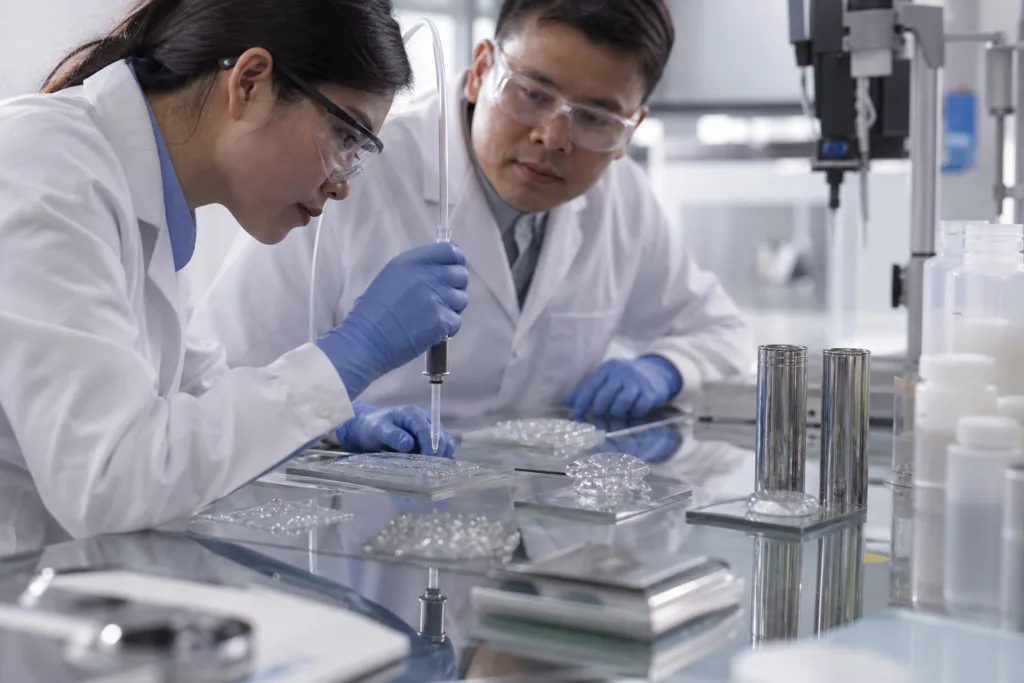
For buyers, the supplier decision is not only about chemistry. It is about whether the manufacturer can support the process from sample stage to bulk production. Silicone bonding projects often need iterative adjustments in viscosity, cure profile, or primer compatibility, so communication speed and technical discipline matter.
At ZDS Adhesive, we advise procurement and engineering teams to ask three questions: Can the supplier explain the failure mode? Can they support trial formulations or sample changes? Can they keep the same quality in bulk production? Those answers matter more than a generic product claim.
It also helps to evaluate packaging and application fit early. A formula that works in a small test cup may not be practical if the line needs cartridges, pails, or automated feed. Likewise, storage stability, shelf life, and batch-to-batch consistency should be discussed before approval, not after field issues appear.
In many projects, the strongest choice is a manufacturer that can adjust the formulation to the job. That may mean changing cure speed, wetting behavior, elasticity, or viscosity to better match the assembly line and the end-use environment.
Custom Formulation, Sample Testing, MOQ, and Production Consistency
Custom formulation is often worthwhile when the silicone part, substrate pair, or processing method is unusual. For example, a line may need a slower open time for manual placement, a faster fixture time for automation, or better heat resistance for an enclosure that runs warm in service. In these cases, a standard product may not be enough.
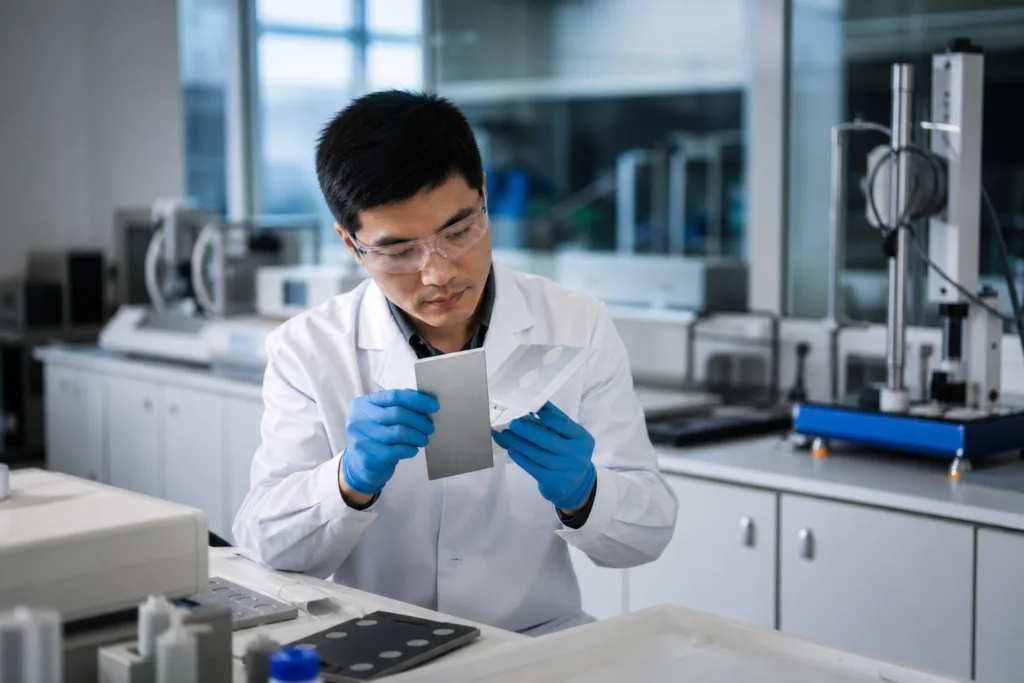
Sample testing should be part of the commercial decision, not an afterthought. We recommend comparing at least two candidate approaches if the application is new: one baseline option and one process-focused option with primer or pretreatment. That gives the team a clearer view of cost-performance trade-offs.
MOQ and lead time should also be evaluated realistically. A product that appears inexpensive but forces excess inventory can be more costly than a slightly higher-priced formulation supplied in the right packaging and lot size. For OEM and private label buyers, consistency in packaging, labeling, and batch traceability can be as important as the adhesive performance itself.
From our adhesive manufacturing perspective, the strongest silicone bonding projects succeed when engineering and procurement work together early. Engineering defines the bond requirement; procurement confirms supply conditions; and the manufacturer helps align chemistry, process, and testing before full-scale rollout.
Conclusion

Silicone rubber is difficult to bond because it combines low surface energy, flexibility, and contamination sensitivity. That does not make reliable adhesion impossible; it means the process must be designed carefully. The right rubber silicone glue is the one that fits the substrate pair, movement level, temperature exposure, and production method, while also being validated with realistic testing.
For manufacturers and B2B buyers, the most practical path is usually: clean the part thoroughly, consider activation or primer when needed, choose an adhesive family that matches the service conditions, and verify the result with standardized testing and production trials. When those steps are handled together, silicone bonding becomes a controlled process instead of a recurring problem.
FAQs
What is the best glue for silicone rubber?
The best glue for silicone rubber depends on the substrate pair, how much movement the joint will see, and the service environment. Flexible silicone adhesives are often the most practical for silicone-to-silicone or high-movement joints, while other families may work better on hybrid assemblies with primers or surface treatment.
Can silicone rubber be bonded without a primer?
Yes, in some cases, but the result depends heavily on cleanliness, surface energy, and the adhesive chemistry. For demanding applications or difficult substrates, a primer often improves consistency and can reduce the risk of early interface failure.
Is silicone adhesive good for high-temperature applications?
Silicone adhesive is commonly chosen for high-temperature service because it remains flexible after cure and can tolerate heat better than many general-purpose adhesives. The exact fit still depends on the specific formulation and the full operating temperature profile.
How do I test whether a silicone bond is strong enough?
Use application-relevant tests rather than only visual inspection. Peel testing, aging tests, and environmental exposure checks are useful because silicone joints often fail by peeling or by delayed interface weakness after heat or moisture exposure.
Why does silicone adhesive fail even after surface cleaning?
Cleaning removes one problem, but it does not always solve low surface energy or the need for activation. If failure continues after cleaning, the project may need plasma treatment, corona treatment, a primer, or a different adhesive family.
Can ZDS Adhesive help with custom silicone bonding formulas and samples?
Yes. We support sample evaluation, technical adjustment, custom formulation, and bulk production planning so buyers can match the adhesive system to their bonding process, packaging needs, and performance targets.