Introduction: Why Vibration Resistant Bonding for Radar Brackets Matters in 2026
From advanced driver-assistance systems (ADAS) to aerospace radar arrays, radar brackets are mission-critical components. They anchor sensors that scan the world—while enduring relentless shock, vibration, moisture, and extreme temperatures. In both automotive and aerospace fields, poor mounting leads to sensor drift, false alarms, and even catastrophic failures. This is where vibration resistant bonding for radar brackets shines. Today, we’ll explore how specialized adhesives and robust bonding technology create resilient, long-lasting radar mounts ready for dynamic real-world conditions.
The Structural Demands Placed on Radar Brackets
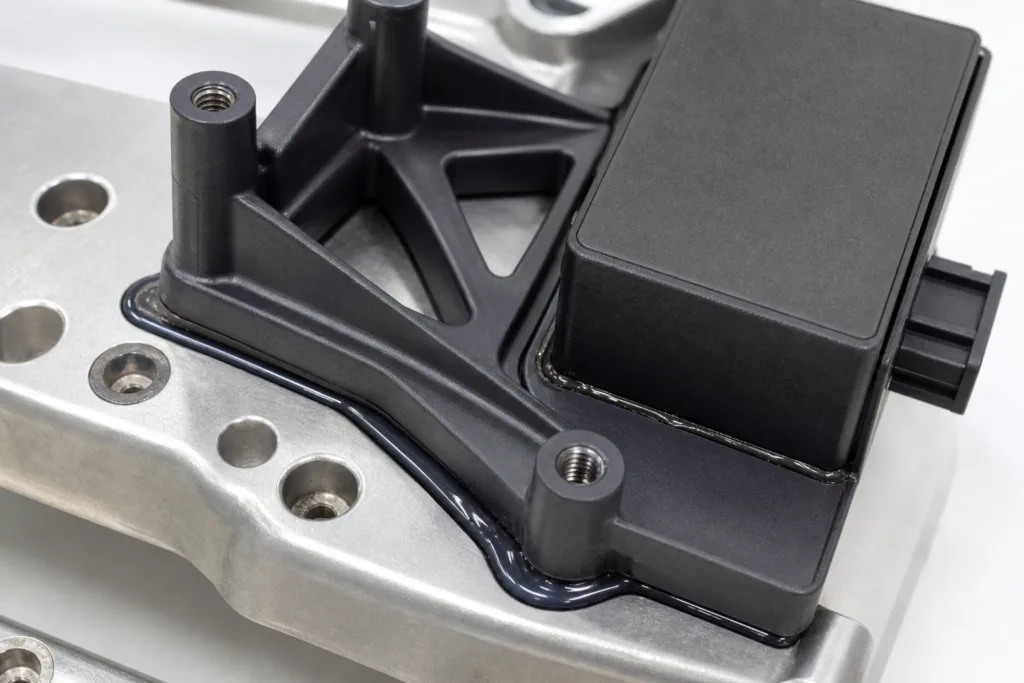
Modern radar brackets must survive countless life cycles of road bumps, engine vibrations, wind shear, thermal shocks, and rapid deceleration. These brackets often support heavy sensors—sometimes weighing several kilograms—on thin metal and composite arms. The wrong bonding solution means joint fatigue, microcracks, delamination, or bracket “creep,” risking the radar’s alignment and functionality.
Understanding Vibration Resistance in Bonding Applications
Vibration resistance isn’t just about adhesive strength—it’s about how a bond dissipates, absorbs, and distributes kinetic energy across cycles. In radar assemblies, designers prioritize:
- Shear Strength: Resistant to lateral forces during operation
- Peel Strength: Handling edge-lifting during shocks
- Fatigue Life: Enduring millions of vibration cycles
- Environmental Stability: Remaining intact through moisture, salt, and UV exposure
The right adhesive creates a ductile, tough bondline, countering common failure modes like adhesive brittleness or cohesive cracking.
Key Properties of Vibration Resistant Adhesives
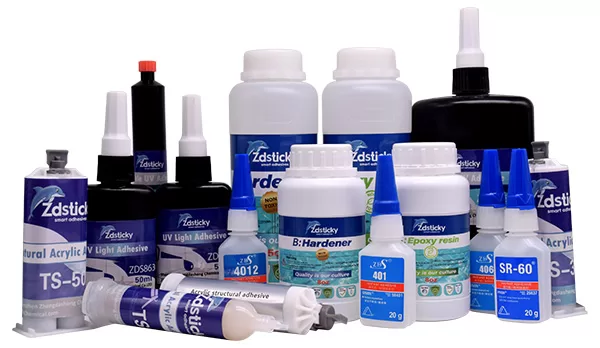
Companies like ZDS Adhesive, an industrial adhesive manufacturer, specify adhesives by measuring several key parameters:
- Lap shear strength and peel strength on metal, plastic, and composite substrates
- Glass transition temperature (Tg) —higher Tg means greater resistance to cyclic thermal stress
- Elongation at break (desired: moderate for energy absorption, not too rigid)
- Cure mechanism: Room temperature, heat cure, UV, or moisture cure
- Dynamic mechanical analysis (DMA): Predicts real-world cyclic loading performance
- Resistance to environmental agents: Corrosive fluids, salt spray, humidity
Major Types of Adhesives for Radar Bracket Bonding
There is no universal adhesive—selection depends on mounting geometries, materials, and operational requirements. The dominant options include:
- Epoxy Adhesives: Industry standard for structural rigidity—offers excellent lap shear, temperature stability, and chemical resistance. Commonly used for metal and composite brackets; best for permanent joints (Epoxy Resin Adhesives 101).
- Polyurethane (PU) Adhesives: More flexible; absorbs shock and reduces stress concentration; suitable for dissimilar substrates or substrates with mismatched coefficients of thermal expansion; example: plastic-to-metal joints. Learn more in our PU Adhesives Guide.
- Silicone Adhesives: Survive extreme temperature swings, resist UV and moisture; often used in outdoor radar applications.
- Acrylic Adhesives: Fast cure, moderate toughness, sometimes used for assembly-line speed and bonding hard-to-wet plastics.
- Hybrid and Toughened Adhesives: Combine chemistries for optimal toughness and fatigue resistance.
How Do Epoxy, Polyurethane, and Silicone Adhesives Compare?
| Property | Epoxy | Polyurethane | Silicone |
|---|---|---|---|
| Shear Strength | High | Moderate | Moderate |
| Peel Strength | Moderate | High | Low |
| Flexibility | Low–Moderate | High | Very High |
| Temperature Resistance | High | Moderate | Very High |
| UV/Weatherability | Moderate | Good | Excellent |
| Cure Time | Minutes–Hours | Minutes–Hours | Minutes–Hours |
| Common Use | Metals, composites | Mixed substrates | Outdoor brackets |
Critical Considerations When Bonding Different Substrate Materials
Many radar brackets use mixed materials—stainless steel, aluminum, glass-filled nylon, reinforced composites—often in the same assembly. Key problems include:
- Low surface energy plastics (PP, PE) resist wetting; require specialty adhesion promoters. Read how Adhesion Promoters Improve Bonding on PP, PE.
- Corrosion risk: Some adhesives react with bare aluminum; always check compatibility.
- Cure shrinkage: Thick adhesive sections may pull on bracket edges; opt for low-shrinkage or flexible formulas when possible.
The Role of Surface Preparation in Vibration Resistance
Regardless of the adhesive chosen, durable bonds begin with proper surface prep. Best practices include:
- Degreasing with isopropanol or specialty wipes
- Abrasive cleaning (scotch-brite pads, sandblasting, or plasma treatment for plastics)
- Application of adhesion promoter or primer for low energy plastics and metals
Failing to prepare surfaces is one of the leading causes of in-field adhesive failure—especially in high-vibration use cases.
Best Practices in Adhesive Dispensing and Bondline Control
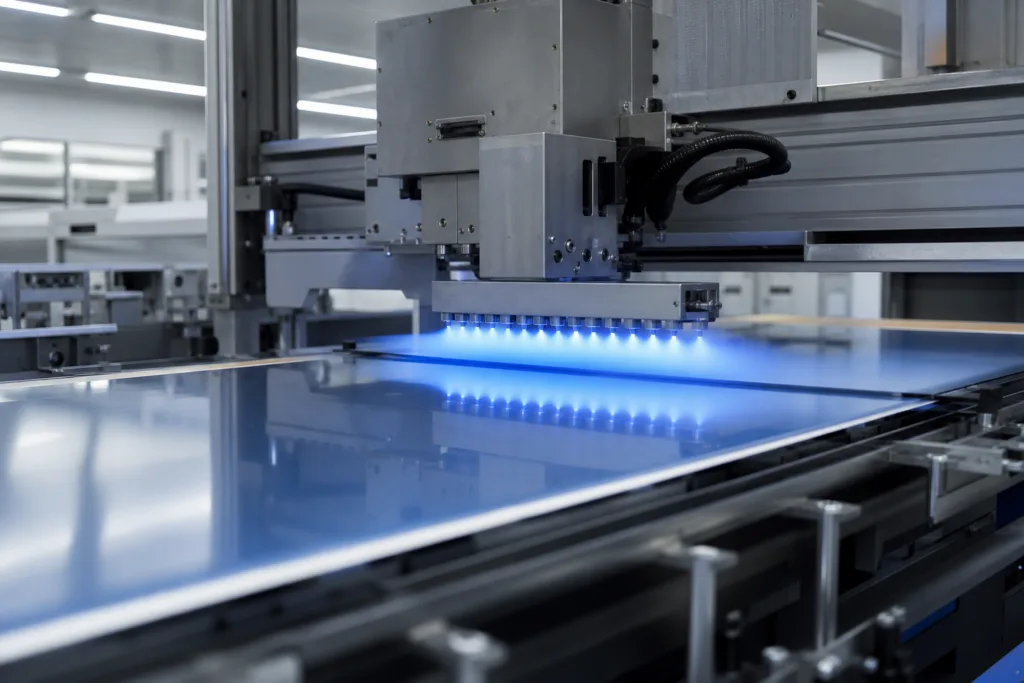
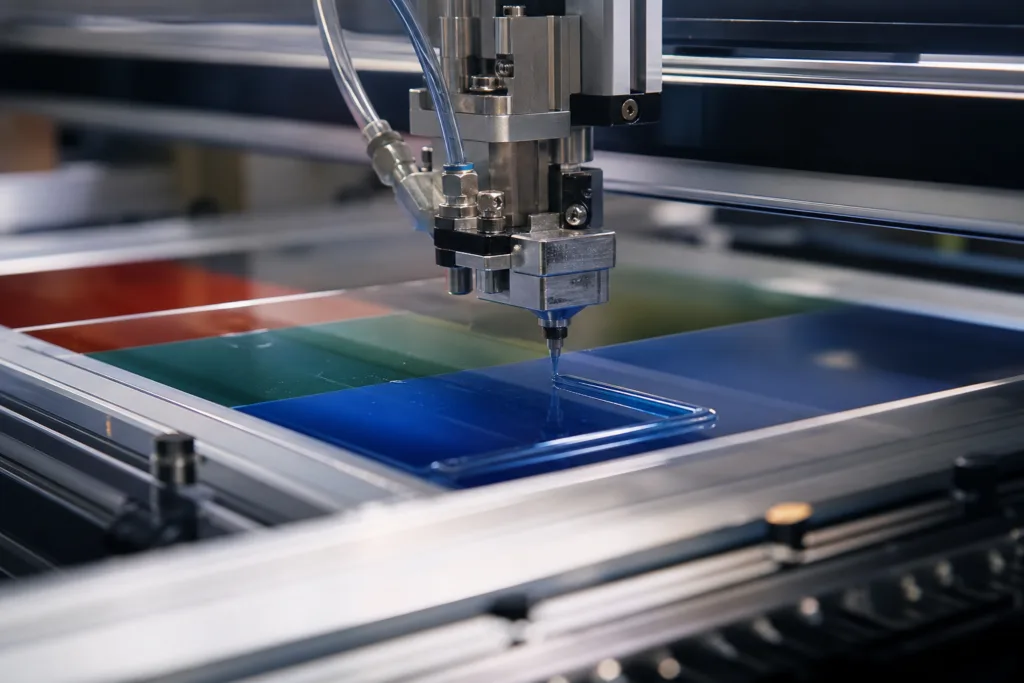
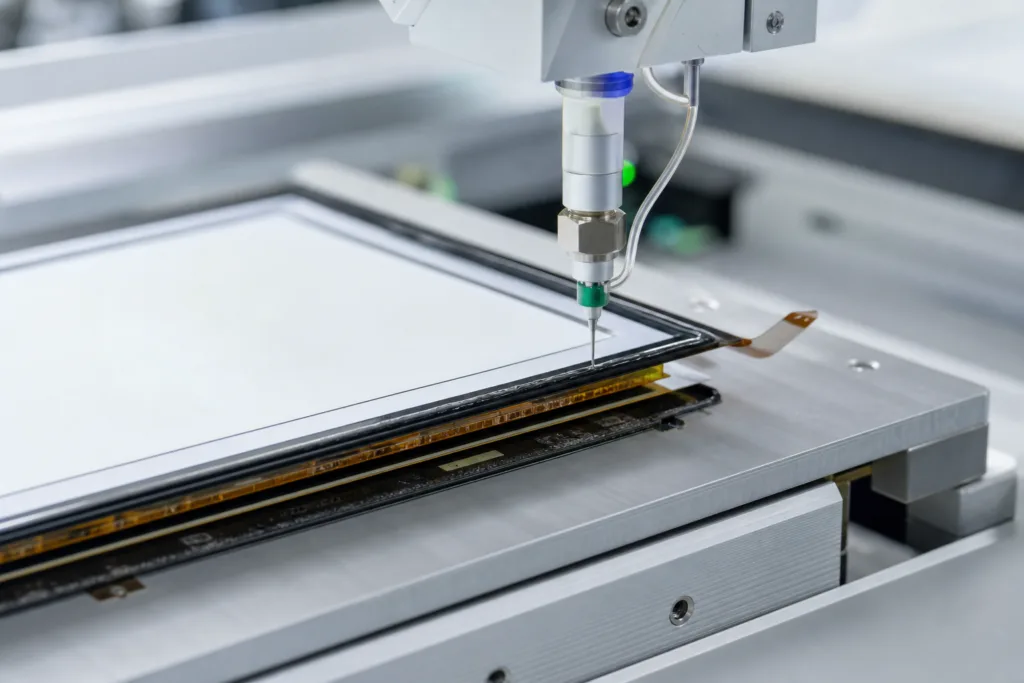
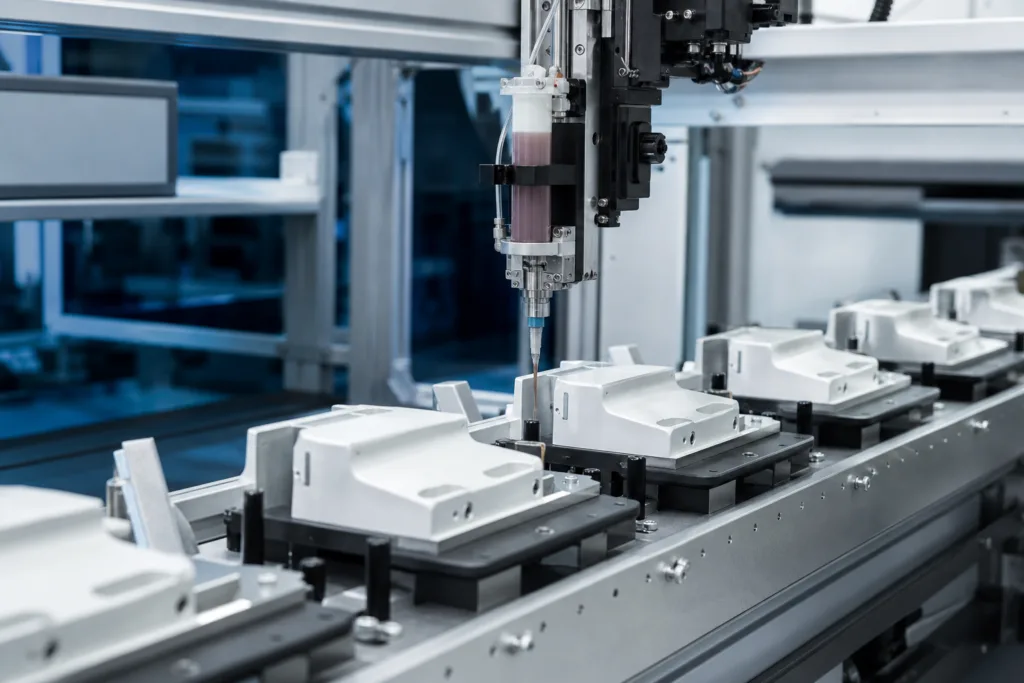
Successful vibration-resistant joints depend as much on the application process as on adhesive chemistry. Teams using Automated Adhesive Dispensing Systems consistently achieve better process control:
- Precise bead placement and uniform bondline thickness (critical for even stress distribution)
- No entrapped air bubbles—air voids lead to stress points and early failure
- Controlled cure conditions (time, pressure, humidity, or light)
Choosing the Right Adhesive for Automotive vs. Aerospace Radar Brackets
Automotive radar brackets often prioritize quick cycle times, high throughput, cost-efficiency, and tolerance of temperature cycling from -40°C to +125°C. Aerospace radar brackets, meanwhile, demand higher levels of vibration resistance, extreme environmental stability, outgassing control, and the ability to meet tight regulatory (DO-160, RTCA) or OEM standards.
Selection logic: For automotive, toughened one-part epoxies or 2K polyurethanes may suffice. For aerospace, two-part, high-Tg epoxies or specialty silicones often set the standard.
How to Test the Effectiveness of Vibration Resistant Bonds
Validating durability is essential. The industry standard tests include:
- Lap shear and peel test: Simulates real-world loading
- Fatigue vibration testing: Run at amplitudes and frequencies matching field conditions
- Environmental cycling: Expose assemblies to heat/cold, humidity, and corrosive atmospheres, then re-test joints
- Pull-off and torsion tests: For larger brackets or multi-point assemblies
Testing should align with the product’s use case and OEM validation rules.
Real-World Failures: What Can Go Wrong in Radar Bracket Bonding?
Typical problems caught during validation or field use:
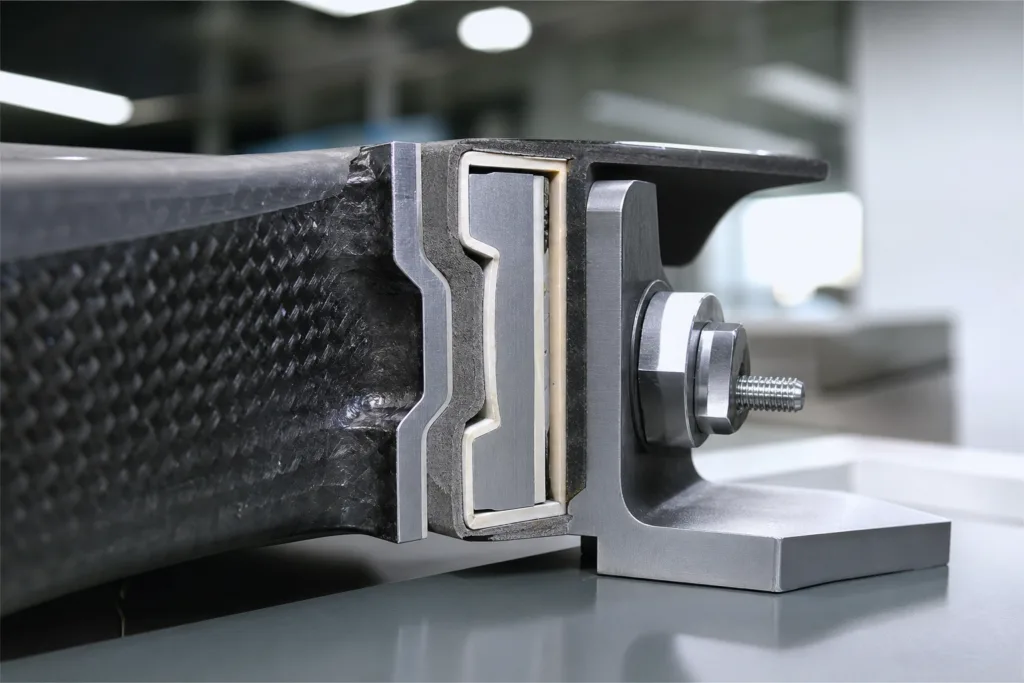
- Cohesive bond failures caused by too-thin glue lines, over-stressed joints, or unanticipated thermal cycles
- Adhesive separation from substrates due to poor prep or contamination
- Brackets deforming over time (creep) if adhesive isn’t suited to constant dynamic loads
- Environmental exposure: UV, salt, chemicals, or condensation breaking down the bondline
Adhesive Curing Mechanisms: How They Impact Vibration Resistance
The way an adhesive cures changes its performance envelope. Curing affects joint flexibility, stress distribution, and durability under vibration.
- Room temperature cure: Convenient for in-field assembly, but can require longer fixturing.
- Heat cure: Gives higher crosslink density and better thermal aging—ideal for large-scale or aerospace brackets.
- UV cure: Rapid, but limited by shadowing (not all joint geometries are suitable).
- Moisture cure: Allows bonding of uneven parts but requires humidity control.
Designing Bonded Joints for Maximum Fatigue Life
Engineers rarely rely on just adhesive spec sheets. Root cause prevention starts with smart bracket geometry and joint design:
- Favor wide-overlap, double-lap, or scarf joints to spread loads
- Avoid point loading and sharp internal corners
- Ensure bondline is neither too thin (brittle) nor too thick (risk of voids or shrinkage)
Testing prototypes with strain gauges during vibration cycles helps confirm stress is evenly distributed, minimizing risk of premature failure.
Potential Challenges in Vibration Resistant Bonding for Radar Brackets
Practical hurdles remain in every production line or field retrofit:
- Consistency from batch to batch of adhesive—control “pot life” carefully, especially in two-part systems (7 Must-Know Rules for Managing Pot Life).
- Ensuring joint accessibility—some radar brackets are in hard-to-reach spaces, so assembly processes need to be adaptable.
- Balancing speed and quality—fast cycles must not sacrifice complete cure or surface integrity.
- Reworkability in case of assembly errors—do you need a reversible solution?
How Environmental Conditions Affect Bond Durability
Environmental tests like salt spray, humidity aging, and freeze-thaw cycling are standard qualifiers. Some adhesives “blush” (surface whitening), exhibit microcracking, or lose cohesive strength if the wrong formulation is used. For instance, outdoor automotive brackets require strong UV and water resistance, making silicone or toughened epoxy preferred.
Case Study: Vibration Resistant Adhesives in Autonomous Vehicle Radar Integration
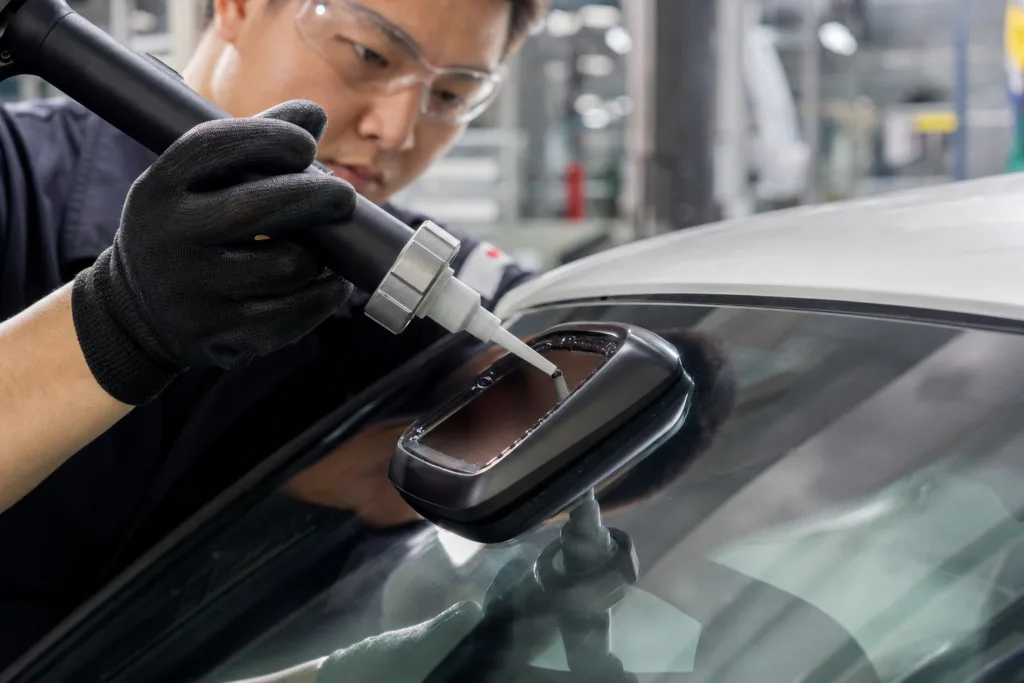
In recent ADAS rollouts, manufacturers have moved from mechanical fasteners to vibration resistant adhesives for radar brackets. Benefits observed:
- Reduced risk of sensor drift from vibration loosening screws
- Weight reduction in assemblies (no bolts/washers)
- Simplified assembly lines—fewer fastener tools needed
- Improved resistance to corrosion around mount points
Testing Standards and Specification Guidelines
Key standards include ASTM D1002 (lap shear), ASTM D1876 (peel), MIL-STD-810 (environmental durability), and RTCA DO-160 (aerospace environmental). Before specifying, always ensure adhesives meet—ideally exceed—the field’s most demanding certification.
Future Trends: Smart Adhesives and Predictive Bond Monitoring
From embedded sensors measuring bondline health to adhesives with tailored viscoelastic profiles, the future promises greater diagnostic capability. This enables predictive maintenance—identifying fatigue before catastrophic failure—and smarter integration with Industry 4.0 production lines.
Summary Table: Checklist for Selecting a Vibration Resistant Adhesive for Radar Brackets
| Factor | Engineer’s Checklist |
|---|---|
| Joint substrates | Are they similar/dissimilar? Metals? Plastics? |
| Vibration profile | What frequency/amplitude is expected? |
| Environmental exposure | Water? Salt? Temperature swings? |
| Assembly conditions | Cycle time, accessibility, cure constraints? |
| Regulatory spec | Does adhesive meet required certifications? |
| Retest & validate | Can you verify with lab/field tests? |
Vibration Resistant Bonding for Radar Brackets
Modern radar deployments rely on engineered bonding solutions that absorb, dissipate, and survive intense vibrations. Thoughtful selection of adhesives—backed by robust process control and smart joint design—ensures radar brackets stay secure through millions of kilometers or thousands of flight hours. Applying the principles covered here can minimize field failures, maintenance costs, and redesigns, while ensuring reliable data from mission-critical sensors.
Conclusion: Building Confident Radar Mounts for a Connected World
Reliability is never accidental. The evolution of vibration resistant bonding for radar brackets has proven that chemistry, engineering, and real-world testing must work hand-in-hand. By understanding joint design, adhesive properties, environmental challenges, and validation techniques, teams can develop sensor mounts that stand up to whatever the connected, autonomous world throws at them.
Frequently Asked Questions
What is the most important property for adhesives in vibration resistant radar brackets?
Shear strength and fatigue resistance are essential, ensuring the bond endures repeated cycles without failure or loss of alignment.
How do you prepare surfaces before bonding radar brackets?
Surfaces must be degreased, abraded (if possible), and, for plastics, may require a primer or adhesion promoter to maximize bond strength.
Can adhesives replace mechanical fasteners for radar brackets?
When the right vibration-resistant adhesive and joint design are used and validated, adhesives often outperform bolts or screws for weight, stress distribution, and reliability.
Are there adhesives specifically made for low energy plastics like PP and PE?
Yes, specialized polyurethane or acrylic adhesives, often used with adhesion promoters, are available for challenging plastics such as PP and PE.
What is the best way to test for vibration resistance in bonded radar mounts?
Fatigue vibration testing, lap shear/peel strength measurements, and environmental cycling realistically simulate service conditions and reveal weaknesses before field deployment.
How can production teams avoid failures when using two-part adhesives?
Carefully control pot life, mix ratios, and application speed to prevent premature curing or poor bond development, especially in high-throughput environments.
Related Reading
- 7 Must-See Advantages of Low Shrinkage Adhesives for LiDAR Assemblies
- Unlocking the Reliability of High-Strength Epoxy in Industrial Structural Bonds
- Your Step-by-Step Guide to Mastering Pot Life in Two-Part Polyurethanes
- Choosing the Perfect Adhesive Dispensing Equipment for Repeatable Assembly
- How to Achieve Strong Bonds on Tricky Plastics with Adhesion Promoters