Understanding QLED Film Lamination: Compatible Adhesive Technologies
QLED film lamination is the process of attaching quantum dot-enhanced layers onto substrate materials to build vibrant, efficient display panels. The selection of compatible adhesive technologies determines the durability, optical clarity, and operational performance of these advanced screens. As QLED displays continue to transform industries from consumer electronics to automotive dashboards, adhesive innovations are playing a crucial role in shaping the market.
What is QLED Film Lamination?
QLED (Quantum Dot Light Emitting Diodes) technology uses a thin film of quantum dot nanoparticles sandwiched between display layers to boost color accuracy and brightness. Lamination ensures each layer stays precisely aligned and protected from environmental damage throughout its service life.
Why Adhesive Selection Matters
The adhesive used for QLED film lamination affects optical clarity, mechanical strength, and resistance to heat, moisture, and UV cycling. An inappropriate adhesive can lead to haze, debonding, yellowing, or even electrical failures in display panels. To further understand adhesive–substrate properties, check our Surface Energy 101 guide, which explains how dyne levels impact wettability and bond quality.
Key Requirements for Adhesives in QLED Film Lamination
Engineers seek adhesives with high optical transmission, minimal haze, strong mechanical adhesion, and long-term reliability. Transparent adhesives are required to ensure the quantum dot layer’s vivid output isn’t compromised. Besides optical clarity, adhesives must match the thermal expansion profiles of multiple substrates and resist moisture ingress over time.
Optical Clarity & Transmission
Light must travel through the laminated QLED film without significant loss or scattering. Optically clear adhesives with low refractive index mismatches reduce interface reflections and preserve the display’s sharpness.
Mechanical Strength & Flexibility
Displays must survive bending, shocks, and repeated usage. Adhesives must balance high lap shear strength with enough flexibility to absorb stress without microcracking. For flexible screens, elongation at break and modulus are critical parameters.
Temperature and UV Resistance
QLED displays face heat from backlight units and ambient environments. Adhesives should tolerate temperatures up to 110–120°C, and withstand UV exposure without yellowing. For expert insights, see our Non-Yellowing UV Adhesives in Smart Lighting overview.
Moisture & Chemical Protection
Humidity and chemical exposure degrade quantum dots and the adhesive bond. Hydrophobic adhesive chemistries prolong film lamination by preventing water ingress.
Adhesive Molecular Structure: Influence on Bonding Performance
The molecular blueprint of each adhesive class affects how it wets QLED layers, cures, and resists environmental stressors. For example, acrylates offer high flexibility, while epoxies provide rigid strength and chemical resistance.
Acrylic Adhesives
These feature backbone structures optimizing UV and moisture tolerance. Modern acrylic formulations often rely on monomers built for high optical transmittance.
Epoxy Adhesives
Epoxy resins form a tightly crosslinked network that can withstand high temperatures and exposure to solvents. Their molecular rigidity suits fixed QLED assemblies but is less ideal for flexible applications.
Silicone Adhesives
Silicones are built around Si-O chains, offering superior flexibility and heat resistance. They’re frequently used in QLED lamination where both optical clarity and elasticity are needed.
Curing Methods: Matching Lamination Needs
Adhesive curing defines how quickly lamination can proceed, fixture strength, and final bond characteristics. There are three principal curing options:
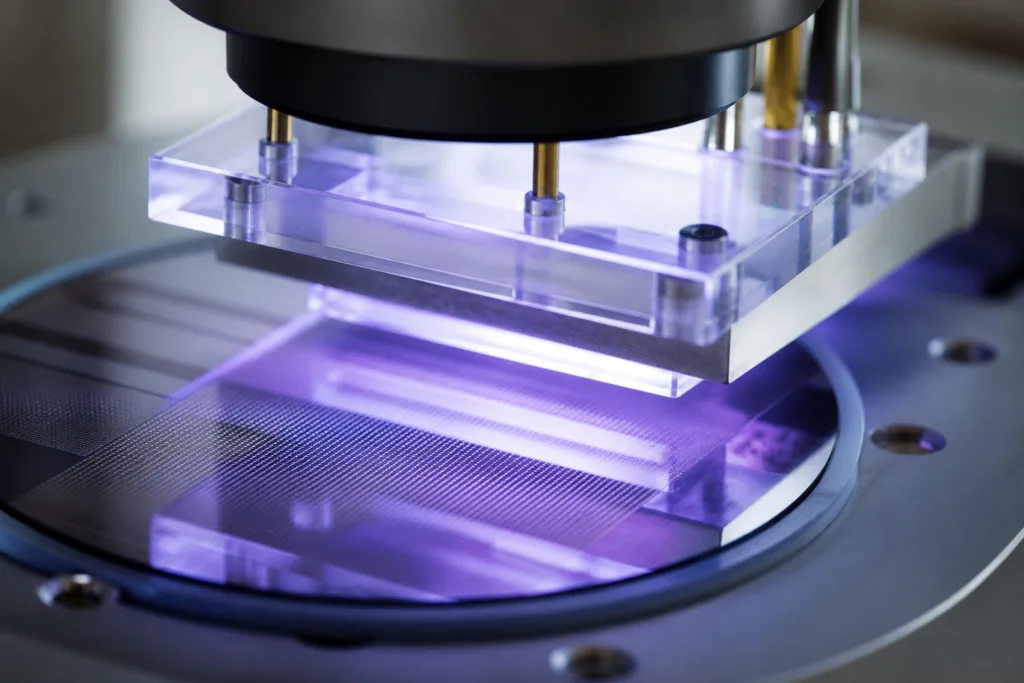
- UV-Curing Adhesives: Fast processing, optically clear, but require transparent substrates and controlled environments. Widely used in QLED display manufacturing.
- Thermal Curing: Delivers highest mechanical strength; often selected for larger panels.
- Room-Temperature Curing: Good for assembly-line flexibility but slower and may not achieve full optical performance.
For practical details on curing, review our Activator Guide for Fast Curing.
Traditional Adhesive Technologies for QLED Lamination
The earliest QLED laminations employed hot melt adhesives and basic pressure-sensitive tapes. Their repeatable processing and low cost made them the go-to for basic screen lamination, but they often lacked true optical clarity and environmental resistance.
Hot Melt Adhesives
Melted onto surfaces, then rapidly cooled; good for quick bonding but susceptible to haze and delamination in harsh environments.
Pressure-Sensitive Adhesives (PSAs)
Easy to apply but minimal chemical resistance, and typically lower optical performance than new alternatives.
Innovative Adhesive Solutions Enhancing QLED Film Longevity
Recent years have seen advanced optically clear adhesives (OCA), liquid optically clear adhesives (LOCA), and hybrid systems revolutionizing display lamination. These adapts their chemistry for longevity, transparency, and precise application on high-value QLED layers.
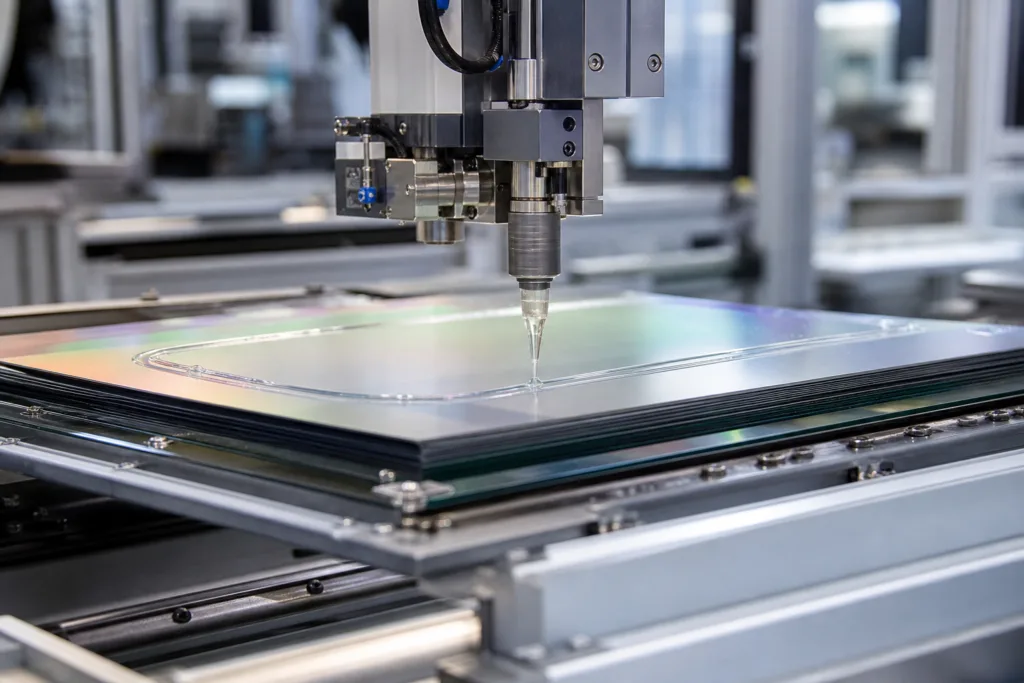
Optically Clear Adhesives (OCA)
OCA tapes are pre-cured for zero haze and high light transmission. They guarantee strong lamination without bubbles, supporting sharp and vibrant QLED visuals.
Liquid Optically Clear Adhesives (LOCA)
LOCA is dispensed as a liquid, conforming perfectly to complex QLED surfaces for seamless display aesthetics. They’re UV-cured, generally offering better durability and repairability.
Hybrid Adhesive Technologies
Combining acrylic, silicone, and polyurethane chemistries gives manufacturers the flexibility to tackle both mechanical strength and environmental resistance in a single bond system.
Adhesive Performance Comparison Table
| Adhesive Type | Optical Clarity | Mechanical Strength | Curing Type | Perfect Application |
|---|---|---|---|---|
| Epoxy | Medium–High | High | Thermal | Fixed Panels |
| Acrylic | High | Medium | UV, Room | Flexible Displays |
| Silicone | Very High | Medium | Room, UV | Curved Surfaces |
| OCA Tape | Excellent | Medium | Pre-cured | High-volume Lamination |
| LOCA | Excellent | Medium–High | UV | Repairable Interfaces |
| Hot Melt | Low–Medium | Low | Thermal | Basic Lamination |
How Adhesive Choice Affects QLED Display Performance & User Experience
The right adhesive minimizes light scatter, maximizes color vibrancy, and prolongs screen service life. Poor adhesive selection leads to clouding, reduced touch response, or even panel failures. High-quality lamination also ensures edge protection, a topic explored in our Edge Sealing Adhesive Guide for Display Devices.
Impact on Aesthetics
Adhesives with ultra-low haze and high optical clarity preserve the seamless look modern customers expect. On large, curved, or bezel-less displays, precise adhesive application means sharp edges and uniform colors.
Touch and Responsiveness
Touch-enabled QLED displays need thin adhesives with minimal modulus to allow accurate sensor function without dampening user input or causing lag.
Application Methods: From Manual to Automated Systems
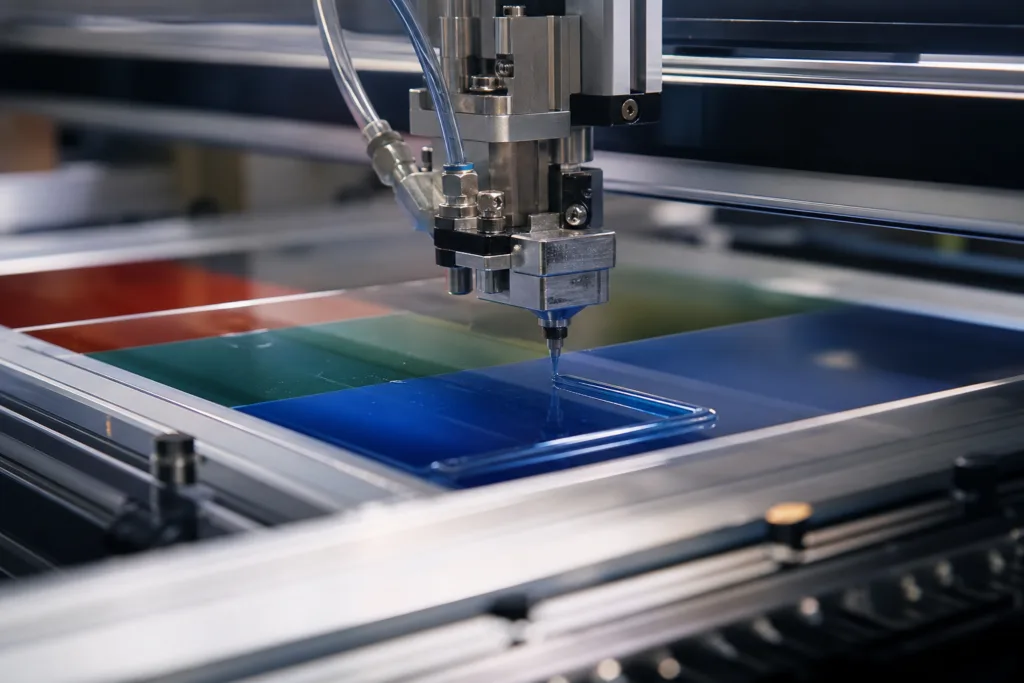
Small to mid-size displays may be laminated manually, but high-volume production relies on automated adhesive dispensing systems. Choosing adhesives suited for automated processes means faster throughput and reduced scrap rates, as outlined in our article on Automated Adhesive Dispensing Systems.
Quality Assurance and Testing for QLED Film Lamination
After lamination, displays undergo rigorous tests: optical transmission (ASTM D1003), lap shear and peel (ASTM D3165, ASTM D903), humidity and thermal cycling, and environmental grade performance checks. Lap shear and peel tests validate adhesive bonding strength and durability under operational conditions.
Environmental and Regulatory Compliance in Adhesive Technologies
Adhesive manufacturers must meet RoHS and REACH regulations, particularly for low-VOC formulations and flame retardancy. Environmental performance is steadily rising, with a focus on reducing toxic byproducts and enhancing recyclability. For more, see “Low-VOC Adhesives for Vehicle Interiors.”
Industry Insights: Experiences from ZDS Adhesive
From an assembly-line viewpoint at ZDS Adhesive, an industrial adhesive manufacturer, achieving optimal QLED lamination demands balancing optical clarity, fixture time, and substrate compatibility. For high-flex panels, acrylic adhesives with dyne-level priming yield the lowest haze and best cycle fatigue results. For static displays in automotive environments, a silicone-based system withstands temperature swings and humidity aging without delamination.
Future Trends in QLED Film Lamination
Next-generation adhesives are rapidly emerging: self-healing formulations, ultra-fast UV-curables, and smart adhesives that respond to environmental changes (humidity and temperature). These advances will enable thinner, stronger, and more interactive displays in homes, cars, and public spaces.
QLED Film Lamination: Compatible Adhesive Technologies
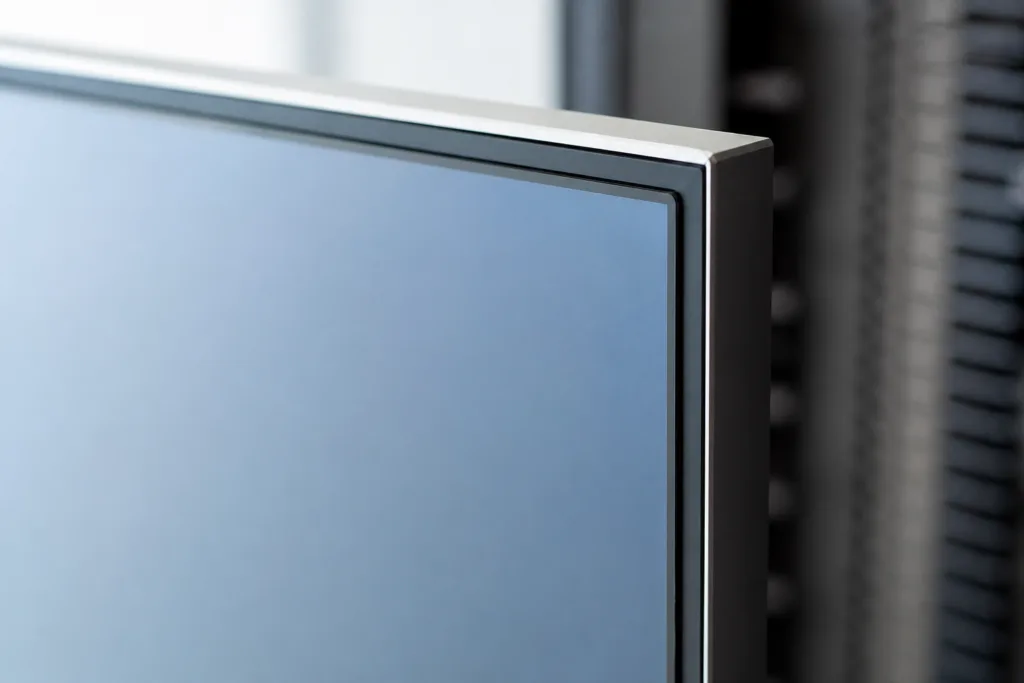
Choosing compatible adhesives for QLED film lamination is the cornerstone of innovation in display technology. It dictates how bright and clear a screen looks today—and how reliably it performs for years to come. Technology, user experience, and sustainability will continue to shape adhesive choices in the QLED sector.
Frequently Asked Questions
Which adhesive is best for optical clarity in QLED film lamination?
Optically clear adhesives (OCA or LOCA) achieve maximum transparency and minimal haze, ideal for preserving QLED color fidelity and brightness in laminated films.
How do adhesives affect the longevity of QLED displays?
Proper adhesive technologies enhance durability by protecting against humidity, UV, and thermal cycling. Poor choices can cause delamination, haze, or yellowing over time.
What curing methods are most efficient for display production?
UV-curing adhesives provide rapid, strong bonds suitable for high-speed production. Thermal curing is chosen for strength and stability in large panels, while room-temperature curing offers flexibility.
Can innovative adhesives improve touch sensitivity in QLED displays?
Yes, thin and flexible adhesives, especially advanced acrylic and silicone types, allow accurate touch sensor function and faster response times in interactive QLED displays.
What environmental regulations must QLED adhesives comply with?
Manufacturers must adhere to RoHS, REACH, and increasingly low-VOC standards to minimize emissions and ensure product safety in all global regions.
What new adhesive trends are shaping QLED display manufacturing?
Emerging trends include self-healing materials, ultra-fast UV curing, and smart adhesives responsive to environmental stress, enabling more robust and interactive screen designs.
Related Reading
- Choosing Clear Adhesives for Crystal-Clear QLED Bonds
- Optimal Optical Bonding: OCR vs. OCA for Curved Displays
- Unlock Brighter Displays: Bonding Reflective Films for Mini-LED Backlights
- Seamless Smart Thermostat LCDs: The Bezel-less Bonding Revolution
- Why Flame Retardant Fixation Is Critical for Smart Plug Safety