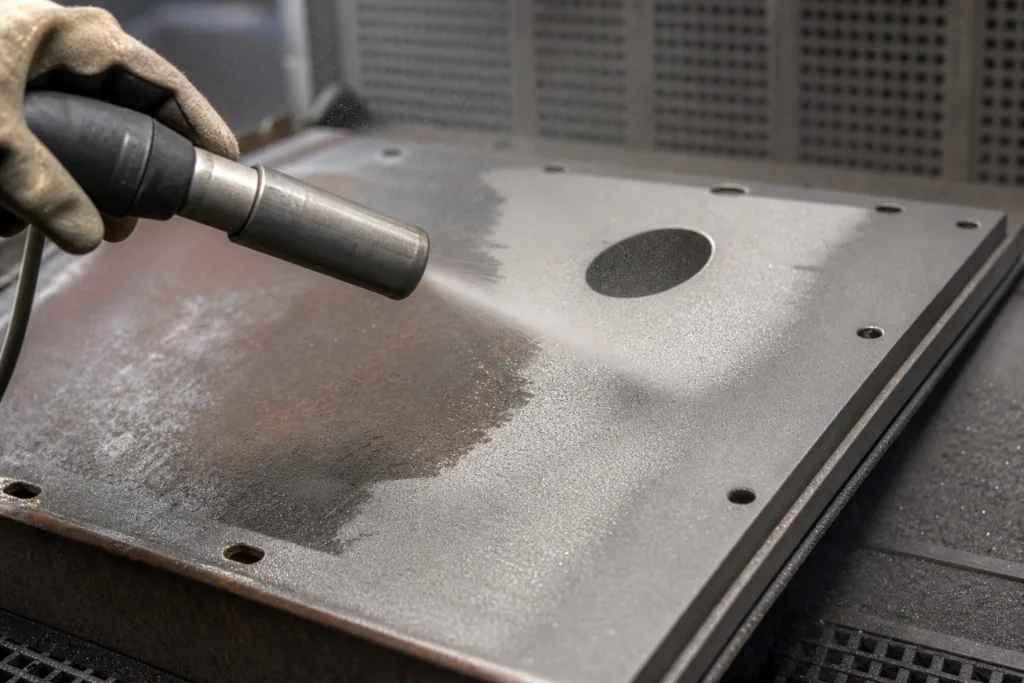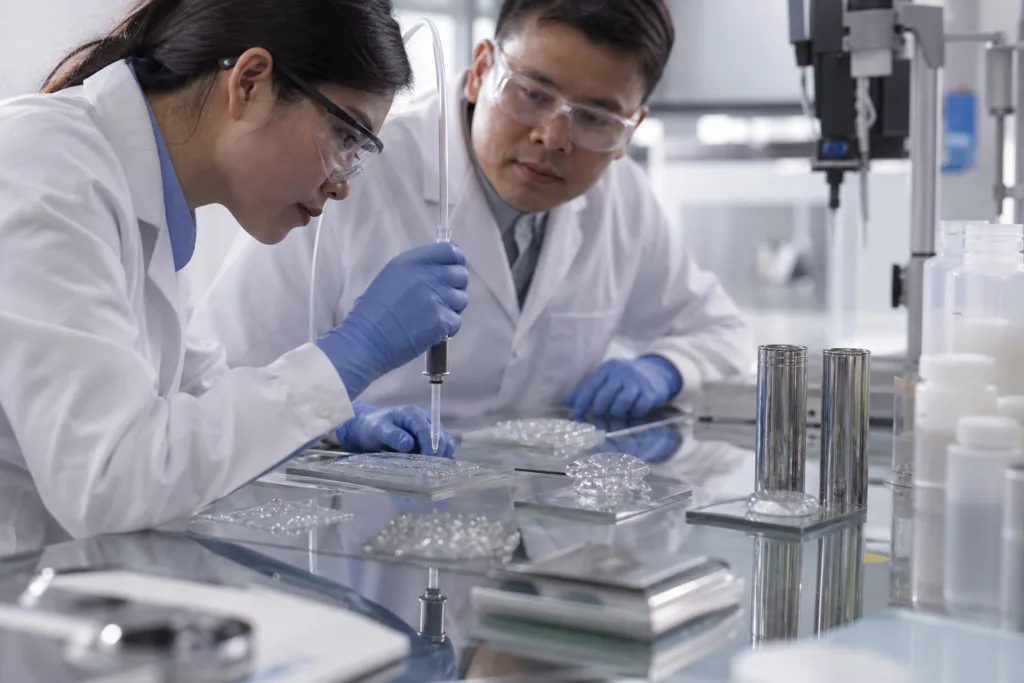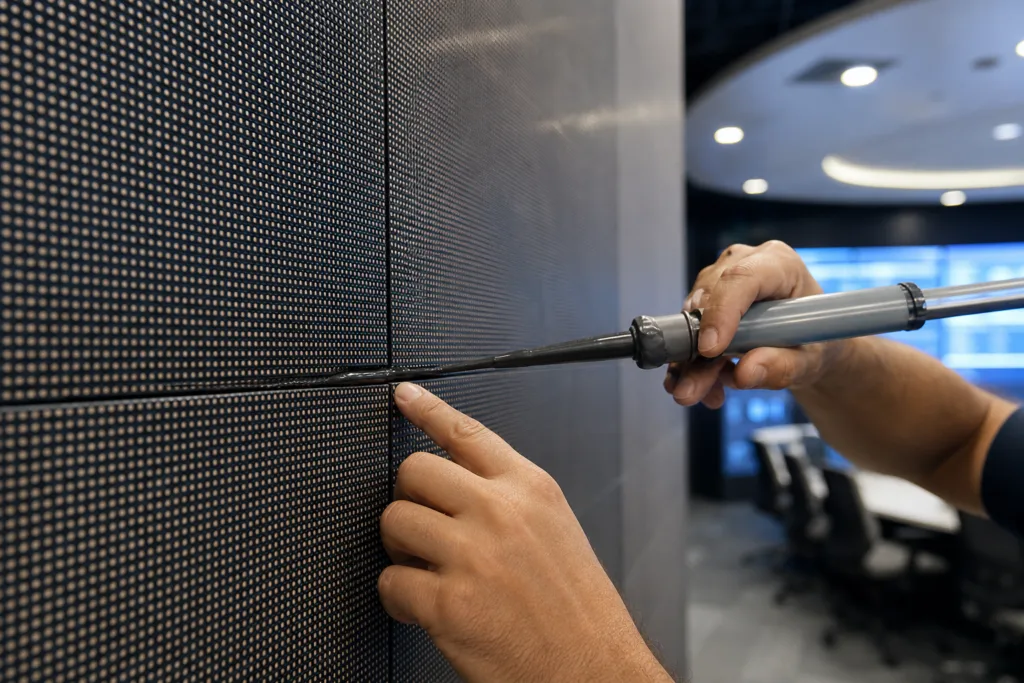
A water soluble adhesive can be a practical choice when a process needs easy cleanup, temporary holding, controlled release, or removal with water during a later step. In industrial settings, that advantage only matters when the bond is strong enough for the working window, yet weak enough to release on command. The challenge is knowing when water solubility supports production efficiency and when it becomes a reliability risk in storage, transport, or service.
For buyers comparing adhesive systems, a useful starting point is our packaging adhesive selection guide, because packaging often shows the same trade-offs seen in water-sensitive bonding: clean application, sufficient tack, predictable release or hold, and stable performance across humidity changes. From our manufacturing perspective, we look at viscosity, coat weight, drying behavior, substrate porosity, and downstream environmental exposure before recommending any formula, and we can support sample testing, viscosity adjustment, OEM packaging, and bulk production planning when the project needs a tighter process window.
What a Water-Soluble Adhesive Is and How It Works
In simple terms, a water-soluble adhesive is designed so water can soften, dissolve, or disperse the bond under the right conditions. That behavior can come from the chemistry of the binder itself, the formulation balance, or the way the adhesive film cures and rehydrates. In practice, not every product marketed as water-based is truly water-soluble, so buyers should read technical data sheets carefully and confirm how the bond behaves after drying or full cure.
Some water-soluble systems are intended for temporary bonds, while others are used where a later wash-off step is part of the process. That can be helpful in assembly, masking, positioning, labeling, or protective holding applications. But once the finished product must survive condensation, splash, cleaning, or storage in a humid warehouse, the same property can become a failure mode rather than a convenience.
Water-Soluble vs. Water-Dispersible vs. Water-Resistant
These terms are often confused, yet they describe different performance expectations. Water-soluble materials can dissolve or lose integrity in contact with water. Water-dispersible systems may not fully dissolve, but they can break into smaller particles or lose cohesive strength when agitated in water. Water-resistant systems may tolerate limited moisture exposure but still fail under prolonged wetting, immersion, or repeated humidity cycling.
| Property | What It Usually Means | Typical Buyer Risk |
|---|---|---|
| Water-soluble | Bond can soften or dissolve when exposed to water | Unexpected bond loss in humid or wet service |
| Water-dispersible | Film may break apart or weaken in water without fully dissolving | Partial residue or inconsistent release |
| Water-resistant | Some moisture tolerance, but not necessarily waterproof | Assuming it can survive conditions beyond its design |
For industrial buyers, the practical question is not only how the adhesive behaves in water, but also how fast it absorbs moisture, whether the bond line swells, and whether the adhesive recovers after drying. Those details determine whether the adhesive is suitable for temporary assembly or too risky for durable bonding.
Where Water-Soluble Adhesives Are Used in Industry
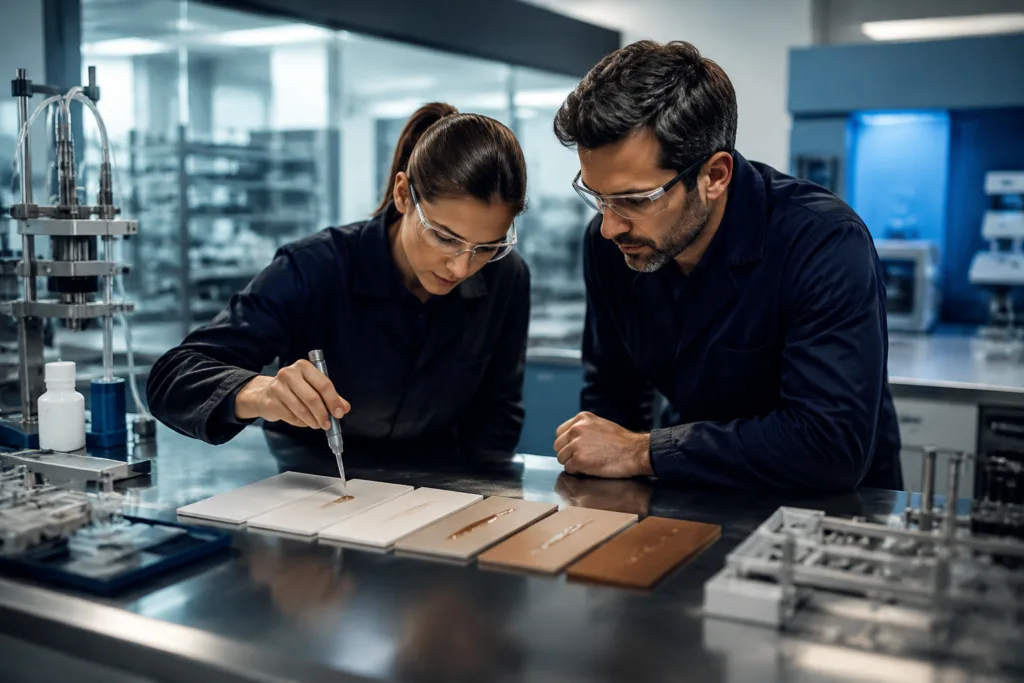
Water-soluble adhesive products appear in many manufacturing processes, especially where removability, clean processing, or controlled release matters more than long-term environmental resistance. Common uses include temporary positioning, removable labels, paper converting, some packaging steps, masking, and certain specialty assembly operations. In these roles, the adhesive is valued because it can help streamline production without leaving a permanent residue or requiring aggressive solvents for cleanup.
In packaging, a related concern is whether the bond must survive transit, refrigeration, condensation, or warehouse humidity. That is why many teams compare water-soluble or water-sensitive options against more durable systems for final closure. For readers evaluating label and carton performance, our permanent label adhesive requirements article is helpful for understanding how permanence, removability, substrate energy, and environmental exposure interact.
Some water-soluble adhesive uses are deliberate and controlled, while others are only acceptable in very short-life applications. For example, a production aid that must release during a wash step may be ideal. The same chemistry would be inappropriate for a product expected to survive outdoor exposure, repeated handling, or customer use.
Industrial application examples
- Temporary fixture and positioning during assembly
- Removable labels, tags, or process markers
- Paper, carton, and converting operations
- Masking or protection during secondary processing
- Controlled-release or wash-off steps in specialty manufacturing
Common Substrates and Bonding Compatibility
Substrate selection matters as much as the adhesive chemistry. A water soluble adhesive may bond well to porous materials because the adhesive can wet and anchor into the surface structure. Paper, cardboard, untreated wood, and some fabrics often respond more predictably than low-energy plastics or smooth metals. Even then, absorption can make the bond appear stronger initially while the film remains vulnerable to later moisture exposure.
Non-porous surfaces can be more difficult because the adhesive must rely on surface wetting and mechanical interlock rather than penetration. On glossy plastic, coated film, glass, or metal, the adhesive may sit as a surface film with limited anchoring. If the process also involves humidity, condensation, or washdown, the effective bond margin can narrow quickly.
Surface energy, contamination, and treatment level all matter. Buyers often underestimate how much dust, release agents, fiber shedding, oil, or liner residue can change real-world performance. For a broader look at why wetting is so dependent on surface condition, see our surface energy and wetting basics guide.
From our formulation and application support experience, the most reliable evaluation method is to test the exact substrate pair, not a generic sample coupon. The same adhesive can behave differently on kraft paper, coated board, painted metal, PET film, and untreated wood because each surface changes spread, absorption, and dry-down behavior.
Benefits of Using a Water Soluble Adhesive
The main advantage is process convenience. A water soluble adhesive can simplify cleanup, reduce the need for harsh debonding agents, and support manufacturing steps where later removal is required. That can improve line efficiency when operators need a bond that is secure enough for handling but not permanent at end of process.
Another benefit is controlled reversibility. In applications such as temporary assembly or label release, the ability to remove adhesive residue with water can reduce rework time and lower the risk of substrate damage compared with more aggressive removal methods. This is especially useful when the final product may need to be separated, washed, or reprocessed.
Water-based systems can also be easier to integrate into some low-odor or lower-solvent process environments, depending on the full formulation. However, buyers should not assume that water-based means automatically safer, simpler, or universally low-risk. The total formulation still matters, including additives, preservatives, co-binders, and any process chemicals used alongside it.
Performance Limits: Moisture Sensitivity, Humidity Exposure, and Water Resistance
This is the central trade-off. If an adhesive can be reactivated by water, then moisture can also reduce its performance before you want it to. High humidity may soften the bond, slow down drying, or allow the adhesive film to absorb water and lose cohesion. In service, that can lead to creep, edge lift, partial debonding, or complete failure.
Humidity-related degradation is not just a theoretical concern. Moisture can accumulate at the interface, create swelling stresses, and weaken the bond over time. NIST has documented how moisture attack can reduce adhesive bond durability in high-humidity exposure, which is why we treat environmental exposure as a core qualification item rather than an afterthought in selection work: humidity attack on adhesive bonds.
For this reason, a water soluble adhesive should usually be considered for temporary, protected, or wash-off applications unless the buyer has tested and confirmed acceptable performance in the actual environment. If the final assembly faces steam, condensation, cleaning cycles, outdoor exposure, or long storage in fluctuating humidity, the margin for error can be small.
As a manufacturer, we often advise teams to separate the ideas of functional water release and long-term water resistance. A formula optimized for one usually sacrifices the other. That trade-off is not a defect; it is the design goal.
Typical risks in service
- Softening during humidity exposure
- Re-activation by incidental water contact
- Creep under load after moisture uptake
- Edge lift on porous or coated surfaces
- Loss of bond after washdown or condensation
How Curing, Drying, and Ambient Conditions Affect Bond Strength
Many water-sensitive adhesive systems depend on drying rather than a true chemical cure, although some products use both processes. If water must leave the film before the bond reaches full strength, then temperature, airflow, coat weight, and substrate absorption all become critical. A thick layer may skin over on top while remaining wet below, which can cause weak initial strength or delayed failure.
Ambient humidity also affects drying speed. In a damp environment, water evaporates more slowly and the adhesive may stay tacky longer than planned. That can disrupt fixture time, line speed, and stacking. On the other hand, overly fast drying can make the working window too short, leading to poor wetting or incomplete assembly.
For production teams, the practical question is whether the bond reaches a stable state before the assembly moves to the next step. That means measuring actual line conditions, not assuming the label claim will translate directly to your factory, warehouse, or customer environment.
Process variables to control
- Temperature and relative humidity
- Airflow and drying capacity
- Coat weight or applied film thickness
- Porosity and absorbency of the substrate
- Fixture pressure and assembly dwell time
Viscosity, Open Time, and Application Method Considerations
Water soluble adhesive products can be formulated in a wide viscosity range, from brushable liquids to more structured gels or paste-like systems. Lower viscosity may improve wetting on porous materials, while higher viscosity can help prevent run-off on vertical surfaces. The right choice depends on how the adhesive is dispensed and what the substrate can tolerate.
Open time matters because operators need enough time to position parts before the bond sets. If the system dries too quickly, alignment becomes difficult. If it stays open too long, line efficiency drops and parts may shift. In many industrial projects, the difference between success and rework is not the chemistry alone, but whether the viscosity and open time match the actual process.
Dispensing method also changes the result. Spray, roller, bead, brush, and slot application each create a different film profile. A product that looks acceptable in a lab test can behave very differently when transferred to a high-speed line, especially if the ambient conditions or substrate absorbency vary from shift to shift.
When a project needs stronger process control, we typically start with the application method, then tune solids content, viscosity, and dry-down behavior to fit it. That is the kind of adjustment we support at ZDS Adhesive when buyers need a formula aligned with a specific machine, substrate, or packaging format rather than a one-size-fits-all product.
Typical Failure Modes: Softening, Re-Activation, Creep, and Bond Loss
The most common failure mode is not dramatic breakup; it is gradual weakening. A bond may appear acceptable at first, then soften after humidity exposure or a light wash, then slowly creep under load. That makes the failure easy to miss in short tests and expensive to discover later in field use.
Re-activation is another concern. If the adhesive is designed to respond to water, incidental moisture can reopen the bond line. That may be useful for removal, but it can also create issues during cleaning, shipping, or seasonal humidity changes. In some cases, the bond loses strength only at the edges, which can create a false sense of reliability until the assembly is stressed.
For packaging, labeling, and temporary assembly, these failure modes are acceptable only when the intended lifecycle is short and the release condition is controlled. For durable products, they are usually warning signs that a different chemistry is needed. Our industrial wood bonding options page is useful for comparing where porous substrates can tolerate water-based or water-sensitive systems and where a more durable bond chemistry is usually safer.
How to Evaluate Whether Water Solubility Is an Advantage or a Risk
The decision starts with the product lifecycle. If the adhesive must support temporary positioning, later removal, or a planned wash-off step, water solubility may be a real advantage. If the product must survive transportation, customer handling, condensation, or cleaning, the same property becomes a liability unless the formulation is specifically engineered and tested for that environment.
We recommend asking four questions. First, is the bond temporary or permanent? Second, will the assembly see incidental moisture, cleaning fluids, or high humidity? Third, is residue acceptable after removal? Fourth, does the process need a predictable release point or unpredictable softening would be a problem? These questions help distinguish controlled removability from unplanned failure.
In some sectors, such as certain medical or controlled-use applications, process cleanliness, traceability, and removal behavior can matter as much as adhesion itself. That is why buyers sometimes cross-check with broader application requirements before selecting a system. For those projects, our medical device adhesive applications guide provides a useful framework for thinking about material compatibility, process constraints, and validation expectations.
Testing and Validation: Water Exposure, Humidity Aging, and Bond Performance Checks
Samples should be tested under the same conditions the product will face in production and service. At minimum, that includes the same substrates, the same coat weight or dispense pattern, the same drying time, and the same environmental exposure. A sample that performs well on a clean bench may fail after a shift in humidity or surface contamination.
Useful validation checks include short water exposure, humidity aging, visual inspection for whitening or swelling, peel or shear comparison before and after exposure, and any process-specific release test if removability is important. It is also worth checking whether the bond recovers after drying, or whether the structure has been permanently weakened.
Packaging teams should also verify whether labels, cartons, or temporary seals remain stable across storage and transit conditions. For product flow that depends on controlled sealing and release, our food pack and carton sealing needs article can help teams think through line speed, moisture exposure, and packaging formats before finalizing a formula.
From a production-control perspective, we encourage buyers to define pass/fail criteria before testing starts. For example: acceptable removal time, no visible residue, no edge lift after humidity aging, or no bond failure after a defined water contact period. Clear criteria reduce debate later and make supplier comparison much easier.
Validation checklist
- Exact substrate pair and surface preparation
- Applied weight, bead size, or film thickness
- Drying or curing time before test
- Humidity and water exposure condition
- Visual, peel, or shear result after exposure
Selection Checklist for Temporary Assembly, Labeling, and Controlled Release Applications
Before approving a water soluble adhesive, buyers should confirm the functional role of the bond. Temporary assembly needs enough hold for handling but not so much permanence that disassembly becomes difficult. Labeling needs readable attachment and controlled removal without damaging the package or leaving excessive residue. Controlled release applications need a predictable response to water, not just a vague claim of washability.
It helps to document the following: substrate type, target bond life, expected humidity range, possible water contact, application method, acceptable residue level, removal method, and packaging format. When these inputs are clear, the selection process becomes more predictable and supplier communication improves.
Also consider storage and shelf life. A formulation that works in the lab can still become difficult to process if it thickens, separates, or loses stability before use. If you are comparing supplier capability, ask how the product is packed, stored, and controlled during shelf-life management. For deeper context on storage discipline, our adhesive storage and shelf-life control article gives a useful framework, even though the chemistry is different.
When to Choose an Alternative Chemistry Instead
If the assembly needs long-term moisture resistance, structural strength, heat stability, or broad environmental durability, a water soluble adhesive is usually the wrong starting point. In those cases, epoxy, polyurethane, acrylic, silicone, or other more durable systems may be more appropriate depending on the substrate and service conditions.
That does not mean water-soluble chemistry is inferior. It means the design target is different. Temporary performance, process cleanup, and controlled release are legitimate manufacturing advantages, but they are not substitutes for durable bond integrity. If the product must survive field use, thermal cycling, or frequent cleaning, the buyer should prioritize reliability over reversibility.
We also see cases where the real need is not bond strength but line efficiency, safety, or debonding control. In such projects, a removable system may be combined with a more permanent downstream process rather than used as the final bond itself. That is often a better manufacturing choice than trying to force one adhesive to solve every problem.
Questions to Ask an Adhesive Manufacturer Before Sampling or Bulk Purchase
When you evaluate a supplier, ask for more than a datasheet. A useful partner should explain how the adhesive behaves on your substrates, what environmental risks matter most, and what testing they recommend before production release. They should also be able to discuss viscosity, packaging, application equipment, and how consistent the formula will be across repeat lots.
Useful questions include: Can the product be tuned for faster or slower drying? Is the adhesive intended to dissolve completely or only soften? What happens under high humidity? What are the storage requirements? Can the product be supplied in the package size your line needs? What sample format is available for trial work?
For buyers focused on packaging closures, line compatibility, and product handling, our linked guides can help frame the conversation. If the concern is whether a bond should be permanent, temporary, or removable, compare your brief against the adhesive’s actual environmental response rather than its marketing description.
At ZDS Adhesive, we treat sampling as a qualification step, not just a sales sample. The goal is to align formula behavior, process conditions, and production consistency before scale-up.
Conclusion
A water soluble adhesive is most valuable when the process genuinely benefits from cleanup, wash-off, or controlled release. It becomes risky when buyers assume the same reversibility will somehow coexist with strong long-term moisture resistance. The right choice depends on substrate, environment, drying conditions, and the bond’s intended lifecycle.
For industrial buyers, the key is to match the chemistry to the process, then test under realistic conditions. If the project needs temporary hold, removable labels, or a planned water-release step, water solubility may be an efficient advantage. If the product must survive humidity, washdown, or long service life, it may be better to choose a different adhesive family from the start.
When you evaluate options this way, the decision becomes less about the label and more about the manufacturing requirement. That is the most reliable path to a stable production result.
FAQs About Water-Soluble Adhesives
What is a water-soluble adhesive used for?
A water-soluble adhesive is typically used for temporary bonding, removable labels, controlled release, wash-off steps, and other processes where water can later soften or remove the bond. It is useful when cleanup and reversibility are more important than long-term moisture resistance.
Is a water-soluble adhesive the same as a water-based adhesive?
No. Water-based describes the carrier or formulation system, while water-soluble describes how the cured or dried adhesive behaves when exposed to water. Some water-based adhesives are not truly water-soluble, and some water-soluble systems are designed for deliberate removal after use.
Can a water-soluble adhesive be used on plastic or metal?
Sometimes, but performance depends on surface energy, contamination, coating, and environmental exposure. Smooth plastics and metals usually require careful testing because a water-soluble system may not anchor as reliably as it does on porous substrates.
What are the biggest risks of using a water-soluble adhesive in industry?
The biggest risks are softening, re-activation, creep, and bond loss in humidity or water exposure. If the final product will see condensation, cleaning, or storage in a wet environment, those risks must be validated before approval.
How should we test a water-soluble adhesive before bulk purchase?
Test it on the exact substrates, with the actual coat weight or dispense pattern, and under realistic temperature and humidity conditions. Then check initial bond strength, water exposure behavior, residue level, and whether the bond remains stable after drying or aging.
Can ZDS Adhesive customize a water-soluble adhesive for our process?
Yes, we can evaluate formulation targets such as viscosity, open time, drying speed, packaging format, and application method so the adhesive better fits the process. For OEM, ODM, or private label projects, we also support sampling, technical review, and bulk production planning.