Fast-curing clear silicone adhesives are often chosen when a production team needs visible, neat bonding with quick handling time, but the real value comes from matching the cure profile to the assembly process. In practice, fast drying clear silicone can improve line throughput, reduce fixture time, and maintain a clean appearance on transparent or exposed parts, yet it also brings tradeoffs in depth cure, adhesion on difficult substrates, and long-term process control. For engineers and buyers, the key question is not whether the adhesive cures fast, but whether it cures fast enough for the part geometry, substrate mix, and operating environment.
For glass, transparent housings, and weather-exposed assemblies, clear silicone bonding guidance for glass assemblies is a practical starting point because glass projects often expose the full range of silicone decisions: surface prep, cure depth, appearance, and moisture resistance. From our manufacturing perspective, we support these programs with formulation selection, viscosity matching, sample evaluation, and bulk production planning so buyers can verify whether a clear silicone system really fits the line before they commit to scale-up.
What Fast-Curing Clear Silicone Adhesives Are
Fast-curing clear silicone adhesives are silicone-based bonding or sealing materials formulated to develop handling strength quickly while remaining transparent or translucent after cure. In industrial use, they are selected for applications where a clean visual finish matters, where flexibility is needed to absorb movement, and where exposure to moisture, UV, or temperature swings makes a rigid adhesive less attractive.
Clear silicone is not a single performance class. Some products are designed primarily as sealants with moderate adhesion and strong environmental resistance, while others are closer to adhesive sealants with better substrate wetting and more reliable bond retention. The phrase fast drying clear silicone usually points to quick skin formation or fast handling rather than instant full cure through the entire adhesive mass, and that distinction matters during qualification.
Why manufacturers use it
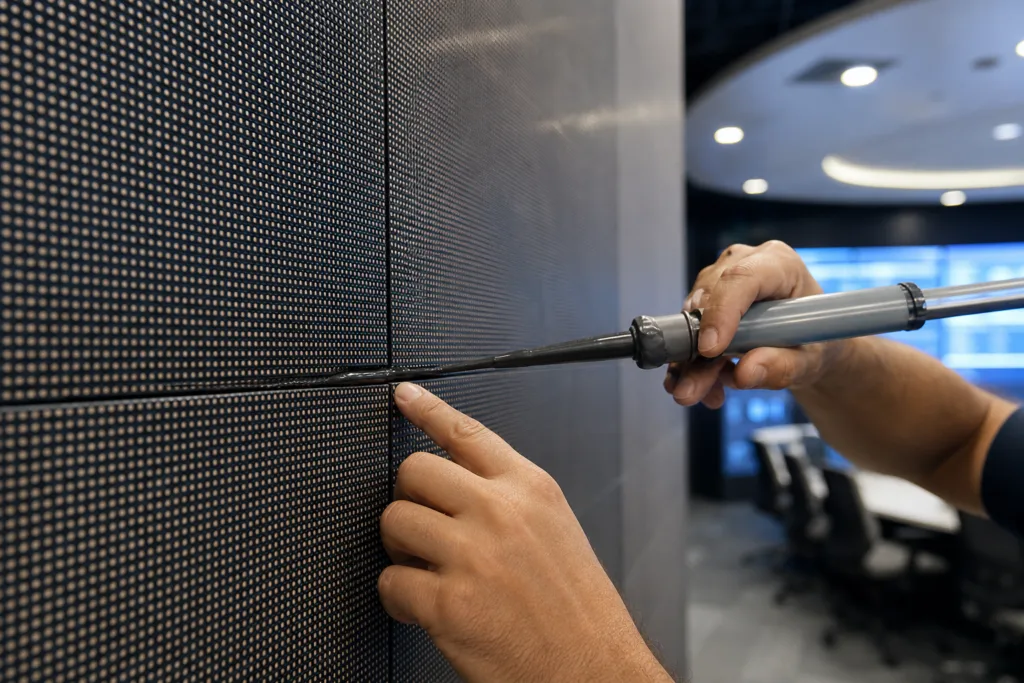
We see it chosen most often for three reasons. First, the adhesive must look acceptable on the finished product, especially on glass, light housings, display components, or visible seams. Second, the part needs to move slightly in service without cracking the bond line. Third, production wants earlier handling, reduced clamp time, or faster downstream assembly.
That combination is useful, but only when the process can support it. If the adhesive skins over quickly while the bead remains uncured inside, the part may appear ready before it truly is. That gap between surface cure and internal cure is where many production issues begin.
Where Fast-Curing Clear Silicone Creates Real Manufacturing Value
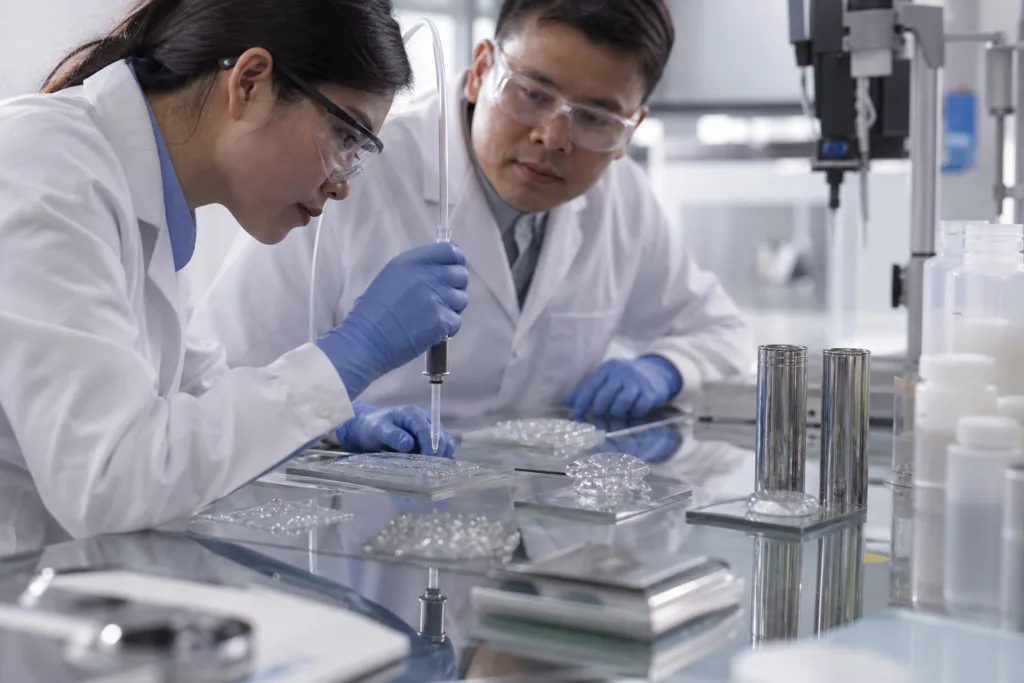
Fast-curing systems are valuable when throughput and appearance both matter. In assembly lines, a shorter tack-free time can reduce waiting between dispensing, positioning, and movement to the next station. In field installation, it can improve handling under weather pressure, especially when an exposed joint must resist rain, dust, or vibration soon after application.
The best use cases are usually those where the adhesive is acting as a flexible bond or seal rather than a high-precision structural joint. Transparent joints, sealed windows, accessory housings, and electronic enclosures can all benefit if the design allows for movement and if the substrates are compatible.
For outdoor and exposed assemblies, weatherproof sealing for exposed outdoor assemblies shows the kind of service environment that often pushes buyers toward silicone rather than more rigid clear adhesives. In those conditions, resistance to moisture and thermal cycling can matter more than ultimate hardness, and a fast skin time can help reduce contamination before the joint is fully protected.
Typical manufacturing value points
- Shorter fixture or handling time on the line
- Cleaner visual result on transparent or exposed parts
- Better tolerance for thermal movement than rigid clear adhesives
- Improved sealing in moisture-prone environments
- More practical process flow for manual or semi-automated dispensing
Fast Drying Clear Silicone Versus Standard Silicone and Other Clear Adhesives
Buyers often compare fast drying clear silicone with slower silicone sealants, UV-curing clear adhesives, acrylics, or epoxies. The right choice depends on whether the project values flexibility, curing depth, clarity, chemical resistance, or line speed.
| Material Type | Main Strength | Main Limitation | Typical Fit |
|---|---|---|---|
| Fast-curing clear silicone | Flexibility, weatherability, clean appearance | Depth cure may lag behind surface skinning | Transparent sealing, exposed joints, flexible bonding |
| Standard silicone | Broader working window and reliable cure depth | Slower handling | Lower-speed lines, thicker beads, general sealing |
| Clear acrylic | Faster handling and good appearance on some substrates | Less elasticity and weather tolerance in some uses | Faster cosmetic bonding where movement is limited |
| Clear epoxy | High rigidity and stronger structural feel | Less flexible and often less forgiving under thermal cycling | Rigid bonding where movement is low |
Transparent bonding is not automatically a silicone advantage. If the part needs high rigidity, a different clear chemistry may be more appropriate. For a broad view of appearance-driven adhesive choices, transparent bonding options with optical clarity helps frame the tradeoff between visual finish, service load, and process requirements. In our formulation work, we often recommend that buyers rank appearance, speed, movement, and environmental exposure before they rank the chemistry itself.
Key Performance Factors Buyers Should Check
Fast drying clear silicone should be evaluated on more than cure speed. A product that looks impressive in a small sample can still create trouble if the bead is too shallow, the bond is too weak on a real substrate, or the line speed exceeds the adhesive’s practical open time.
Skin time and handling time
Skin time tells you when the surface stops being wet or tacky. Handling time tells you when the part can move without disturbing the joint. These are not the same as full cure. A production team may be able to release a part from a fixture quickly, but if the adhesive is trapped in a deep joint, the core may still be soft for much longer.
Depth cure
Depth cure matters whenever the bead is thick, the joint is enclosed, or the assembly has limited access to air or moisture. Silicone cure behavior is strongly tied to chemistry, moisture diffusion, and formulation design. For a technical explanation of why surface skinning and through-cure can differ, the discussion of moisture-cured RTV silicone chemistry is useful because it explains why humidity, bead thickness, and catalyst choice affect curing behavior. In buyer terms, this means a fast surface finish does not guarantee a fast full-depth cure.
Bond strength and movement tolerance
Silicone is usually selected because it remains flexible and can tolerate thermal expansion, vibration, and repeated movement better than rigid clear adhesives. That flexibility is an advantage, but it also means buyers should not expect the same load-bearing profile as a structural epoxy or acrylic system.
Weather resistance
Silicone’s environmental durability is often the reason it is selected in the first place. It typically handles moisture, sunlight, and temperature changes well when the formulation and substrate preparation are correct. For outdoor assemblies, weather resistance can outweigh the appeal of a faster cure if the faster system becomes brittle or loses adhesion over time.
Clarity retention
Some products look clear during application but haze, yellow, or collect surface contamination after cure or aging. If appearance is part of the product value, clarity retention should be tested after heat, humidity, and UV exposure rather than judged on day one.
Substrate Compatibility: Where It Bonds Well and Where It Needs Testing
Silicone is often assumed to bond to almost anything, but production reality is more selective. Glass, coated metal, ceramic, and some treated surfaces can perform well. Low-surface-energy plastics, oily metals, dust-covered parts, or silicone-rich surfaces can be far more difficult.
For teams working with rubber and silicone components, we recommend early substrate screening because adhesion can vary sharply across surface types. The article on improving adhesion to silicone and rubber substrates is relevant here because silicone-to-silicone or silicone-to-rubber joints often need more deliberate surface preparation and, in some cases, primer support.
Substrate notes for common industrial cases
- Glass: often strong candidate for clear silicone, especially where appearance and moisture resistance matter.
- Metal: generally workable if the surface is clean, degreased, and free from oxidation or release residues.
- Plastic: compatibility varies widely, especially with PP, PE, and some fluorinated materials.
- Coated surfaces: the coating can be the real bonding surface, so the coating chemistry matters as much as the base substrate.
- Silicone and rubber: often require extra attention because the surface itself may be low-energy or chemically similar to the adhesive.
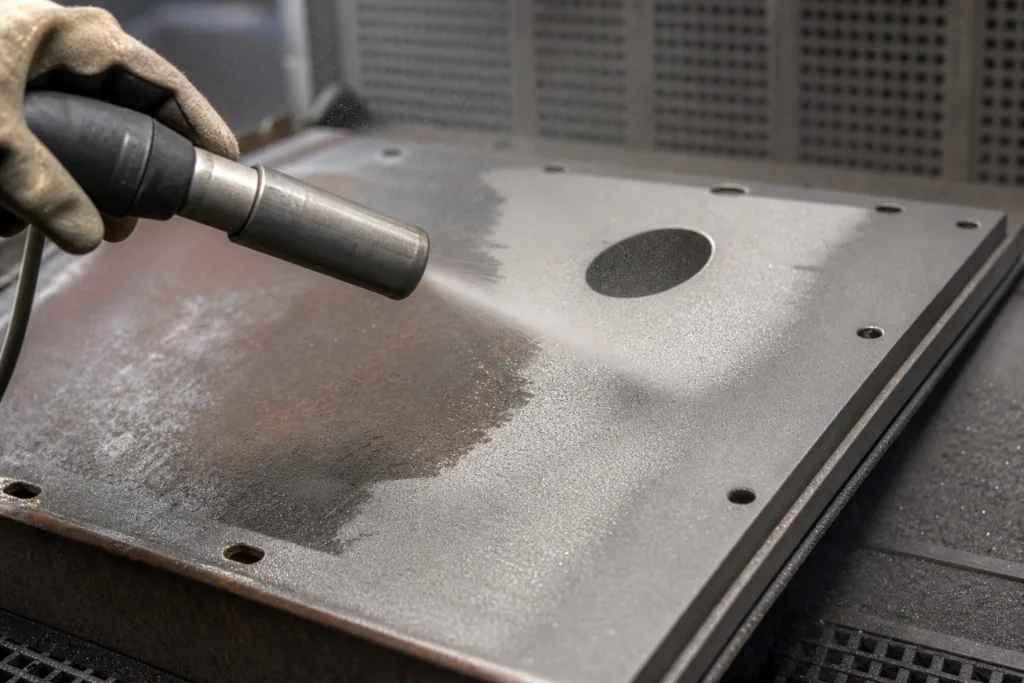
When adhesion is difficult, the issue is usually not only the adhesive chemistry. Surface energy, contamination, curing environment, and primer strategy all affect the final bond. A useful technical reference for this stage is surface energy basics for adhesion selection, because low surface energy is one of the most common reasons a fast-curing clear silicone performs well in a lab but underperforms in production.
When Transparency Matters, and When It Does Not
Transparency is valuable when the adhesive line is visible to the customer, when light transmission matters, or when product design relies on a clean finish. That includes display elements, glass furniture, decorative lighting, transparent housings, and certain consumer or commercial devices.
Transparency matters less when the joint is hidden, covered, painted, or mechanically protected. In those cases, performance should dominate appearance. A buyer may pay a premium for clarity that the end product never sees, or choose a fast-curing clear silicone when a different opaque system would have delivered better process robustness.
There is also a hidden tradeoff: products formulated for better optical clarity sometimes require tighter process control. If the adhesive is too thin, it may sag on vertical surfaces. If it is too thick, it may trap bubbles. If it cures too quickly, the operator may lose working time before final alignment is complete.
Waterproofing and Outdoor Durability Considerations
Silicone is often chosen for waterproofing because it stays flexible and resists environmental aging well. But waterproof does not mean automatically suitable for every outdoor assembly. Joint design, adhesion quality, cure depth, and movement stress all affect real durability.

Outdoor use adds several stresses at once: heat in the day, cooling at night, moisture exposure, vibration, UV, and possible chemical contact from cleaners or pollutants. A product that performs well indoors may fail outdoors if it cannot tolerate expansion and contraction. Fast curing is useful only if the adhesive still cures thoroughly in the actual bead geometry.
For exposed devices and housings, we usually advise buyers to test water ingress, edge lift, and adhesion after thermal cycling rather than relying on a simple room-temperature pull test. The question is not whether the bead seals on day one; it is whether the seal remains intact after the assembly has moved and aged.
Tradeoffs to Evaluate Before Choosing Quick Drying Silicone Sealant
There is no free gain in cure speed. When a clear silicone cures faster, it can narrow the practical application window, make bead control more sensitive, or place more pressure on upstream surface preparation. Those tradeoffs are acceptable in some lines and costly in others.
Common tradeoffs
- Faster skinning may reduce working time for alignment
- Thicker beads may need longer through-cure than operators expect
- Strong surface cure can hide incomplete internal cure
- Some formulas trade open time for throughput
- Better clarity may come with narrower process tolerance
For procurement teams, the most useful question is not “How fast does it cure?” but “How fast can our line actually process it without increasing scrap?” That is why we often review dispensing method, part geometry, fixture design, and environmental conditions before we recommend any formulation.
A broader selection framework is available in clear adhesive selection by performance tradeoff, which is helpful when a project is still deciding between silicone and other clear chemistries. In our view, the right choice is the one that fits the line with the least hidden process risk, not the one with the flashiest data line on a brochure.
Common Failure Modes in Production
Most production failures come from process mismatch rather than from the adhesive name itself. A well-chosen fast drying clear silicone can still fail if the surface is contaminated, the bead is too deep, the substrate is poor, or the part is put under stress too soon.
Typical failure patterns
- Poor depth cure: often seen in wide or enclosed beads where moisture cannot reach the center quickly enough.
- Weak adhesion: caused by dust, oil, mold release, old coatings, or low-surface-energy plastics.
- Surface contamination: silicone oil, fingerprints, and processing residues can prevent wetting.
- Movement stress: the part is flexed or loaded before the bond has developed enough internal strength.
- Bubble entrapment: can appear when dispensing speed, viscosity, or nozzle design is poorly matched.
One practical production fix is to separate cosmetic readiness from functional readiness. A joint may look cured on the outside while still needing more time before load, water exposure, or packing. Another is to control application equipment more carefully. For higher-throughput lines, dispensing setup for fast-curing silicone systems is useful because equipment choice affects bead shape, consistency, and operator repeatability.
How to Select the Right Clear Sealant Glue
Selection should begin with the part, not the product. Before comparing suppliers, define the substrate pair, joint geometry, cure environment, cosmetic requirement, and service condition. Then decide how much speed is truly needed.
Selection checklist
- What substrates must be bonded or sealed?
- Is the joint visible in the final product?
- How thick is the bead or seal line?
- Will the assembly see moisture, UV, heat, or chemicals?
- How much working time does assembly need?
- Does the line need fixture release in minutes or hours?
- Is flexibility more important than strength?
- Does the process allow primer, surface treatment, or pre-cleaning?
At ZDS Adhesive, we usually advise a sample trial that mirrors the real process as closely as possible. That means using the actual substrate finish, real bead size, real cure conditions, and the same handling window planned for production. A sample test done on a bench with tiny dots of adhesive rarely predicts performance in a real enclosure or a long seal line.
For buyers who need to improve reliability on difficult surfaces, surface treatment choices for better bond strength can help them decide whether plasma, corona, cleaning, or primer is the most practical route before they lock in a formula.
Testing Checklist for Samples and Production Validation
Testing should match the risks you actually face. If the concern is clarity, test haze and visual appearance after cure and aging. If the concern is waterproofing, test seal integrity under wet exposure. If the concern is bond reliability, test both substrate adhesion and failure mode.
Practical validation points
- Skin time and handling time under your actual shop conditions
- Through-cure in the thickest expected bead
- Adhesion after surface cleaning, aging, and humidity exposure
- Appearance after thermal cycling or UV exposure
- Movement tolerance under vibration or repeated flexing
- Dispensing consistency from the intended equipment
For sensitive optical or display-related products, low residue and low fogging may also matter. When that is part of the design risk, low-outgassing considerations for sensitive optics is a useful reference because many visibility problems in sealed assemblies are not about strength at all; they are about volatile byproducts and internal contamination.
Customization, Packaging, MOQ, and Supply Considerations
Manufacturers rarely need a generic adhesive in the abstract. They need a version that fits the way their line runs. That may mean changing viscosity for better dispensing, adjusting cure speed for fixture timing, improving clarity, or tuning the balance between adhesion and flexibility.
From a production standpoint, we evaluate whether a formula should be supplied in cartridges, tubes, pails, or bulk packaging. Small manual lines and automated dispensing systems have different needs. Shelf life, storage temperature, and batch consistency also matter because fast-curing silicone systems can be more sensitive to moisture exposure during storage and handling.
For high-volume programs, procurement teams should ask about MOQ, lead time, batch-to-batch QC, and packaging compatibility with their equipment. If the adhesive will be dispensed automatically, the material must behave predictably in the machine, not only in a lab cup. Our manufacturing role is to align the formula with the process, then keep that formula stable through repeated production runs.
For buyers building a line around automation, automated dispensing for production throughput is a good companion topic because throughput gains only hold when the adhesive, pump, nozzle, and cure profile are designed together.
Selection Summary: When Speed Is Worth the Compromise

Fast drying clear silicone is worth serious consideration when the assembly needs a neat appearance, flexible bonding, and faster handling, especially on glass, sealed housings, or outdoor-exposed parts. It is less attractive when the joint is thick, the substrates are difficult, the load is structural, or the process cannot tolerate tight application timing.
The most reliable way to choose is to compare the adhesive’s practical cure behavior against the actual production step. If the fast skin time helps the line without hiding incomplete depth cure, and if the substrate adhesion is stable after real environmental testing, the material can deliver clear manufacturing value. If the speed is real but the process margin is too narrow, a slower or different clear adhesive may create fewer defects and less rework.
In our view, the best selection decisions are made when engineering, procurement, and production agree on the same acceptance criteria before sampling begins. That is how a fast-curing clear silicone stops being just a promising product and becomes a controlled part of the manufacturing process.
FAQs
Is fast drying clear silicone the same as fully cured silicone?
No. Fast drying usually refers to surface skin formation or handling readiness, not complete internal cure. In thicker beads or enclosed joints, the core can take much longer to fully cure even when the surface feels dry.
Can fast-curing clear silicone bond glass and metal reliably?
Yes, it often can, but only if the surfaces are clean, compatible, and prepared correctly. Glass and many metals are workable substrates, yet oils, dust, coatings, and oxidation can reduce adhesion enough to require testing or primer.
What is the biggest tradeoff with faster cure speed?
The main tradeoff is working time. Faster skinning can reduce alignment time and make bead control more sensitive, especially on manual lines or large assemblies. Buyers should confirm that the line can place and fixture the part within the available window.
How do I know if the adhesive has enough depth cure for my joint?
Test the thickest expected bead under the same humidity, temperature, and part geometry used in production. Do not rely only on surface dry time. Cut a cured sample or test internal hardness and bond integrity after the planned cure period.
Can you customize clear silicone for viscosity or cure speed?
Yes, custom formulation is often possible. We can evaluate viscosity for dispensing, adjust cure behavior for your assembly pace, and review whether the target transparency, flexibility, and environmental resistance can be balanced for your application.
What should I ask suppliers before approving samples?
Ask about substrate compatibility, expected skin time, through-cure behavior, packaging options, shelf life, MOQ, and QC consistency. It also helps to ask whether the supplier can support sample tuning and production-scale repeatability, not just a one-time lab sample.