Start With the Project Specification
Choose clear epoxy resin for river tables only after matching the proposed system to the wood or art substrate, casting geometry, required appearance, working window, cure conditions, and service environment. Before purchase, review the current technical data sheet (TDS) and safety data sheet (SDS), confirm packaging and supply details, and run a representative sample with the intended wood, pigments or inclusions, mold, temperature, and finishing process. Do not assume that a clear product is suitable for deep pours, thick sections, outdoor exposure, food-contact use, or structural bonding without formulation-specific evidence. ZDS’s clear epoxy resin options should therefore be assessed through current product documentation rather than appearance alone.
The first purchasing decision is not which resin looks clearest in a container. It is whether the documented application scope and verified process data fit the planned casting. Record the wood species or other substrate, prepared dimensions, void or mold geometry, approximate casting volume, inclusions, colorants, intended surface finish, available equipment, production scale, and expected service conditions.
| Project factor | Why it affects selection | Evidence to request or verify | Approval question |
|---|---|---|---|
| Substrate and geometry | Porosity, void shape, section thickness, and mold design affect wetting, leakage, flow, air release, and cure control. | Current TDS scope, preparation guidance, section or pour guidance if published, and a representative sample. | Does the documented use match this substrate and casting geometry? |
| Appearance | Clear, tinted, filled, polished, or coated results require different visual acceptance criteria and may change with the process. | Product appearance information, pigment or inclusion compatibility, stated test conditions, and cured samples. | Does the cured sample meet the agreed visual standard under intended lighting? |
| Process and cure | Mixing, dispensing, temperature, working window, and cure behavior determine whether the planned pour can be controlled. | Product-specific TDS and SDS, confirmed component instructions, application guidance, and trial observations. | Can operators reproduce the process at the planned scale? |
| Service and supply | Sunlight, moisture, heat, chemicals, handling, packaging, and batch continuity may affect approval and repeat orders. | Relevant exposure data, finishing guidance, batch information, packaging details, and supply confirmation. | Are performance limits and purchasing conditions acceptable? |
Separate Casting Resin From Coating and Adhesive Use
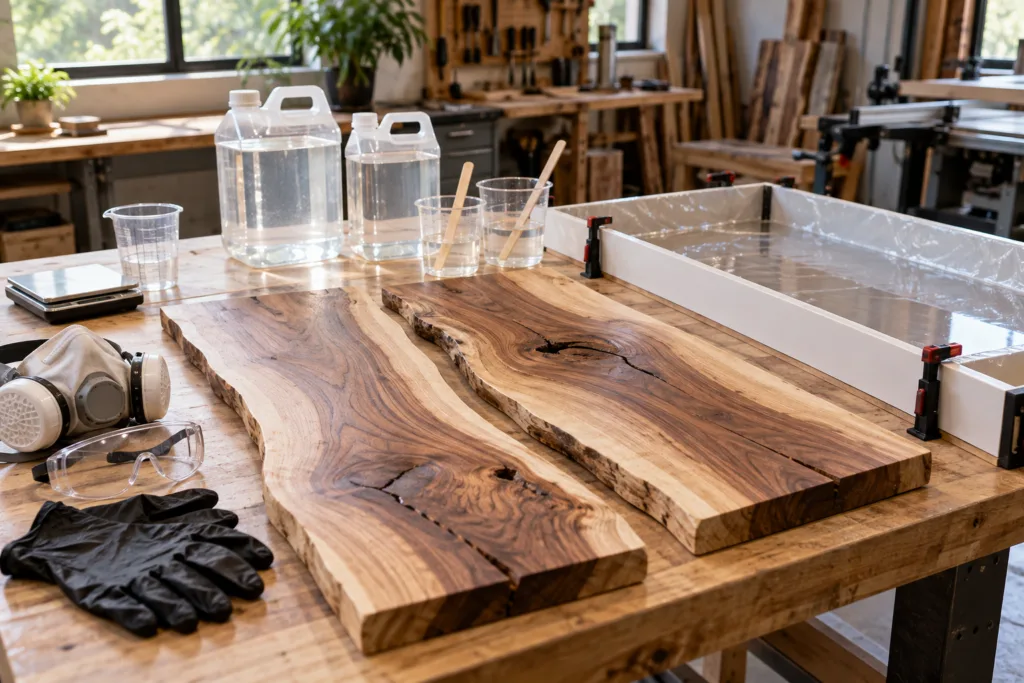
A casting resin fills a void, mold, or encapsulation space; a coating forms a comparatively thin surface layer; an adhesive is selected for a bond line between substrates. These uses can overlap in a project, but the product documentation must identify the intended application. A system described for tabletop coating or bonding should not be treated as a deep-cast material without evidence for the planned section and cure conditions.
This distinction matters for river tables because the resin may contact porous end grain, remain in a large volume, interface with a sealed or unsealed surface, and later be machined or finished. Art projects may introduce different requirements: small molds, irregular shapes, embedded objects, dyes, pigments, or repeated visual batches. Each change can alter flow, air entrapment, adhesion, appearance, and cure behavior. Treat general practice as a starting hypothesis, not a ZDS product claim.
A clear epoxy selection guide can help structure the inquiry, but the final decision should rely on the current product identity and its TDS and SDS. Ask whether the proposed system is documented for casting, encapsulation, coating, bonding, or more than one of these uses. Where the documentation is unclear, request technical clarification before ordering material for a full pour.
Match the Product to the Substrate
Wood is not a uniform surface. Species, porosity, moisture condition, machining marks, dust, oils, seal coats, and end-grain exposure can change the result. A mold or insert introduces another interface, so compatibility should be verified for the actual material rather than inferred from a generic epoxy description. The same principle applies to glass, metal, plastics, pigments, dyes, and embedded objects.
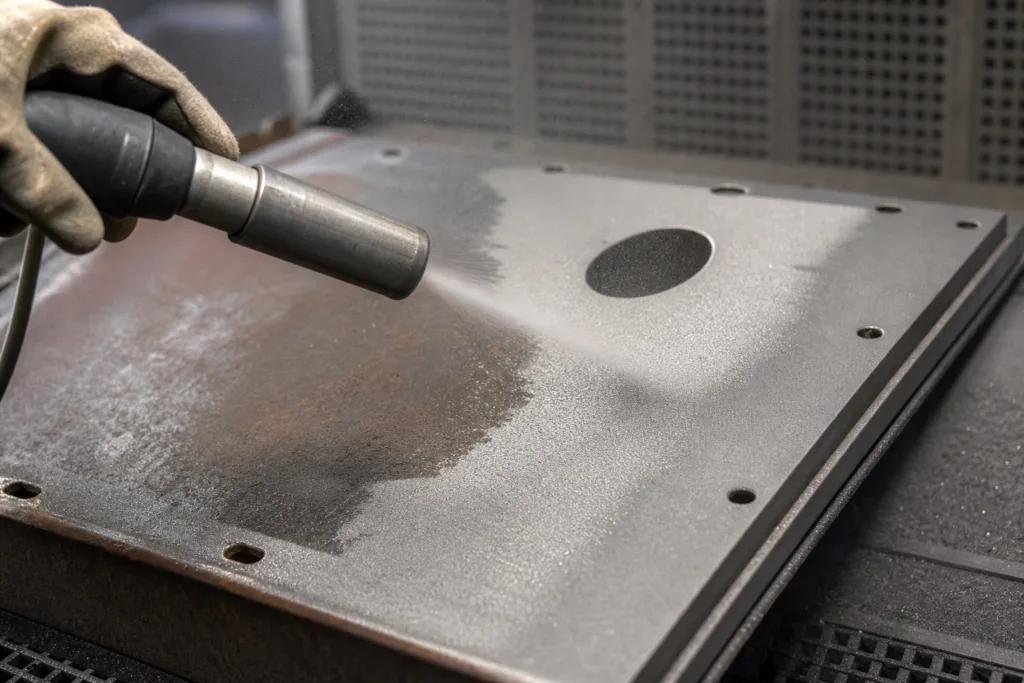
Preparation guidance should identify cleaning, drying, leveling, sealing, masking, and leak-control requirements without assuming a universal method. A seal coat may change absorption and air release; a mold release or mold material may change surface finish and adhesion. Run a small representative trial using the intended substrate, preparation, mold, colorants, inclusions, and finish. Inspect wetting, leakage, bubbles, visible defects, adhesion at the interface, cure state, machining response, and final appearance.
For a wood-table application, epoxy for wood table tops is a relevant application category, not proof that every product in that category suits a river void or thick casting. Confirm the exact product, intended section, process instructions, and exposure limits before approval.
Specify Appearance Without Overclaiming
Define whether the project requires transparent, tinted, pigmented, filled, glossy, matte, polished, or intentionally varied appearance. Record the lighting used for inspection and decide how much color variation, bubbles, inclusions, surface texture, or edge effect is acceptable. Do not use terms such as “crystal clear,” “non-yellowing,” or “UV-resistant” unless the current product evidence supports them under stated conditions. For sunlight or outdoor service, request formulation-specific exposure information and validate the finished system, including any topcoat.
Match Viscosity and Working Window to the Geometry
Viscosity and working time should be evaluated against the actual void, mold, inclusion layout, and available dispensing method. A narrow channel between wood slabs creates different flow and air-release demands from a large irregular mold. Porous end grain, recesses, and embedded objects may also change how the liquid wets surfaces and where air remains trapped.
Request the current TDS values and guidance for viscosity, working or handling time, cure behavior, application temperature, dispensing method, and allowable section or pour conditions where published. Do not infer a maximum pour depth from a product label or from another epoxy system. If the documentation does not state whether the material is suitable for the planned section, ask ZDS technical support before approving the design.
During a representative trial, record the room and material conditions, batch identity, mixing method, pour sequence, time available for placement, bubble behavior, leakage, surface leveling, and cure observations. The trial should use the intended wood, mold material, colorants, inclusions, and finishing route. A process that works in a small open sample may not be reproducible at the volume or geometry of a production table.
Control Mixing, Dispensing, and Cure
Use only the component identities, mix ratio, mixing method, working window, application temperature, cure schedule, and recoat or finishing instructions stated in the current product documentation. These details are formulation-specific. Do not substitute a ratio from another resin, adjust the components to change flow, or add pigments, dyes, solvents, fillers, or other materials unless compatibility and safety have been confirmed.
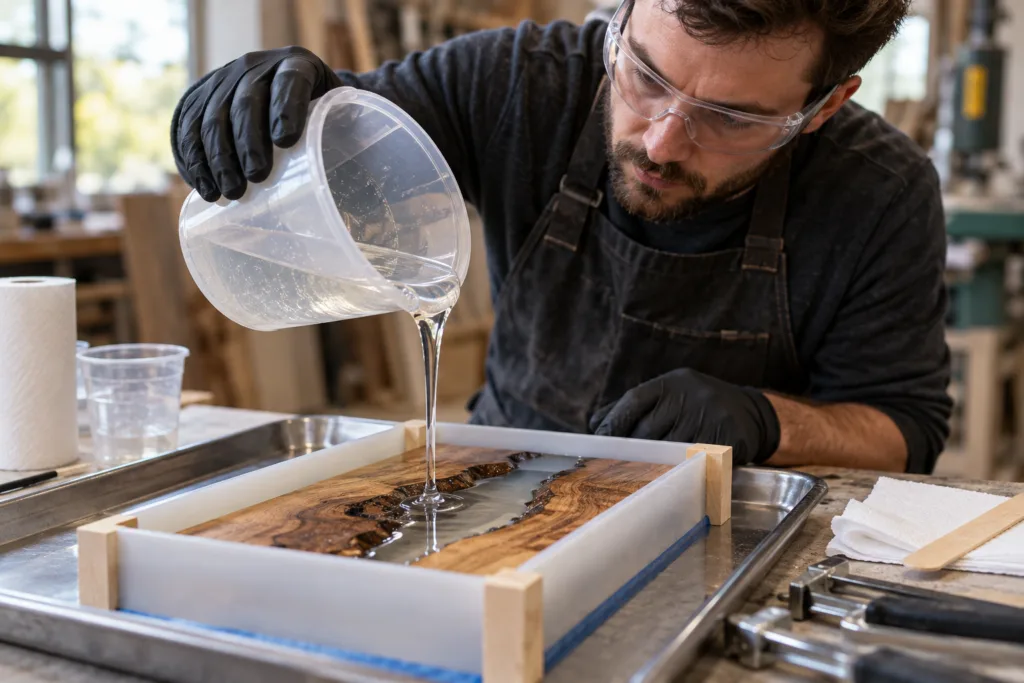
Set up a controlled work area with suitable ventilation, clean tools, stable temperature, leak containment, and access to the current SDS. Operators should use the protective equipment, spill response, storage, disposal, and emergency measures specified by the SDS and applicable workplace procedures. The SDS remains the authority for hazards, sensitization, skin and eye protection, and handling restrictions.
For repeat work, define how components are identified, measured, mixed, transferred, dispensed, and traced to a batch or lot. A simple process record can capture operator, date, material identity, batch information, ambient conditions, preparation method, and cure observations. This record helps separate a material issue from a substrate, process, mold, or environmental issue.
Plan Finishing and Service Exposure
Approval should cover the cured surface, not only the wet appearance. Confirm whether the planned process includes trimming, sanding, machining, polishing, a clear topcoat, or another finish, and validate the complete sequence on a representative sample. Inspect the surface for tack, voids, bubbles, cloudiness, edge defects, uneven color, and other criteria agreed before the trial.
Service conditions also need a documented decision. List expected sunlight, moisture, heat, chemicals, abrasion, impact, cleaning agents, and mechanical handling. Request formulation-specific data for relevant exposures, including test method, specimen, duration, and conditions where such data is available. A clear appearance alone does not establish outdoor, food-contact, high-heat, waterproof, or structural suitability.
For art projects, record how the finished piece will be displayed, handled, cleaned, and stored. For furniture, include the intended environment and finish maintenance. Where sunlight or temperature is important, validate the complete cured system, including pigments, inclusions, seal coats, and topcoats, rather than evaluating the resin in isolation.
Validate Before Buying at Production Volume

Use a staged approval process. First, confirm the product identity and application scope. Next, review the current TDS and SDS and resolve missing information with ZDS. Then prepare a representative sample at a geometry, substrate condition, color, inclusion level, and finish that reflect the planned job. The sample should be large and realistic enough to expose leakage, wetting, air entrapment, cure, machining, and appearance issues.
Set written acceptance criteria before the trial. These may cover surface appearance, color consistency, bubbles, void filling, interface condition, tack-free or cured state as defined by the documentation, machining response, finish adhesion, and exposure observations. Do not convert an informal visual impression into a product guarantee. Retain photographs, process records, sample identification, inspection results, and any technical response received from ZDS.
Distributors and repeat buyers should also verify packaging format, labeling, component identification, storage guidance, batch traceability, export or shipping documents, minimum order requirements, lead time, and availability directly with ZDS or an authorized distributor. These commercial details can change the practicality of a system even when the sample is acceptable. For small studios, DIY epoxy project guidance may provide useful project context, but it does not replace product-specific TDS and SDS review.
Before a full pour or stocking order, contact the ZDS technical team with the substrate pair, process, operating environment, validation plan, quantity, and packaging needs.
Frequently Asked Questions
How do I know whether a clear epoxy resin is suitable for a river-table casting rather than a tabletop coating?
Confirm that the current product documentation identifies casting or encapsulation use and addresses the planned geometry, section conditions, process window, and cure requirements. A coating or bonding description alone is not evidence for a river-table pour.
What information should I request from ZDS before selecting a clear epoxy casting system?
Request the current product identity, TDS, SDS, component instructions, viscosity, working and cure behavior, section or pour guidance, application temperature, compatibility information, packaging, batch traceability, storage, and supply details where applicable.
Can pigments, dyes, wood sealers, or embedded objects be used with clear epoxy resin?
They should be used only after compatibility and safety have been confirmed for the selected system. Validate the actual pigment, sealer, inclusion, substrate, mold, and finishing process in a representative sample.
How should I validate a clear epoxy resin before making a full-size river-table pour?
Run a representative sample using the intended substrate, geometry, preparation, colorants, inclusions, mold, conditions, and finish. Record the process and inspect wetting, leakage, bubbles, cure, appearance, machining response, finish compatibility, and relevant exposure behavior.
Is clear epoxy resin suitable for outdoor, food-contact, or high-heat applications?
Do not assume suitability from a clear appearance or general epoxy description. Require formulation-specific evidence for the intended exposure and confirm any regulatory or use restrictions before approval.