Introduction: Why Shelf Life Matters for Cyanoacrylate Adhesives
When it comes to assembly and repair, the shelf life and stability of cyanoacrylate adhesives—often known as instant or super glues—can make the difference between a successful bond and a costly failure. For manufacturers and everyday users alike, extending shelf life isn’t just about reducing waste; it means reliable performance, predictable results, and lower costs. But what exactly shortens the shelf life of cyanoacrylates, and what can be done to prolong it? This article explores effective methods and innovations for keeping your adhesives potent, covering optimal storage strategies, the role of chemistry, and practical, field-tested tips to ensure adhesives stay at peak performance.
The Chemistry Behind Cyanoacrylate Adhesive Stability
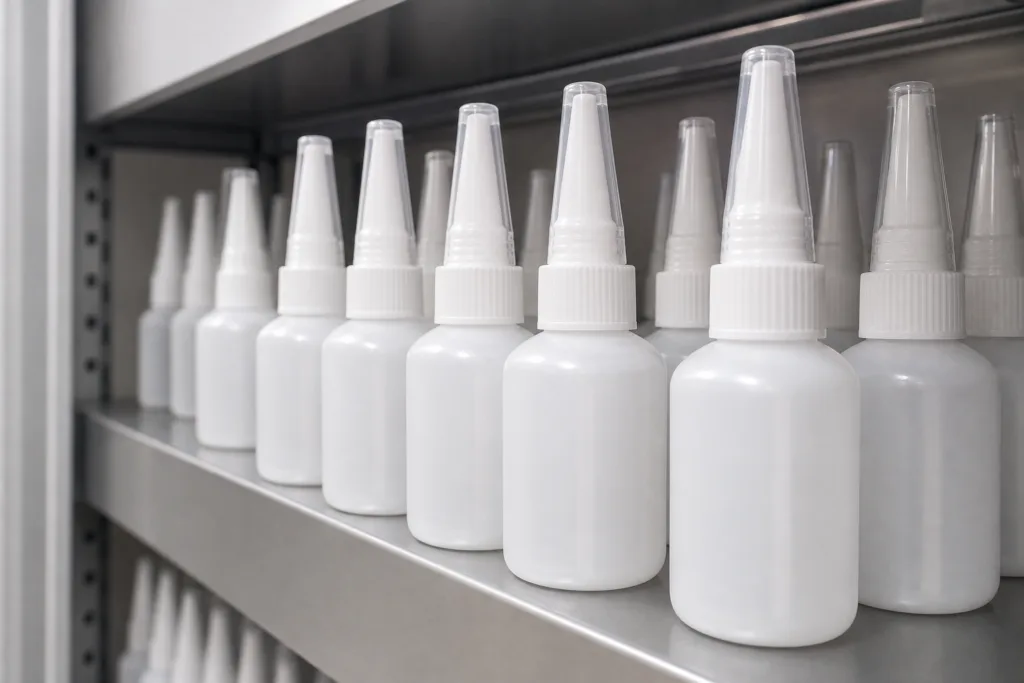
Cyanoacrylates are single-component, fast-curing adhesives that polymerize in the presence of moisture. Their basic structure—a cyanoacrylate monomer—makes them susceptible to polymerization, even before they’re used. Stability depends on preventing premature reactions inside the bottle. Factors like trace moisture, high temperatures, and contamination can compromise shelf life, which is typically estimated between 6 to 24 months from the manufacturing date.
Understanding Shelf Life and Stability: Definitions and Dynamics
Shelf life refers to how long a material retains its performance characteristics under proper storage conditions. Stability describes an adhesive’s resistance to chemical and physical changes over time. In cyanoacrylates, stability is influenced by bottle material, seal integrity, exposure to air, and environmental conditions.
What Shortens Cyanoacrylate Shelf Life?
The main culprits that reduce shelf life include moisture, heat, light, and contamination. Even small amounts of water vapor in the air can start the polymerization process inside the bottle. Every time a container is opened—or not sealed tightly—moisture can enter, slowly degrading the adhesive. In high-volume assembly lines or repair stations, constant opening and closing of the bottle can accelerate this process, especially if environmental controls are lacking.
Critical Role of Moisture
Moisture is the most significant threat to cyanoacrylate stability. Even a few parts per million of water vapor can trigger unwanted curing. For this reason, humidity control in both storage and use environments is crucial. For manufacturers, integrating industrial-grade cyanoacrylates with robust sealing processes can reduce premature failure of adhesive stock.
The Impact of Temperature and Light
Storage temperature dramatically affects cyanoacrylate shelf life. Warmer conditions increase the rate of chemical reactions, reducing usable time. Ideally, cyanoacrylate adhesives should be kept at 2–8°C (36–46°F) in airtight containers. Excessive light, particularly UV, can also initiate breakdown, which is why opaque or UV-blocking packaging is standard in the industry.
Packaging Solutions: Barrier Technology and Bottle Choices
The choice of packaging can increase shelf life. Specialty bottles made from high-density polyethylene with barrier layers minimize air and moisture ingress, while one-way valve systems help prevent backflow contamination. Multi-layer foil or composite pouches may be used for bulk packs or where long-term storage is required. Ensure your packaging meets both chemical compatibility and environmental resistance standards for best results.
Optimal Storage Conditions for Extended Shelf Life
Reliable cyanoacrylate performance starts with these simple, field-tested rules:
- Store bottles tightly closed in their original, air- and moisture-resistant packaging.
- Maintain temperature at 2–8°C (36–46°F), ideally in a dedicated refrigerator not used for food.
- Avoid excessive heat, freezing, or direct sunlight.
- Allow adhesives to reach room temperature before opening to avoid condensation inside the bottle.
- Limit bottle opening time to minimize air entry.
For more on controlling adhesive pot life in demanding environments, see the guide on managing pot life in 2-part polyurethane systems.
Preventing Cross-Contamination and Clogging
When tips, applicators, or nozzles become contaminated (for example, by substrate dust, skin oils, or water), it increases the risk of clogging and premature hardening. Using single-use tips or cleaning dispensing equipment regularly reduces glue waste and equipment downtime. For consistent dispensing, periodic cleaning cycles and selecting compatible equipment is critical; a full primer can be found in the Precision Dispensing Equipment Guide.
Transport and Logistics: Maintaining Quality Through the Supply Chain
Adhesives can be affected by temperature swings in transit. Shipping in insulated containers and closely monitoring humidity are routine practices for major adhesive suppliers. If adhesives experience temperature extremes, always check for unusual viscosity, odors, or presence of cured particles before use.
Practical Tips for Manufacturers and End Users
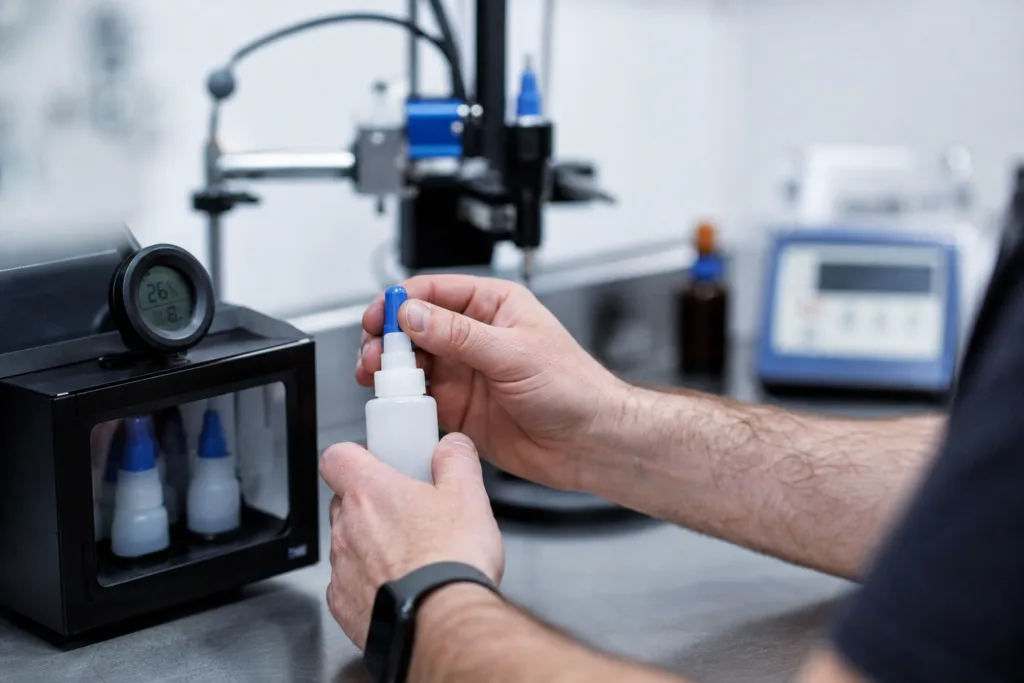
- Purchase only the quantities needed for short-term use to minimize time in storage.
- Label bottles with opening dates; first-in, first-out (FIFO) rotation maintains quality and reduces old stock risk.
- Do not transfer adhesive into unapproved containers, as this often leads to contamination.
- For assembly lines, consider small, portion-sized packs to reduce air exposure each time glue is dispensed.
Quality Control: Testing Shelf Life Before Use
Check adhesives for signs of polymerization, increased viscosity, or changes in color before applying them in critical applications. Simple bench tests, such as forming a bond on a scrap piece and measuring tack or fixture time, verify viability as adhesives age. For industries with regulated safety or performance requirements, regular shelf-life verification is essential for quality management systems.
Advances in Cyanoacrylate Formulation for Extended Shelf Life
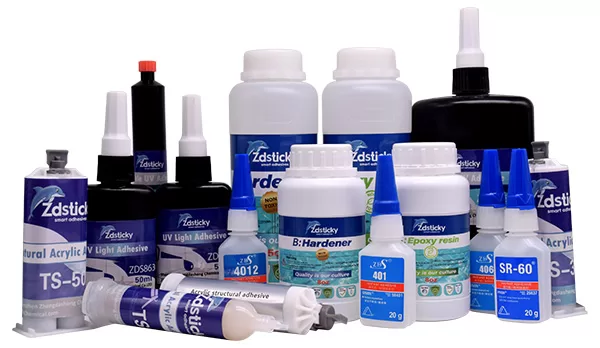
Recent innovations in cyanoacrylate chemistry include improved stabilizer additives that slow down unwanted polymerization. This results in longer open-bottle shelf lives and increased performance even in humid conditions. Additionally, new crosslinking agents and rubber-toughened variants offer greater temperature and moisture resistance. ZDS Adhesive, an industrial adhesive manufacturer, evaluates all new formulations through simulated climate aging—an approach that ensures a bottle’s “real-world” lifespan is as predictable as its certified one.
Dealing with Expired Cyanoacrylate: What Are the Risks?
Expired adhesives may cure slowly, weakly, or not at all. In some cases, shelf-aged cyanoacrylates can also become lumpy or thick, increasing the risks of equipment blockage and poor wetting. Never use old or compromised adhesive on safety-critical or high-value assemblies. The cost of rework or field failure far outweighs savings from using old supplies.
Innovative Storage and Packaging Strategies
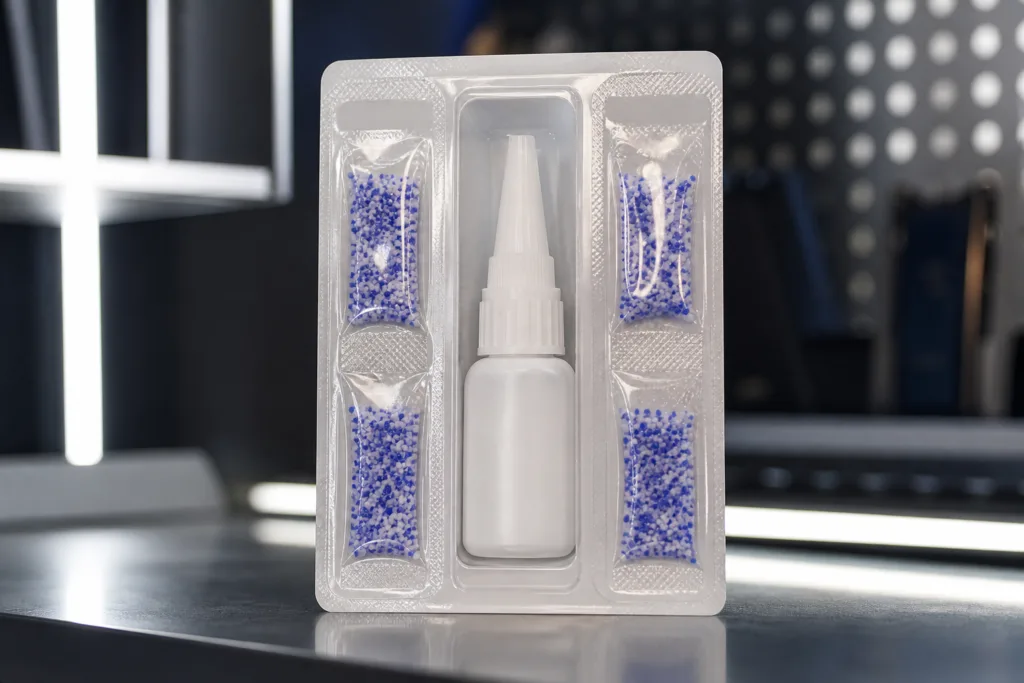
Manufacturers are increasingly offering pre-filled syringes, dual-pack ampoules, and mini-tubes that limit air contact and are quick to dispose of after single use. Smart packaging with built-in desiccant capsules or gas-scavenger sachets can capture residual moisture inside the bottle, especially helpful for high-value, specialty adhesives. For automated production, sealed cartridge systems integrated into robotic dispensing lines are gaining traction.
Sustainability and the Future: Minimizing Waste
Extending shelf life has sustainability impacts. Less expired adhesive means fewer hazardous waste returns and more efficient use of packaging. Expect to see more recyclable bottles, biodegradable barriers, and reusable storage modules in coming years, reducing both environmental impact and total cost of ownership.
The Role of Training and SOPs in Shelf Life Management
Proper staff training and clear standard operating procedures (SOPs) are central to upholding adhesive performance. Practical, recurring training sessions on correct storage, FIFO principles, and handling protocols ensure even well-designed adhesives reach their full potential. In high-volume assembly or critical end-use industries, these routine checks pay off substantially in reduced rework rates and improved product quality.
Frequently Asked Questions
How long can cyanoacrylate adhesives be stored if kept unopened?
Most cyanoacrylate adhesives remain usable for 6–24 months if kept sealed in a cool, dry environment and at a constant temperature between 2 and 8°C away from direct light.
Can I store cyanoacrylate adhesives in my home refrigerator?
Yes, you can store them in a dedicated refrigerator (do not use one where food is present) at 2–8°C, making sure the bottle is tightly closed and brought to room temperature before opening to avoid condensation.
What should I do if the glue nozzle becomes clogged?
Remove cured material from the nozzle using a clean pin or replace it with a new applicator tip if available. Always wipe the nozzle after each use and recap tightly.
Will using adhesives past their shelf life always result in failure?
Not always, but shelf-aged cyanoacrylates can lose bond strength, become thick or stringy, and may not work in safety-critical applications. Always run a performance test when in doubt.
Does temperature cycling during shipping reduce shelf life?
Yes. Repeated heating and cooling can encourage premature polymerization and reduce overall stability. Always check adhesives after shipment for any change in flow, appearance, or odor before using.
Are there cyanoacrylate alternatives with longer shelf life for extreme conditions?
Yes. Newer formulations—like rubber-toughened or modified cyanoacrylates—can offer greater longevity, especially when stored in the correct packaging and controlled climate conditions.
Related Reading
- Gel vs. Liquid CA: Which Is Best for Vertical Bonding?
- Medical Grade vs. Industrial Cyanoacrylates: 2026 Safety & Performance Guide
- How Rubber-Toughened CAs Unlock Next-Level Heat and Shock Resistance
- Switching to Low-Blooming, Low-Odor Super Glues for Clean Bonds
- Proven Ways to Speed Up Instant Adhesive Cure with Activators