Introduction: Why EMI Shielding Pastes Matter in System-in-Package (SiP) Electronics
Electromagnetic interference, commonly known as EMI, poses a major threat to the functionality and reliability of compact electronic devices. As modern gadgets become smaller, faster, and more densely packed thanks to System-in-Package (SiP) integration, the need for robust EMI shielding solutions has never been greater. EMI shielding pastes for System-in-Package (SiP) are crucial for blocking unwanted signals that could cripple high-performance electronics. These pastes, made from highly conductive materials, act as barriers to external and internal electromagnetic disturbances, ensuring sensitive circuits run smoothly even in harsh signal environments.
What Are EMI Shielding Pastes for System-in-Package (SiP)?
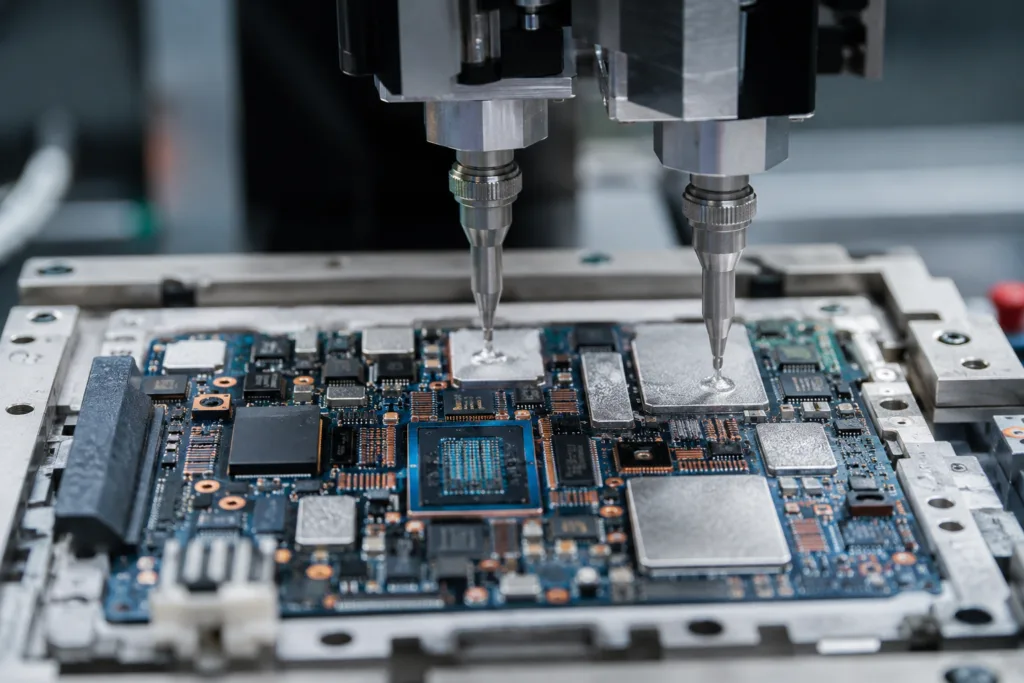
EMI shielding pastes are specialized formulations containing conductive particles in a polymer matrix. In the context of System-in-Package electronic assemblies, these pastes are applied to targeted areas to prevent electromagnetic “leaks” that may cause malfunction, data loss, or regulatory problems. SiP technology, which combines multiple integrated circuits (ICs) and components into one compact package, relies on these shielding pastes for space-saving, efficient EMI protection.
Understanding System-in-Package (SiP) and the EMI Challenge
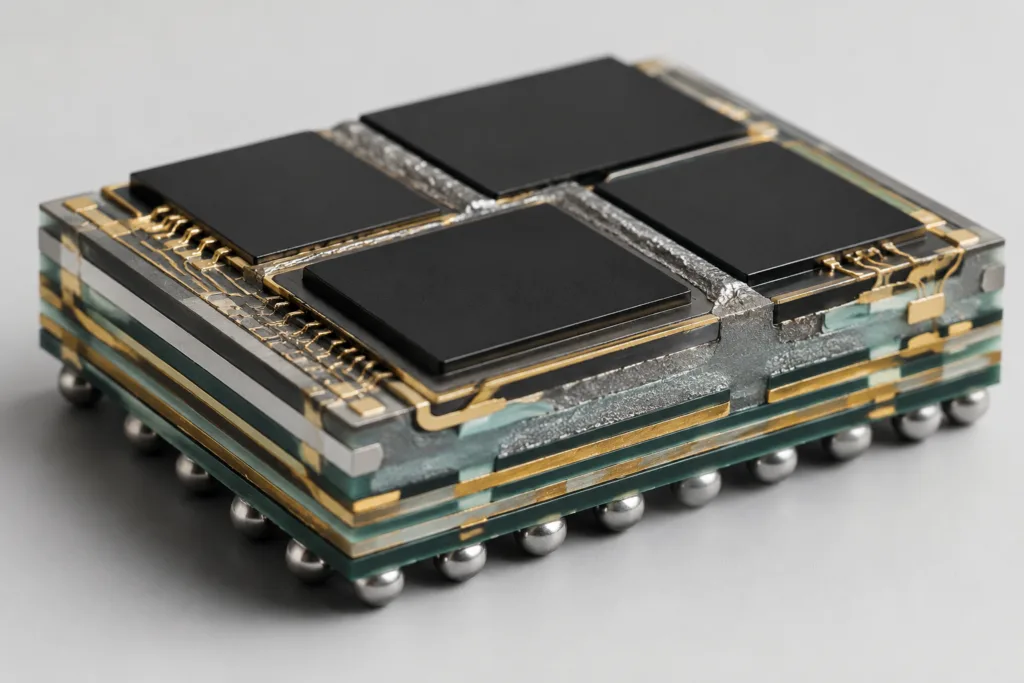
SiP modules pack various chips—such as processors, memory, and wireless radios—into a single substrate, enabling powerful computational abilities in miniature devices. However, with multiple ICs working close together, the risk of electromagnetic crosstalk and interference increases. Without effective shielding, these internal signals may escape or external signals may infiltrate, disrupting operation. That’s where the strategic use of EMI shielding pastes comes into play, preserving signal integrity in even the most congested designs.
Why EMI Shielding Is Essential in Miniaturized Electronic Packaging
EMI shielding is vital for meeting international standards, ensuring safety, and maintaining performance in automotive electronics, wearables, smartphones, medical devices, and industrial sensors. Even slight EMI can cause major failures—think missed heartbeats in a health monitor or dropped signals in a wireless module. Shielding pastes offer a fine-tuned, customizable approach that fits the limited real estate of SiP layouts.
Core Functions of EMI Shielding Pastes in SiP Structures
- Provide continuous conductive barriers over and around critical signal paths
- Fill gaps and seams where traditional metal covers are impractical
- Bond to diverse substrates including ceramics, polyimide, or silicon
- Withstand temperature fluctuations, humidity, and the physical stress of assembly
- Meet RoHS, REACH, and other environmental regulations
Typical Composition of Conductive Pastes Used for EMI Shielding in SiP
Most EMI shielding pastes are made from a blend of the following:
- Polymer Matrix: Epoxy, acrylic, silicone, or polyurethane bases are chosen for substrate compatibility and durability.
- Conductive Fillers: Silver, copper, nickel, carbon, or hybrid particles provide the path for electric charge and EMI attenuation.
- Additives: Enhance flexibility, adhesion, curing speed, or resistance to environmental factors.
Key Properties and Performance Criteria
- Shielding Effectiveness (SE): Measured in decibels (dB) over a range of frequencies, typically 60–100 dB for leading pastes.
- Volume Resistivity: Indicates how well the paste conducts electricity; the lower, the better for shielding, commonly 10-4 to 10-5 Ω·cm.
- Adhesion and Mechanical Strength: Ensures the paste stays in place during bonding, reflow, or operational vibration.
- Flexibility and Curing: Needed for SiPs with thermal cycling or dimensional movement.
Application Methods: How Are EMI Shielding Pastes Used in SiP Packaging?
Application process and equipment selection directly affect the performance of EMI pastes in SiPs. Common application methods include:
- Screen Printing: For high-volume, repeatable coverage of large or flat areas.
- Dispensing: Enables selective placement on narrow traces, corners, or over 3D surfaces.
- Stencil Printing: Used for precise, automated layering in volume production.
After application, pastes are typically cured at set temperatures to harden the polymer matrix and achieve final properties.
Common Challenges When Applying EMI Shielding Pastes in SiP Designs
- Miniaturization: Extremely fine features and tight tolerances leave little room for excessive paste or rework.
- Material Compatibility: The paste must bond equally to metals, polymers, and ceramics found in SiP substrates.
- Process Integration: Shielding steps must fit into existing surface mount or assembly lines without slowing throughput.
- Consistent Coverage: Uniform thickness is essential for reliable EMI protection and meeting regulatory targets.
Read more about capillary underfill for flip-chip packaging, a related topic in advanced packaging processes.
Solving Miniaturization Problems: Practical Guidelines
- Use low-viscosity pastes for fine features
- Optimize nozzle shapes for targeted dispensing
- Run pilot tests to validate coverage on mock SiP boards
Material Innovations: Trends in Conductive Filler Technology
Recent advances have produced hybrid fillers combining silver with carbon or nickel, dramatically improving cost-to-performance ratios. Nanoscale particles now boost total surface area and create more effective EMI barriers without raising viscosity or compromising print quality. These technology trends mean manufacturers can achieve EMI shielding at lower fill weights and reduced cost per unit.
Curing Technologies for High-Reliability SiP EMI Pastes
Modern formulations offer one- and two-part options, including UV-curable, moisture-curing, and heat-cured pastes. Fast-curing systems reduce production bottlenecks and minimize warpage or movement during SiP assembly.
Comparison Table: Types of EMI Shielding Pastes for SiP
| Type | Typical Fillers | Curing | Main Benefit |
|---|---|---|---|
| Epoxy-based | Silver, nickel | Heat | High adhesion, chemical resistance |
| Silicone-based | Silver, carbon | Room/Heat | Thermal flexibility, vibration absorbing |
| Acrylic-based | Nickel, copper | UV/Heat | Fast cure, good for plastics |
| Composite/hybrid | Silver-carbon, nickel-graphite | Custom | Tailored for cost/performance |
EMI Shielding Pastes for System-in-Package (SiP): Performance in Action
Consider a modern wearable health tracker packed with sensors, a wireless chip, and a microprocessor. Without effective EMI shielding paste, the RF signals easily leak, causing unreliable step counts and heart data. By integrating a silver-filled epoxy paste along critical seams and chip pins, the device passed both local and international EMI standards, even after extensive thermal cycling tests.
ZDS Adhesive’s Experience: Material Selection and Testing for Reliable Shielding
From an assembly-line viewpoint at ZDS Adhesive, an industrial adhesive manufacturer, engineers recommend EMI shielding pastes with volume resistivity lower than 5.0×10⁻⁵ Ω·cm for advanced SiP applications. When bonding to mixed substrates, they also suggest running humidity aging and reflow solder resistance tests to verify both the mechanical and electronic performance for the product lifecycle.
Failure Modes and How to Avoid Them During SiP EMI Shielding Paste Application
- Poor surface cleaning leads to delamination
- Excess paste thickness causes voids or slumping
- Inadequate curing weakens shielding effectiveness
- Overly rigid pastes crack under thermal cycling in portable devices
Proper process control—including surface prep, paste selection, and automated application—dramatically reduces these risks. Explore further ways to protect SiP assemblies with conformal coating for charging stations.
Case Study: EMI Shielding Paste Success in Wearable SiP Modules
A leading smart ring designer reduced rework rates by 38% after switching to nano-silver hybrid paste. Automated dispensing enabled reliable coverage of curved, miniaturized SiP boards, helping the company meet FCC and CE EMI standards and accelerate time-to-market by two months.
Cost Considerations and Supply Chain Factors
Silver is the most effective filler but also the costliest. Hybrid silver-carbon pastes balance performance and price for consumer electronics, while pure nickel or carbon are suitable for budget lines with lower EMI demands. Always check supply chain stability and shelf-life in volume procurement decisions.
Environmental and Regulatory Standards: What Drives EMI Shielding in Modern Electronics?
EMC (electromagnetic compatibility) standards such as FCC Part 15, CISPR 22, and ETSI EN 301 489 demand low radiated emissions from electronic modules. RoHS and REACH also require pastes to be free of hazardous substances like lead, certain plasticizers, and halogens. Schedule regular compliance testing, as non-conformance can delay product launches. You may also find practical strategies for resilient waterproofing in our blog on IP68 Waterproof Potting for Outdoor DC Charging Piles.
Testing Methods to Validate Shielding Paste Performance in SiP Devices
- ASTM D4935: Standard test method for EMI shielding effectiveness of planar materials
- Surface Resistivity Checks: Performed after curing as part of routine QA
- Thermal and Humidity Cycling: Simulate field conditions
- Peel and Shear Tests: Confirm paste adhesion and flexibility
Future Trends: Printable and Flexible EMI Shielding Pastes
The latest advances focus on ultra-thin, printable shielding layers for foldable electronics and IoT sensors. Self-healing pastes, stretchable compositions for wearable SiPs, and sustainability improvements, such as bio-based polymers or recyclable fillers, are on the research horizon for 2026 and beyond.
Summary Table: Key Parameters When Selecting EMI Shielding Paste for SiP
| Parameter | Optimal Value or Range | Importance |
|---|---|---|
| Shielding Effectiveness (SE) | ≥ 80 dB | Blocks most EMI across frequencies |
| Volume Resistivity | < 1.0×10⁻⁴ Ω·cm | Enables strong conductivity |
| Cure Time | < 10 minutes (UV) or <1 hour (thermal) | Boosts production speed |
| Adhesion | > 1.5 MPa (varies by substrate) | Ensures long-term reliability |
| Flexibility | High (strain to failure > 10%) | Prevents cracking |
EMI Shielding Pastes for System-in-Package (SiP)
From critical 5G communication boards to tiny hearing aids, EMI shielding pastes for System-in-Package (SiP) are unsung heroes in the battle for electronic reliability. As systems continue to shrink, rely on process-proven, standards-compliant pastes supported by robust testing protocols and experienced manufacturing partners.
Conclusion: Building Reliable, Compliant Miniature Electronics with Advanced EMI Shielding Pastes
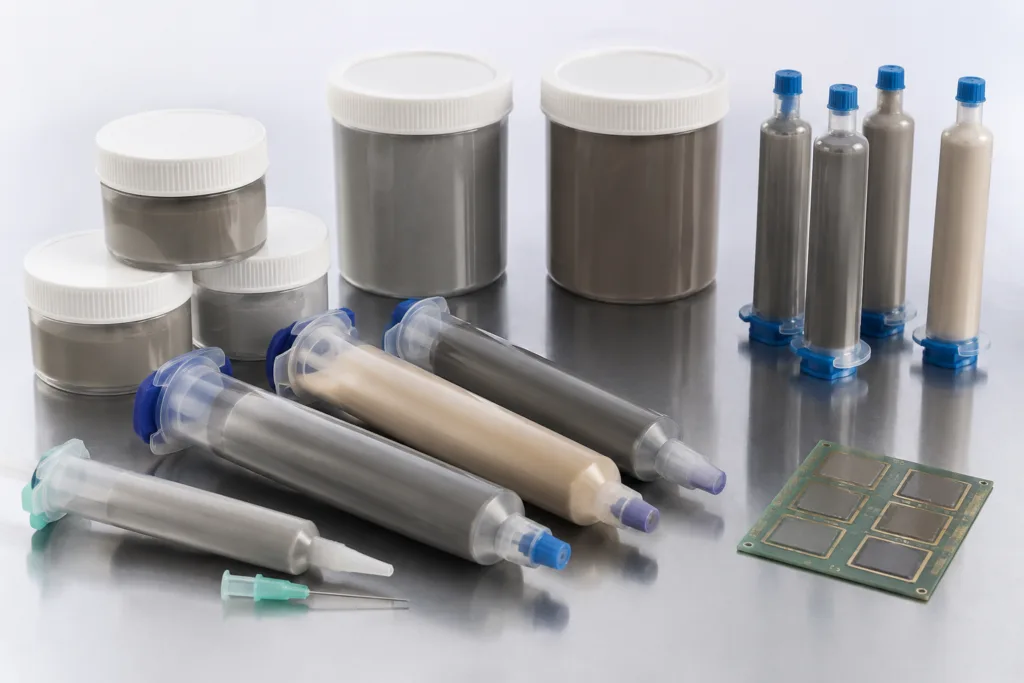
EMI shielding pastes for System-in-Package (SiP) are central to unlocking compact, high-speed, and compliant electronic designs. A smart choice of paste—matched to your specific SiP architecture, manufacturing process, and regulatory requirements—can make the difference between flawless product launches and frustrating field failures. With innovations in material composition and application methods, plus industry insights from manufacturers like ZDS Adhesive, application engineers and designers have a clear path to future-ready shielding solutions.
Frequently Asked Questions
What is the main role of EMI shielding pastes in System-in-Package designs?
They block unwanted electromagnetic interference to keep signal quality high and devices functioning reliably in small, densely packed modules.
How are EMI shielding pastes applied in SiP assembly?
Most pastes are dispensed, printed, or stenciled onto target areas, then cured to form continuous barriers over or between sensitive components.
Which type of conductive filler offers the highest EMI shielding in SiP applications?
Silver-based fillers have the best performance, but hybrid fillers (silver-carbon, nickel-graphite) offer cost benefits and good shielding for many uses.
Can EMI shielding pastes meet environmental safety regulations?
Yes, leading formulations are RoHS and REACH compliant, meaning they are free from restricted chemicals and safe for global markets.
What are the biggest challenges when using EMI shielding pastes in miniaturized SiPs?
Achieving consistent coverage on tiny features, bonding to varied substrates, and integrating with fast-paced manufacturing lines are top challenges.
How can engineers verify the effectiveness of EMI shielding pastes?
By measuring shielding effectiveness (dB), surface resistivity, and performing durability tests like thermal cycling and peel/shear strength checks.
Related Reading
- Temporary Bonding Secrets for Flawless Wafer Dicing in Electronics
- How Structural PU Adhesives Dominate Carbon Fiber Bonding in 2026
- Revolutionizing Heat Sinks in AAUs with Phase Change Materials
- 2026 Buyer’s Guide to the Best Adhesives for Every Plastic
- 17 Ways Structural Bonding Boosts Battery Swap Station Reliability