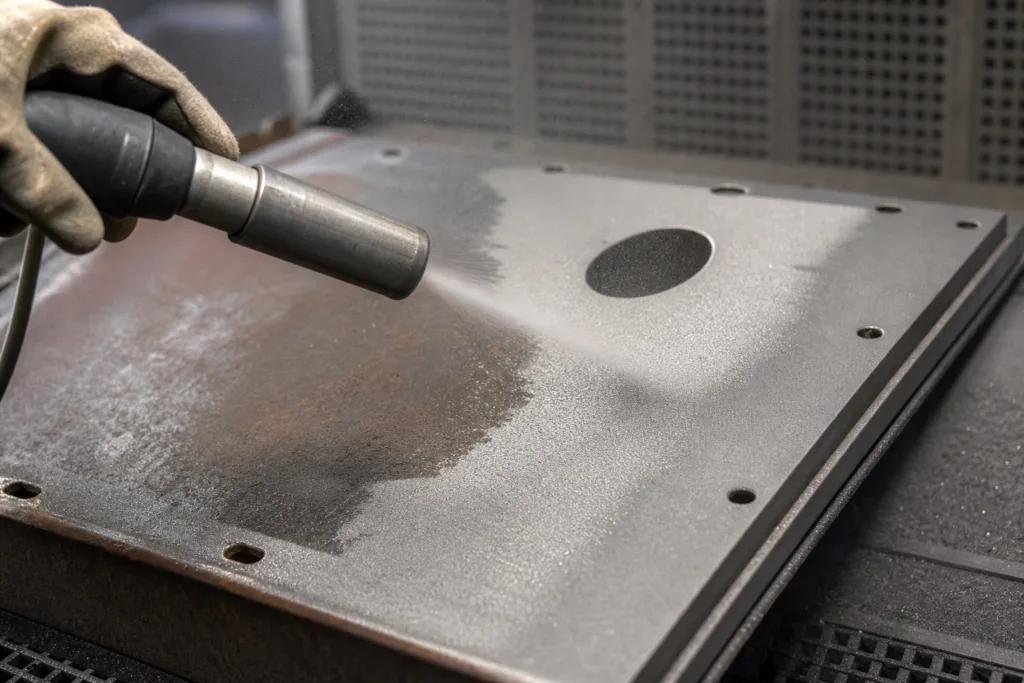
What decision must the adhesive pass?
Chemical-resistant adhesives for oilfield applications are suitable only when documented compatibility and cured-bond performance match one defined joint’s substrates, geometry, loads, cure conditions, chemical exposure, temperature cycle, moisture state, and service interval. The qualification task is therefore not to find an adhesive that is broadly described as oilfield-ready. It is to decide whether one candidate passes the requirements for a specific bonding, sealing, repair, or maintenance joint. For a related technical consideration, oil and gas adhesive solutions.
Start with an application record approved by engineering. Identify the equipment, joint function, substrate pair, surface condition, bond-line gap, load direction, movement, access, and consequence of bond failure. Record whether the joint is structural, retaining, protective, or intended to assist a seal. Adhesive bonding should not be treated as proof of pressure-sealing capability or as a substitute for a mechanical fastener, gasket, weld, or engineered seal without a separate design review.
Broad oil and gas adhesive solutions information can provide context, but it cannot replace product-level evidence for the proposed joint. Before purchase or field use, require a current technical data sheet (TDS), safety data sheet (SDS), relevant compatibility information, application instructions, and an agreed acceptance criterion. A candidate with missing evidence remains unqualified, even if its chemistry appears suitable.
Build the oilfield exposure profile before comparing products

Terms such as “harsh chemicals,” “high temperature,” or “oilfield service” are too broad for a defensible selection. Describe the actual exposure the cured bond will encounter. Identify each process fluid or cleaning chemical where known, its concentration or composition information, contact mode, exposure duration, and whether contact is intermittent, splash, condensation, or immersion. Add temperature and pressure history, moisture, thermal cycling, vibration, movement, and the expected maintenance interval.
Separate operating exposure from preparation and maintenance exposure. A bond may contact a process fluid during service and a different solvent, detergent, or treatment chemical during cleaning. Consider start-up, shutdown, upset, storage, transport, and repair conditions where they can change the joint temperature or moisture state. Upstream, midstream, downstream, offshore, and field-repair work may impose different access, contamination, curing, inspection, or environmental constraints; the location alone does not establish adhesive suitability.
| Qualification area | Application information to record | Supplier evidence to request | Approval question | Decision status |
|---|---|---|---|---|
| Fluid exposure | Fluid identity, concentration, contact mode, duration, and cleaning exposure | Compatibility or immersion data stating fluid, conditions, substrate, specimen, and method | Does the evidence represent the real exposure? | Evidence required |
| Temperature and moisture | Operating range, cycling, humidity, condensation, and immersion state | Relevant thermal and environmental data with stated test conditions | Will the cured bond be evaluated across the actual cycle? | Evidence required |
| Joint and load | Substrates, geometry, gap, load direction, movement, vibration, and pressure role | Product limitations, substrate guidance, and application-specific test results | Does the joint design keep adhesive demand within the validated use? | To verify |
| Process | Access, surface condition, working time, fixturing, cure temperature, and inspection | TDS instructions for preparation, mixing or dispensing, handling, and cure | Can the site repeat the documented process? | To verify |
| Release evidence | Acceptance criteria, traceability, failure consequence, and validation owner | Current TDS, SDS, change information, and technical support records | Are evidence gaps closed before approval? | Hold pending validation |
Check substrate compatibility and joint design
Substrate identification must go beyond “metal” or “plastic.” Record the material grade where available, coating, plating, corrosion state, porosity, surface roughness, and whether the part is new, repaired, or contaminated. Include rubber, composite, painted, or dissimilar-material interfaces when present. Wet, oily, oxidized, or previously coated surfaces may require a different preparation method, and the approved method must be repeatable at the intended site.
Joint design and chemistry are linked. Record overlap or contact area, bond-line gap, edge exposure, fillets, access for application, and the direction in which the load reaches the bond. Dissimilar materials can move differently as temperature changes, so a candidate’s rigidity or flexibility must be considered with the joint geometry and service cycle. Do not infer compatibility from a product family name or from a result obtained on a different substrate or surface preparation.
Compare cure mechanism with the available process
Next, determine whether the adhesive can reach its documented cure state within the production or field window. Review component format, mixing or dispensing equipment, working and handling guidance, fixture requirements, ambient temperature and humidity limits, access to the joint, and any post-cure condition. A product that requires conditions unavailable during maintenance cannot be approved solely because its cured chemistry appears attractive.
Screen chemistry families only as starting categories. Epoxy, polyurethane, acrylic, silicone, and other systems can present different balances of rigidity, flexibility, toughness, cure behavior, temperature capability, and chemical compatibility; product-level data controls the decision. Use epoxy adhesive screening when an epoxy candidate is under review, and compare movement and dissimilar-substrate requirements through polyurethane adhesive selection. Neither resource replaces testing on the actual joint and exposure profile.
Prepare surfaces, dispense consistently, and control the bond line
A suitable candidate can still fail when the preparation and application process differs from the evidence used for selection. Convert the supplier’s TDS instructions into a site work instruction that identifies approved cleaning, abrasion, priming, mixing, dispensing, fixturing, inspection, and traceability steps. The instruction should state which surface conditions are acceptable and what happens when the part is oily, wet, corroded, porous, painted, plated, or otherwise outside the qualified condition.
Control contamination between preparation and adhesive application. Record the cleaner or primer, preparation method, equipment, operator, batch or lot, environmental conditions, and inspection result where those controls matter to the joint. Do not substitute a convenient solvent, abrasive, or primer without technical review. A process that cannot be repeated by the intended maintenance or production team is not a qualified process, even when laboratory data appears relevant.
Dispensing must also preserve the intended joint design. Confirm the component format, mixing or metering equipment, nozzle or applicator requirements, working and handling guidance, fixturing method, access limitations, and bond-line control method from the current TDS. Avoid assuming that a visual fillet proves complete wetting or that a filled gap has the same performance as a close-fitting joint. Define inspection points for coverage, squeeze-out, alignment, cure state, visible defects, and evidence of contamination, using acceptance criteria approved by engineering.
Validate before release and review safety documentation
Use staged validation so that evidence becomes more representative as the decision approaches release. Begin with a documented review of the candidate’s TDS, SDS, compatibility information, limitations, and stated test methods. Then evaluate prepared specimens using the actual substrate pair and preparation method. Where chemical exposure is relevant, identify the fluid or reagent, concentration or composition information, temperature, duration, contact mode, specimen construction, and evaluation method. Generic resistance language is not a substitute for these details.

Progress to representative parts or joint constructions that reproduce the proposed geometry, gap, coatings, access, cure conditions, and inspection process. Include the relevant unaged and aged conditions, temperature cycle, moisture or immersion state, mechanical loading, movement, pressure role, vibration, and cleaning exposure. The exact protocol should be set by the responsible engineering team and applicable equipment requirements. Examine failure location and mode, not only whether a specimen remains attached. Record deviations, operator observations, and any change in surface condition after exposure.
Site validation should confirm that trained personnel can repeat the approved process under actual access, environmental, tooling, and maintenance constraints. Define acceptance and rejection criteria before testing, assign an approval owner, and document the conditions under which the result remains valid. A favorable result on one part does not automatically approve another substrate, geometry, exposure, or service interval. Changes to adhesive, packaging, preparation, dispensing equipment, substrate finish, or work instruction should trigger the agreed change-control review.
Procurement and EHS should review the current SDS alongside the TDS. Confirm hazard classification, required handling controls, storage and transport information, spill and waste guidance, personal protective equipment requirements, and jurisdiction-specific obligations through the applicable documents and responsible site functions. Do not infer low toxicity, low emissions, regulatory compliance, hazardous-location suitability, or worker safety from a chemistry name or marketing description. The adhesive selection FAQ may help frame product questions, but application approval still depends on current technical evidence.
Create a procurement and total-maintenance comparison
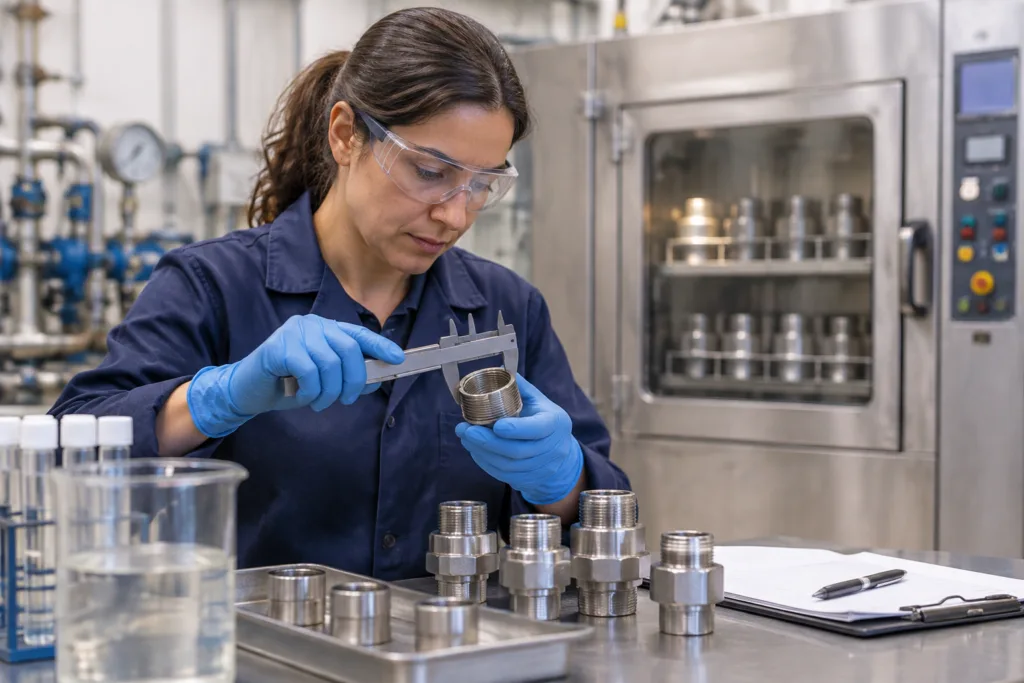
After technical screening, compare candidates on the complete approved process rather than unit price alone. Record the required packaging and dispensing format, storage conditions, transport constraints, lot identification, documentation package, technical support, delivery requirements, and change-notification process. Verify that the proposed pack format is compatible with the equipment and usage pattern documented in the work instruction. Do not invent coverage, shelf life, minimum order quantity, lead time, or supply-continuity claims when the supplier has not confirmed them.
A maintenance comparison can include preparation labor, fixturing, cure-related waiting, inspection, access restrictions, replacement parts, waste handling, and the consequence of an unsuccessful repair. Keep these as documented cost inputs or assumptions in a total-cost model. Claims about reduced downtime, longer service life, lower maintenance, or improved reliability require customer-approved records or application-specific evidence. A candidate should remain on hold when critical exposure, process, safety, or supply evidence is missing.
Before approval, the review record should identify the defined joint, substrates, exposure profile, design role, process controls, validation results, document revisions, acceptance criteria, and responsible approvers. For product-specific questions and an application review, contact the ZDS technical team with the substrate pair, process, operating environment, validation, quantity, and packaging needs.
Qualification questions buyers should resolve
Are chemical-resistant adhesives suitable for every oilfield application?
No. Suitability depends on the defined joint, substrates, geometry, loads, cure process, chemicals, temperature, moisture, pressure role, and validation evidence. A broad oilfield label does not establish approval.
How should chemical exposure be specified when selecting an oilfield adhesive?
Identify the fluid or reagent, concentration or composition information, temperature, contact mode, exposure duration, immersion or splash state, cycling, and cleaning exposure. Match those conditions to documented supplier evidence.
Can a chemical-resistant epoxy bond every metal, plastic, composite, or coated surface?
No. Compatibility depends on the actual material, finish, coating, surface condition, preparation method, joint design, and product data. Test the proposed substrate pair rather than generalizing from the chemistry family.
What testing should be completed before approving an adhesive for oilfield equipment?
Use staged testing that can include prepared-substrate specimens, chemical and temperature exposure, moisture or immersion, representative-part loading, movement, vibration, and failure analysis, according to the application risk.
What should procurement review in the adhesive TDS and SDS?
Review application limits, preparation, dispensing, cure, handling, storage, hazards, protective controls, waste guidance, document revision, packaging compatibility, lot traceability, change notification, and required technical support.
When should an adhesive not be used as a substitute for a mechanical fastener, gasket, weld, or engineered seal?
Do not substitute it when the joint requires a separately qualified pressure boundary, structural load path, positive retention, engineered sealing function, or compliance basis that the adhesive evidence does not establish.
Related technical guidance: polyurethane adhesive selection.