Epoxy adhesive applications are best evaluated by assembly task rather than industry label. Construction repair and anchoring, metal and composite assembly, electronics protection or bonding, automotive components, and marine fabrication can justify screening an epoxy system, but none identifies a suitable product by itself. Start with the substrate pair, surface condition, bond-line gap, loads, cure process, operating environment, and product-specific evidence. Then request current technical data sheets (TDS), safety data sheets (SDS), application instructions, samples, and relevant test data before comparing quotations. For a related technical consideration, epoxy resin system selection.
How to use this industrial epoxy application guide
Use this guide to decide whether epoxy is a credible candidate for a defined joint, repair, potting, or protection task. An application label such as “metal bonding” does not establish adhesion to a particular alloy, coating, or finish; nor does “electronics” establish electrical insulation, thermal transfer, moisture protection, optical clarity, or rework suitability. These outcomes depend on the candidate formulation and the complete assembly process.
Define the required function first: bonding, gap filling, sealing, encapsulation, repair, or a combination. Record both adherends, including coatings, contamination risks, prior treatments, and permitted preparation methods. Identify joint geometry and the expected load modes—such as shear, peel, tension, impact, vibration, or sustained loading. Also set production constraints: application method, working window, cure conditions, handling point, inspection approach, and allowable dimensional change. This requirement set gives suppliers a basis for recommending candidates through epoxy resin system selection rather than offering a generic epoxy grade.
For each candidate, separate screening information from proof. The TDS may describe intended use and handling; the SDS governs hazard, storage, and safe-use review. Neither substitutes for validation on production-representative parts when bond failure, electrical function, environmental exposure, or regulated project requirements matter. Acceptance criteria should be set by the product owner, design authority, or project specification before testing begins.
Where epoxy systems are commonly screened

Industrial teams commonly screen epoxy systems for construction-material repair or bonding, metal and composite assemblies, component fixing or protection in electrical equipment, and assemblies exposed to vehicle or marine service. These are starting categories, not universal-use claims. A system that is worth testing for one concrete repair task may be inappropriate for an anchor-related task; a candidate for a metal bracket may fail the needs of a coated multi-material joint.
| Application area | Typical task to screen | Key selection questions | Evidence to request | Main limitation to verify |
|---|---|---|---|---|
| Construction materials | Repair, bonding, or anchor-related work | What is the substrate condition, load case, cure environment, and project requirement? | Current instructions, substrate preparation requirements, applicable approval documentation, and task-relevant test data | Do not infer structural or anchoring approval from an epoxy label |
| Metal and composites | Metal-to-metal, metal-to-composite, or composite-to-composite assembly | What coatings, joint geometry, movement, and environmental conditioning apply? | Substrate-specific adhesion data, bond-line guidance, relevant mechanical data, and representative-part validation | Surface preparation and peel or movement sensitivity can control the result |
| Electronics | Component bonding, encapsulation, or protection | Is the requirement mechanical, electrical, thermal, optical, environmental, or rework-related? | Relevant TDS values and test reports for the stated function, plus component-compatibility evidence | Do not assume insulation, heat transfer, or moisture protection |
| Automotive or marine service | Bonding or repair in exposure-prone assemblies | Which vibration, fluids, salt, moisture, temperature cycling, maintenance, and coating conditions apply? | Application-specific conditioning results, process instructions, and customer or project requirements | Sector name alone does not establish service suitability |
Construction repair, anchoring, and material assembly
For epoxy adhesive for construction, first classify the task precisely. Surface repair, crack-related repair, material bonding, and anchor-related work have different evidence needs. Define whether the base material is concrete, masonry, stone, metal, or a combination; whether it is sound, damp, contaminated, coated, or deteriorated; and whether preparation can expose a suitable bonding surface. Confirm cure conditions at the jobsite and how the work will be inspected.
Where loads or safety-critical performance are involved, generic statements about epoxy strength are not enough. Request the candidate product’s instructions, relevant load data, substrate limitations, cure requirements, and any project- or jurisdiction-required documentation. A product should not be represented as suitable for structural bonding, anchoring, or rebar-related work without applicable product-specific evidence and approval by the responsible project authority.
Metal and composite bonding: screen the joint, not the material name
Epoxy adhesive for metal bonding and epoxy adhesive for composite bonding should be assessed as a substrate-pair and joint-design problem. Identify the exact metal alloy or composite construction, coating or primer, surface cleanliness, and feasible preparation. A bond that is loaded mainly in shear may need a different evaluation from an edge-loaded, peel-loaded, impact-exposed, or vibration-prone joint. Bond-line variation, part fit-up, thermal expansion differences, and expected movement should be included in the design review.
If the assembly is intended to carry load, request data relevant to the actual substrate pair and conditioning plan, not only a generic strength value. The discussion of high-strength structural epoxy bonds can help frame this review, but product selection still requires joint-specific validation. Test parts should use the planned surface preparation, adhesive application, gap, cure, and post-cure handling conditions.
Electronics bonding and protection require function-specific evidence
For epoxy adhesive for electronics, specify whether the adhesive only fixes a component or must also encapsulate, protect from a defined contaminant, provide electrical behavior, manage heat, preserve appearance, or allow rework. Confirm compatibility with component materials, finishes, and the electrical validation plan. Do not assume dielectric, thermal, moisture, optical, or outgassing performance from the word “epoxy.” Where heat-management function is relevant, evaluate the stated thermal epoxy selection tradeoffs against the actual assembly, then obtain candidate-specific documentation and test evidence.
Automotive components and marine fabrication: define the exposure first
Vehicle and marine labels do not establish epoxy suitability. For an automotive component, identify the duty cycle and failure consequences, then document vibration, impact, temperature cycling, fluid contact, wash processes, coatings, and any customer-controlled material or validation requirements. The evaluation should also reflect the actual production route, including part handling before full cure and the inspection method.
For marine fabrication or repair, define the substrate construction, prior coatings, moisture condition, salt exposure, immersion or splash exposure where relevant, maintenance chemicals, and expected flexing. A candidate should be tested under conditions that represent the intended service, rather than assumed suitable because the assembly contains fiberglass, metal, or a composite. Where movement, vibration tolerance, or different material expansion is central to the joint, include acrylic structural adhesive alternatives in the chemistry comparison instead of presuming epoxy is the preferred option.
Selection criteria: turn the application into pass/fail requirements
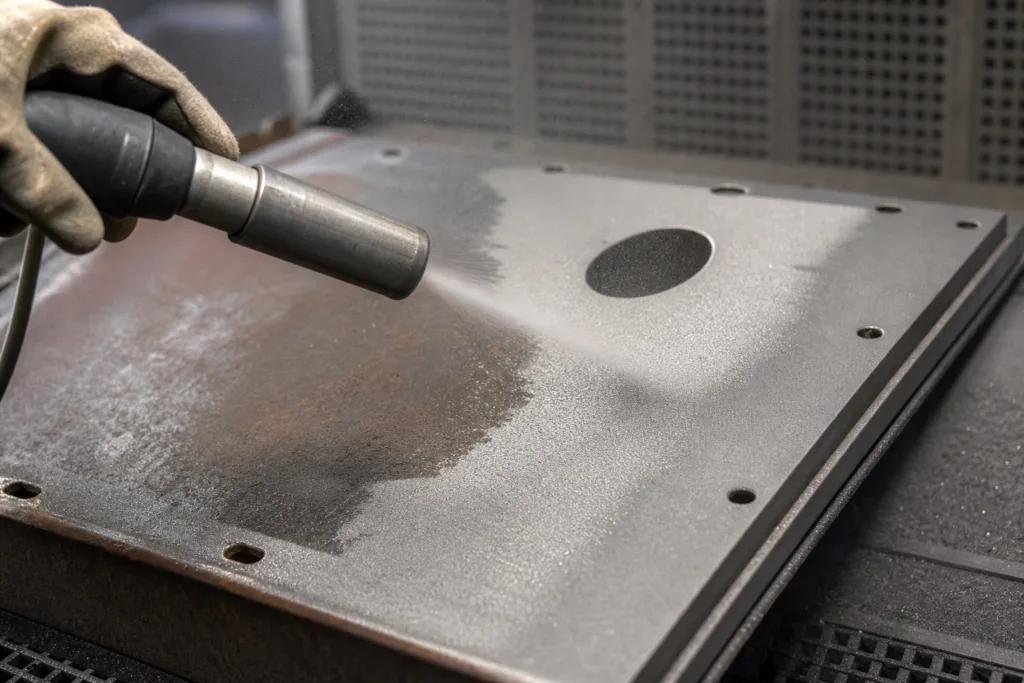
A useful selection brief separates non-negotiable requirements from trade-offs. Start with the exact substrate pair and all intervening layers: oxide, coating, primer, release agent, machining fluid, dust, corrosion, or prior adhesive. State the permitted cleaning and preparation steps, because a laboratory result on prepared coupons may not represent a production part that cannot receive the same treatment.
Next, describe the joint rather than simply requesting a “strong” adhesive. Record the nominal and worst-case bond-line gap, overlap or bond area, edge geometry, part stiffness, assembly tolerance, and whether fixturing is available. Identify the load modes and their duration: shear, tension, peel, impact, vibration, or sustained load. Differential thermal expansion and part movement may change the stress distribution even when the substrate names remain unchanged.
- Process window: define application method, usable working window, fixture or handling requirement, cure route, available production temperature, and permitted time before downstream operations.
- Service environment: list the anticipated temperature range, humidity or moisture, cleaning agents, process fluids, salt, chemicals, and exposure duration that must be assessed.
- Functional requirements: identify electrical, thermal, optical, sealing, appearance, dimensional, outgassing, or rework needs when they apply.
- Evidence threshold: request the current TDS, SDS, application instructions, substrate-specific information, and test data relevant to the requirement set.
This structure prevents a nominal property from being treated as an application approval. For example, a candidate may fit the available cure route but not the joint gap, or show adhesion on a substrate yet lack evidence after the required environmental conditioning. Resolve those gaps through documented screening and representative-part testing.
Dispensing, production integration, and supply review
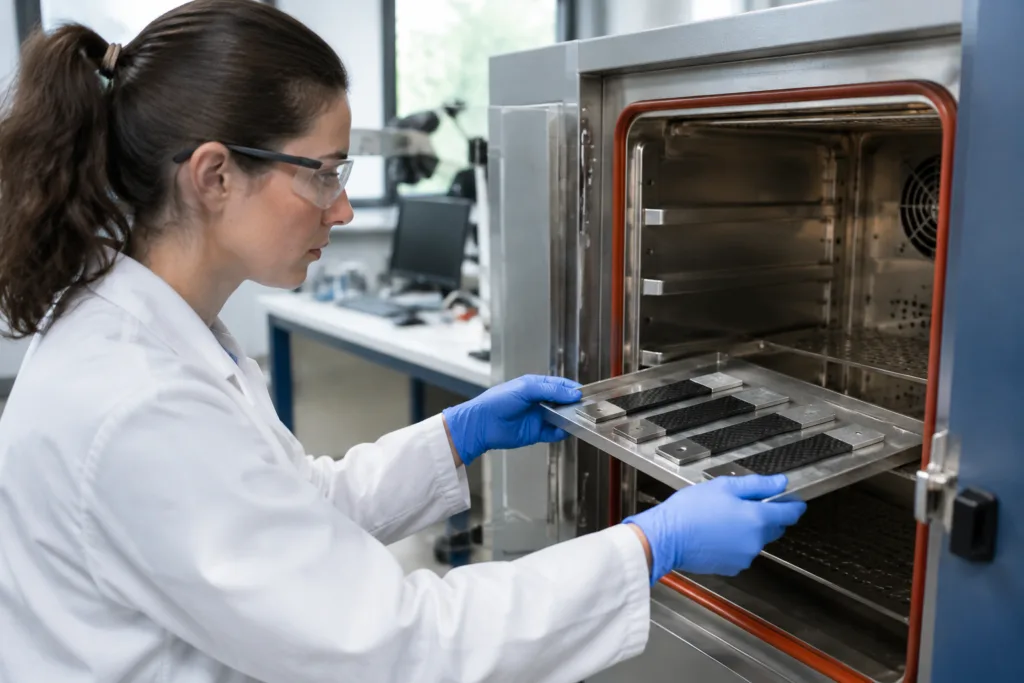
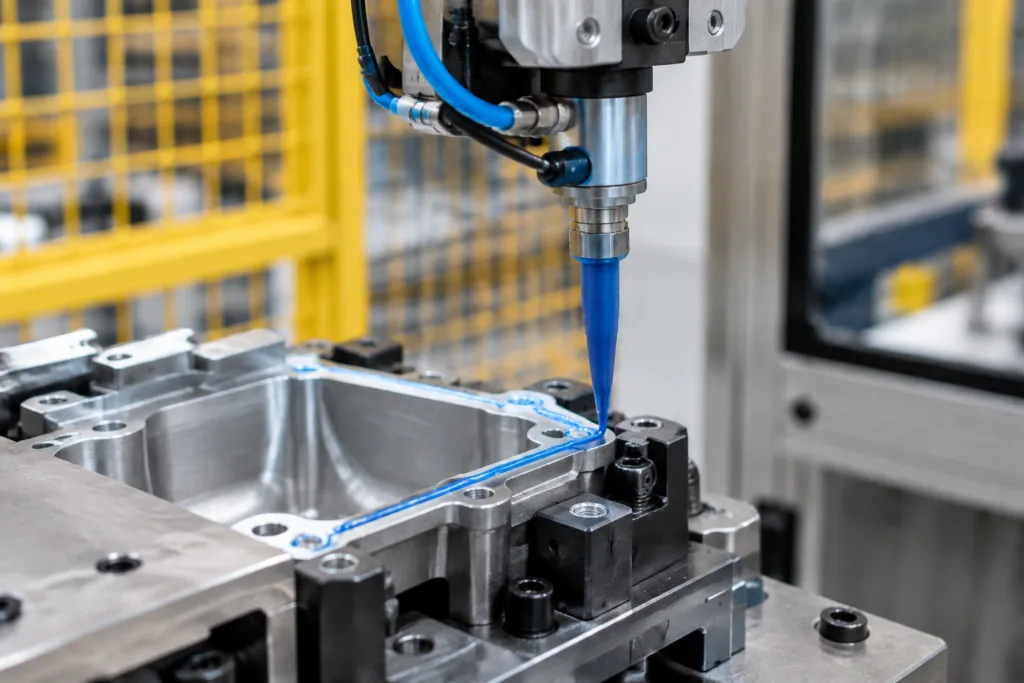
A technically credible material can still fail at implementation if the process cannot control placement, mix consistency where applicable, quantity, or cure. Map the adhesive path from receiving through storage, preparation, dispensing, assembly, cure, inspection, and nonconforming-material control. The production team should establish what must be monitored at each stage and whether the dispensing approach can reach the specified bond line without contaminating adjacent features.
Review epoxy dispensing machine configuration alongside the candidate documentation and the actual part geometry. This review should address compatibility as confirmed by the relevant equipment and adhesive suppliers; it should not assume a dispensing setup is suitable from material chemistry alone. Run trials with intended parts, operators, fixtures, and cure conditions to reveal access, repeatability, cleanup, and inspection issues before release.
Procurement and quality teams should request supplier-confirmed packaging options, storage and handling instructions, batch identification or traceability documentation where required, current TDS and SDS, sample terms, and commercial supply information. Do not turn a preliminary quote into an assumed commitment on packaging, availability, minimum order quantity, lead time, or continuity. Record the revision level of documents used for qualification so later changes can be assessed against the approved process.
Validation checklist before production approval
Build a written plan before testing. It should name the candidate material, substrate pair, coating and preparation condition, bond-line target and tolerance, application method, cure route, part geometry, and acceptance criteria. Include baseline specimens and any process extremes that could reasonably occur in production. The product owner or design authority should define the criteria and decide which failures are safety-, function-, or appearance-critical.
- Verify incoming documentation is current and review the TDS, SDS, application instructions, and any required project or customer documents.
- Make samples using production-representative parts, surface preparation, dispensing, assembly pressure or fixture approach, bond line, and cure conditions.
- Evaluate the load modes and functional checks that match the assembly, rather than relying only on a generic adhesive test value.
- Condition test parts for the specified temperature, moisture, fluid, chemical, vibration, or cycling exposures where applicable, then inspect and test to the defined criteria.
- Document defects, failure location, process settings, lot identification where available, and deviations; use the results to refine the work instruction and control plan.
- Obtain the required engineering, quality, customer, and project approvals before production release.
Validation is not a one-time substitute for process control. When the substrate source, coating, preparation, dispensing method, cure, part design, or service requirement changes, assess whether the existing evidence still represents the assembly.
To discuss substrates, process conditions, performance requirements, quantity, packaging and validation requirements for a current project, contact the ZDS technical team.
Frequently asked questions
What are the most common industrial applications of epoxy adhesives?
Industrial teams commonly screen epoxy systems for construction-material repair or bonding, metal and composite assembly, electronics bonding or protection, and selected automotive or marine tasks. Suitability depends on the formulation, substrate pair, process, service conditions, and application-specific evidence.
What surfaces will epoxy adhesive not bond without suitable preparation?
Surfaces carrying oils, dust, corrosion, release agents, weak coatings, or other contaminants may require cleaning or preparation. Confirm the permitted preparation method and substrate-specific adhesion evidence in the candidate product documentation; do not assume a generic epoxy will bond every finish.
How should an epoxy adhesive be selected for metal-to-composite bonding?
Define the metal alloy, composite construction, coatings, surface preparation, bond-line gap, joint geometry, load modes, movement, cure route, and environmental exposure. Request relevant substrate-pair data, then validate candidates on representative parts under the intended conditions.
What should engineers check before using epoxy adhesive in electronics?
Specify whether the task requires bonding, encapsulation, environmental protection, electrical behavior, heat management, appearance, or rework. Confirm component and finish compatibility and obtain product-specific documentation and test evidence for each required function.
How can a buyer validate an epoxy adhesive before production approval?
Use a documented plan with production-representative substrates, preparation, gap, dispensing, cure, service conditioning, inspection, and acceptance criteria. Review current TDS and SDS, record results and deviations, and secure the approvals required by the product owner, customer, or project authority.
For a focused review, contact the ZDS technical team and share the substrate pair, process, operating environment, validation requirements, quantity, and packaging needs.