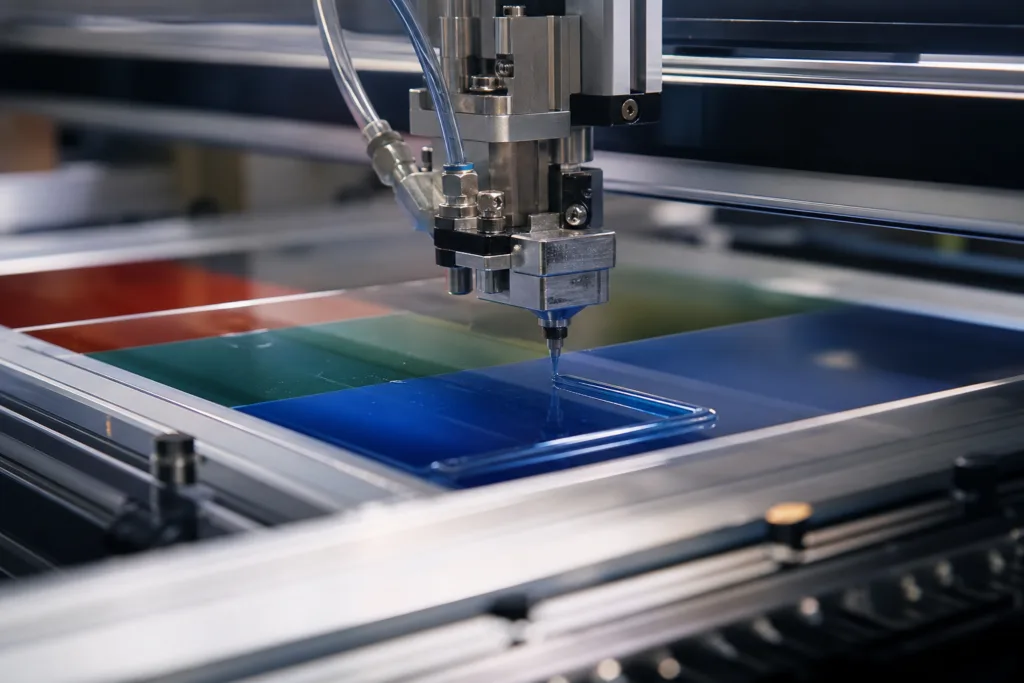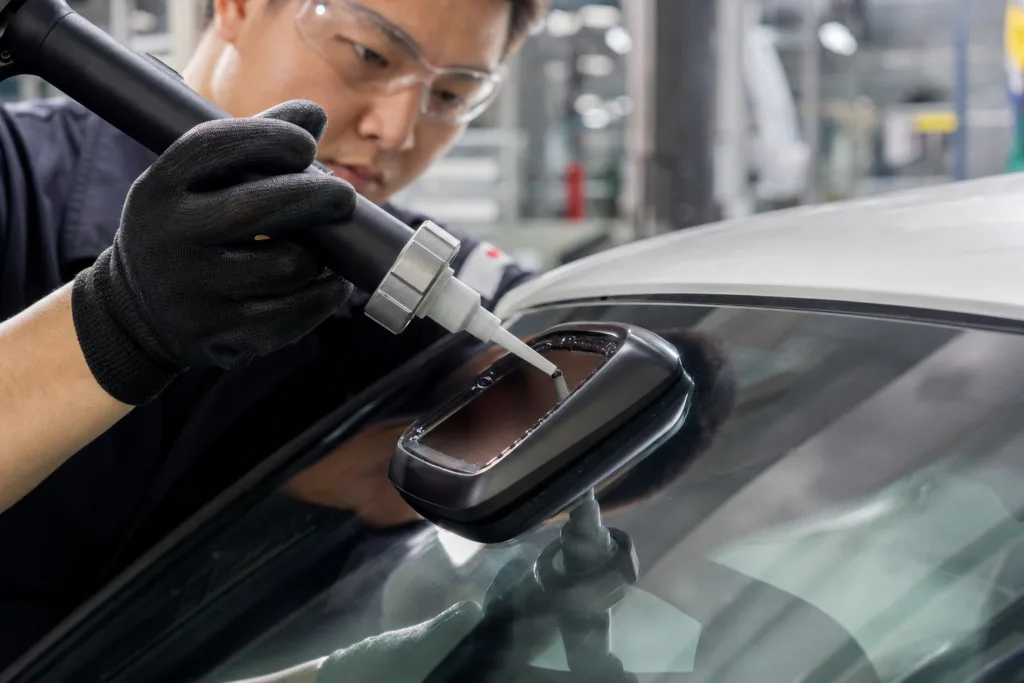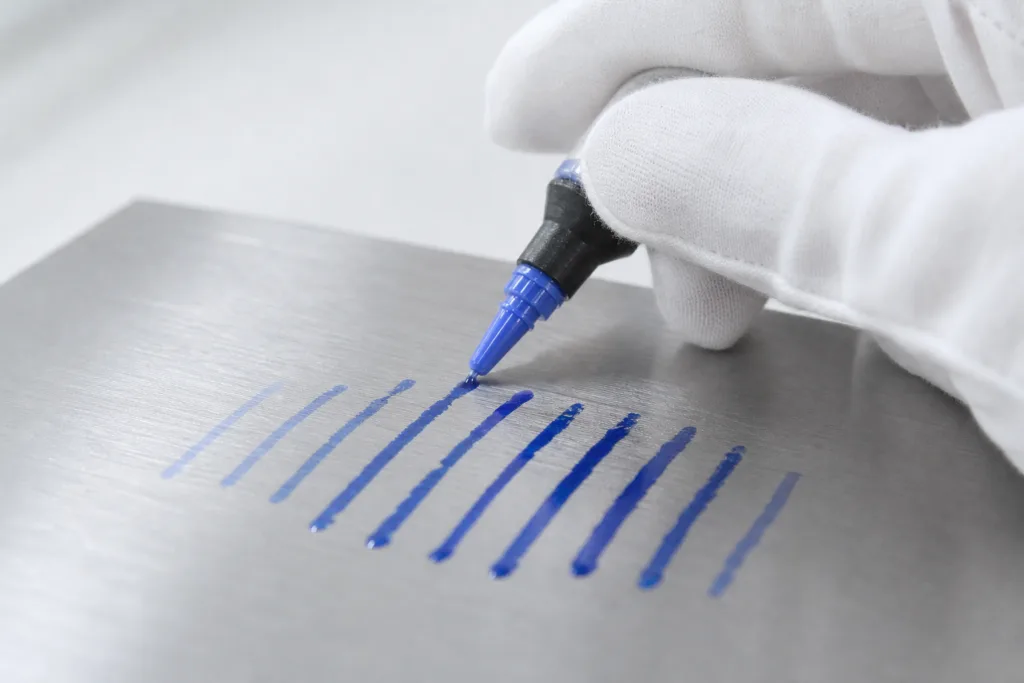
An industrial hot melt glue gun can be the right choice when production needs speed, simple operation, and flexible deployment without the cost and complexity of a full automated line. For many factories, the real question is not whether hot melt works, but whether a manual or semi-manual tool is enough for the takt time, product mix, and quality target in front of them. In those cases, the tool’s value comes from matching application volume, operator skill, and adhesive behavior to the process rather than forcing a high-capital system into a small or changing production environment.
For teams evaluating process fit, hot melt adhesive processing guidance is a useful starting point because the adhesive itself often determines whether a glue gun can deliver stable results. At ZDS Adhesive, we look at melt viscosity, open time, set speed, and substrate compatibility together, then support sample testing, application evaluation, and OEM or private label supply when buyers need a practical production-ready option rather than a one-size-fits-all system.
What an industrial hot melt glue gun actually does
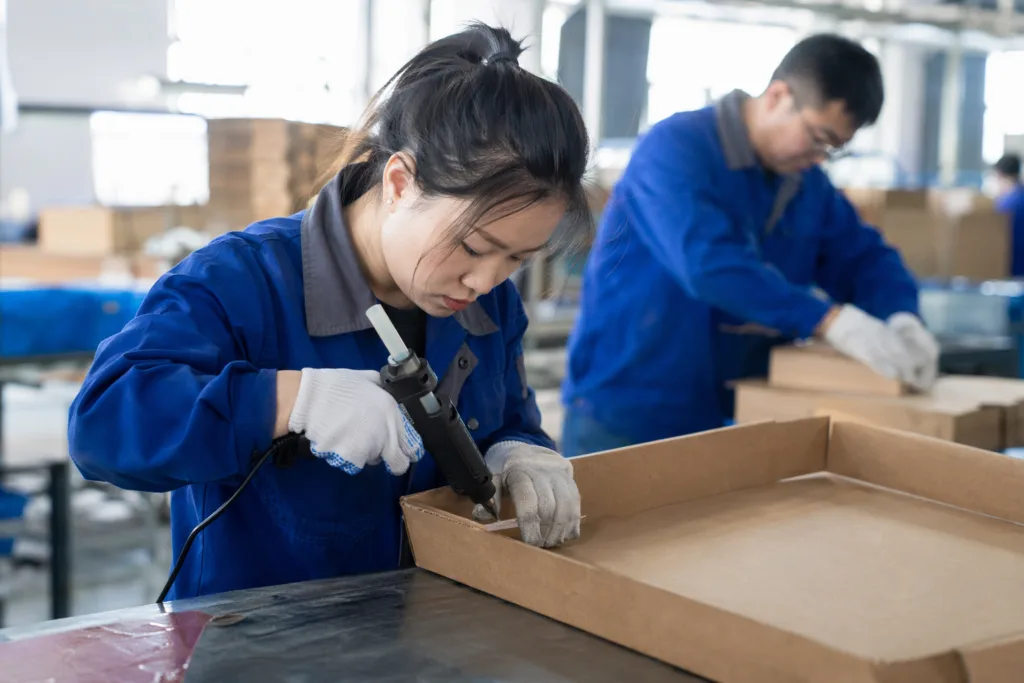
An industrial hot melt glue gun is a heated hand tool or semi-manual applicator that melts solid hot melt adhesive and delivers it to a bond line, assembly point, or repair area. Compared with consumer tools, industrial units are built for longer run time, better temperature control, stronger trigger systems, higher melt capacity, and compatibility with production-grade adhesives. They are used in packaging, assembly support, component fixing, spot sealing, and repair work where a fast-setting bond is needed but full automation would be overkill.
The key difference is not just durability. Industrial tools are expected to support repeatable work under production conditions, which means they must handle more consistent heat transfer, better nozzle options, and more stable adhesive flow. Even so, they still depend on the operator to position the bead, control speed, and maintain consistent pressure. That trade-off is what makes them valuable in some lines and unsuitable in others.
Where glue guns fit better than automated dispensing
Manual hot melt application often makes the most sense when the production environment changes frequently. If the product mix is broad, the line changes over often, or the bond point is small and intermittent, a glue gun may outperform a more complex system in practical terms. It can be moved where needed, put into service quickly, and adapted to different part geometries without reprogramming or long setup cycles.
This is especially true for low-to-medium volume operations, prototype builds, pilot lines, repair stations, and packaging cells that need bursts of adhesive rather than continuous output. In those settings, the cost of automation can outweigh the benefit of speed. Buyers who are comparing tool types should also review matching hot melt equipment to process needs because equipment choice should follow the adhesive, not the other way around.
| Production situation | Why a glue gun can be practical | Where it starts to lose value |
|---|---|---|
| Small-batch assembly | Fast setup, low capital cost, easy repositioning | When repeatability demands become tight |
| Changeover-heavy lines | Simple switching between products and bond points | When operators spend more time applying than assembling |
| Repair or rework stations | Useful for targeted, intermittent bonding | When repair volume becomes a core production step |
| Packaging support | Quick tacking and sealing for varied packs | When throughput is continuous and high |
Typical production uses that still favor manual hot melt application
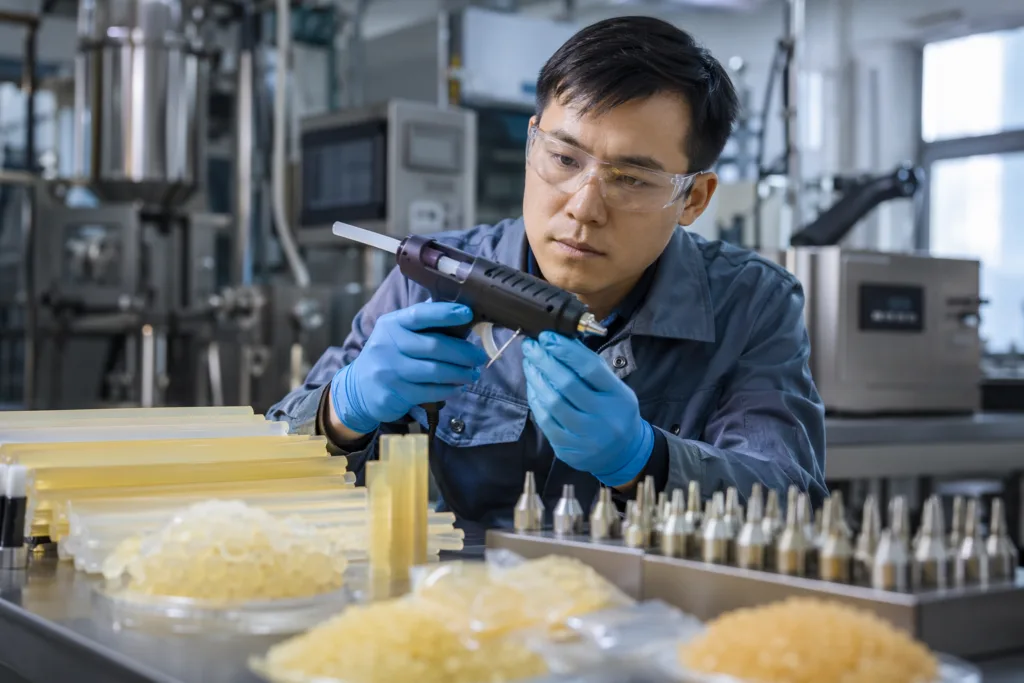
Industrial hot melt glue guns remain relevant in packaging, light assembly, and spot-fix operations because these tasks often need speed more than full automation. In carton closure, display assembly, tray fixing, and protective packing, a fast-setting bead can help teams secure parts without waiting for long cure cycles. In appliance subassembly or general industrial assembly, the tool is also useful for temporary positioning or supplemental bonding before final fastening.
Manual application can also help when the adhesive point is difficult to reach. A nozzle can be aimed into corners, edges, and irregular spaces where conveyors, robots, or fixed dispensers would need custom fixtures. That flexibility is one reason many plants keep glue guns available even when they also use automated systems elsewhere.
Production scenarios where the tool adds real value
- Packaging operations: Carton tacking, tray sealing, and product retention where fast set and simple application matter.
- Assembly support: Temporary hold, point bonding, and part positioning before a secondary fastening step.
- Repair and rework: Replacing failed bonds, filling gaps, or correcting small assembly defects quickly.
- Low-volume lines: When output is irregular and automation would create idle capital.
- Shift-based operations: When the production cell must restart quickly after breaks, pauses, or changeovers.
For buyers comparing manual and automated options, automated adhesive dispensing systems are worth reviewing because the tipping point is usually not technical possibility but economic fit. Once output rises, or once bead placement tolerances narrow, automation begins to pay for itself through consistency and labor reduction.
Industrial hot melt glue gun vs automated hot melt systems
The choice between a glue gun and an automated system is usually a balance of output, precision, labor, and repeatability. A manual tool wins on simplicity and flexibility. An automated system wins when the process needs stable bead geometry, continuous throughput, and less operator dependence. Production managers often make the wrong choice when they focus only on equipment price and ignore the hidden cost of variation, rework, or labor time.
A useful way to compare them is by asking three questions: How many parts are bonded per hour? How much variation can the process tolerate? And how much operator attention is available per station? If the answer to the first is moderate, the second is forgiving, and the third is adequate, a glue gun can be the right answer. If not, the economics usually move toward automation.
| Decision factor | Industrial hot melt glue gun | Automated hot melt system |
|---|---|---|
| Upfront cost | Lower | Higher |
| Setup time | Short | Longer |
| Throughput | Moderate | High |
| Bead consistency | Operator dependent | Highly repeatable |
| Changeover flexibility | Very good | Depends on programming and tooling |
| Maintenance burden | Lower, but cleaning still matters | Higher system upkeep |
| Scalability | Limited for high-volume lines | Strong for growth plans |
For teams evaluating the handoff point between manual and precision systems, choosing adhesive dispensing equipment helps frame the procurement discussion around process need rather than habit. In our manufacturing work, that shift is often what prevents underinvestment in a line that is becoming too variable for manual application.
How to judge whether a glue gun matches your line volume
Line volume is the first practical filter. If the glue application is intermittent, the tool can keep pace without creating a bottleneck. If the adhesive bead is needed on every part at a predictable rhythm, the operator becomes part of the process capacity. That means the production line is no longer just buying a tool; it is buying labor time and operator consistency.
Another important factor is takt time. A glue gun can work well if the operator has enough time to place the bead, check alignment, and move to the next part without rushing. If the station is being forced to work faster than the operator can reliably dispense, the result is often inconsistent bead size, stringing, or missed coverage. In that case, manual application may still be possible, but it should be treated as a temporary bridge rather than a permanent process design.
When production variability favors manual application
Manual glue guns often make sense where product dimensions vary, fixtures are still being refined, or the assembly sequence is not yet fully standardized. In early-stage production, flexibility matters more than perfect repeatability. A tool that can adapt to part changes and still maintain acceptable bond quality can help teams move quickly through process validation.
We also see manual application used when operators need to place adhesive in different zones depending on product variant. This can be useful in custom manufacturing or mixed-model assembly, but it requires discipline. The more the line depends on human judgment, the more the process needs training, visual standards, and simple inspection checks.
When repeatability becomes the main challenge, precision dispensing for repeatable production becomes the more relevant design direction. That is usually the point at which a glue gun starts to feel convenient but not sufficient.
Key technical factors that affect performance
The glue gun itself matters, but the adhesive and process settings often matter more. Hot melt systems depend on melt viscosity, working temperature, open time, and set speed. If the adhesive is too thick for the tool, flow becomes inconsistent and the operator compensates by applying more heat or pressure. If it is too fluid, the bead may slump or string. If the open time is too short, the bond may skin over before part placement is complete. If it is too long, the line may lose speed and the part may move before set.
From a formulation and production perspective, the key is to match the adhesive to the application method. Some hot melts are built for fast packaging work, while others are made for better flexibility, higher temperature resistance, or stronger adhesion to difficult substrates. Surface condition also matters. Dusty, oily, or moisture-laden parts can make a good adhesive look bad, even when the tool is performing correctly.
Selection factors for industrial glue guns
- Melt capacity: The tool must keep up with the application rhythm without temperature sag.
- Temperature stability: Stable heat helps keep adhesive flow and bead shape consistent.
- Nozzle options: Different bead sizes, narrow access points, and corner work require different tips.
- Trigger feel and feed mechanism: These affect operator control, fatigue, and bead accuracy.
- Ergonomics: A comfortable tool supports consistent use over long shifts.
- Adhesive compatibility: The gun must handle the viscosity and melt behavior of the chosen hot melt.
For manufacturers, ZDS Adhesive approaches this as a process fit question. We consider whether the adhesive should set quickly for packaging, stay open longer for alignment, or offer more flexibility for vibration-prone parts. That is where formulation work and equipment choice should meet.
Hot melt adhesive considerations for manual production
Not every hot melt adhesive is equally suitable for a glue gun. Some are formulated for fast fixture and clean handling, while others are tuned for structural support or higher service temperatures. The adhesive must remain stable enough in the heated chamber, flow consistently through the nozzle, and bond properly after cooling. If the substrate pair is difficult, the formulation may need more work than the tool itself.
Bond performance depends on compatibility with substrates such as paperboard, plastics, wood, foam, textiles, metal, and coated surfaces. A manual applicator may be able to place the adhesive precisely, but it cannot compensate for poor surface energy or contamination. In practice, the fastest way to improve bonding is often not to increase heat or adhesive volume, but to reduce surface variability and select the right hot melt grade.
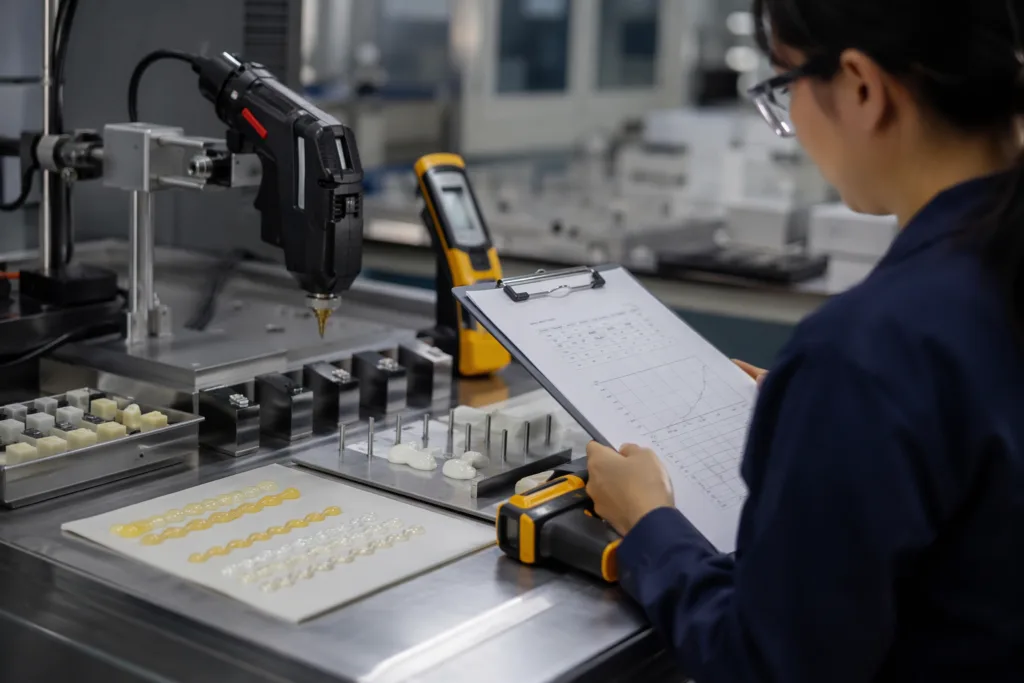
For engineering teams validating whether the process will hold under heat, it helps to remember that adhesive performance is temperature-sensitive during bond development. Industry test methods such as testing adhesive strength as temperature changes are relevant because they reflect how thermal conditions can influence cohesive strength development and bond evaluation under controlled loading. That matters in real production when a bond must perform consistently after a hot application step.
What to check in the TDS before choosing a glue gun process
- Melt temperature range: Confirms whether the adhesive suits the tool and the line environment.
- Open time: Determines how long the operator has for positioning.
- Set speed: Affects downstream handling and whether the line can move immediately.
- Viscosity: Influences bead formation, flow stability, and stringing risk.
- Service temperature: Indicates whether the bond can survive the end-use environment.
- Substrate compatibility: Helps avoid trial-and-error on critical materials.
Common bottlenecks in manual hot melt production
The most common problem with glue guns is not the tool itself, but the way the process is managed. If the adhesive cools in the nozzle, operators waste time clearing it. If temperature drifts, beads become inconsistent. If the work surface is poorly organized, the operator takes longer to place each bead. And if the adhesive is selected without considering the line speed, the bond may not set when needed.
Other bottlenecks include excessive stringing, oversize adhesive deposits, blocked nozzles, and operator fatigue. These are often symptoms of a process that needs better control, not necessarily a different chemistry. Simple steps such as preheating properly, keeping nozzles clean, standardizing bead length, and using a fixture to hold parts can reduce variation significantly.
How to reduce variation without over-investing too early
Teams do not always need to jump immediately to automation. In many cases, a better manual process is enough. That can include a more suitable glue stick or pellet grade, a better nozzle, a stable workbench layout, and a short operator standard work routine. If the production pattern is still evolving, this approach protects cash while the process matures.
As the line becomes more stable, buyers can compare the economics of manual versus automatic application again. If output rises, or if quality complaints begin to cluster around bead inconsistency, the next step may be to move to a more controlled platform. Before making that decision, it is often helpful to review precision dispensing for repeatable production because the threshold is usually process control, not just speed.
When to upgrade beyond an industrial hot melt glue gun
Upgrading makes sense when the manual process starts creating hidden costs. These can include too much operator time, inconsistent bond quality, frequent rework, excessive adhesive usage, or an inability to scale the line without adding labor. If the line is running near capacity and the glue application is now a core constraint, the glue gun has reached its practical limit.
Another upgrade trigger is quality sensitivity. If the product is customer-facing, safety-critical, or highly visible, even small variation in bead placement may matter. At that stage, a semi-automatic or fully automated system can reduce subjectivity. The upgrade decision should be based on measurable symptoms, not on the assumption that automation is always better.
Teams often ask whether they should upgrade equipment or switch adhesive first. The answer depends on the failure mode. If the issue is bead placement, tool control, or labor variability, equipment may be the issue. If the issue is poor wetting, open time mismatch, or weak substrate adhesion, the adhesive may need reformulation. In many projects, both need to be reviewed together.
Quality control and operator training for consistent results
Manual hot melt bonding can still be controlled if the process is simple and the checks are visible. We recommend setting a target bead width, placement zone, and minimum dwell time before the part moves. Operators should know what good looks like and what failure looks like, especially when the bond is hidden inside a carton, under a cover, or behind a structural component.
Quality checks should focus on consistency rather than just appearance. A shiny bead does not always mean a strong bond, and a neat line does not guarantee good wetting. Inspectors should look at coverage, placement, set condition, and whether the part survives normal handling without lift, slip, or peel. In validation runs, it is wise to test multiple operators because a manual process can look stable with one person and drift with another.
Process control points worth standardizing
- Tool temperature and warm-up time
- Nozzle cleaning interval
- Adhesive loading method and storage condition
- Bead size and location
- Part alignment window after application
- Shift start checks for temperature and flow consistency
Safety and maintenance basics
Hot melt tools create burn and hot-surface risks, so safety must be built into the station layout. Operators should be trained on trigger control, nozzle handling, hot adhesive string management, and safe placement of the gun during pauses. Heat-resistant gloves are not a substitute for good work practices, but they can reduce minor injury risk when used appropriately. Guards, holders, and stable stands also help keep the nozzle away from skin and flammable materials.
Maintenance matters because residue, degraded adhesive, and worn nozzles can all affect performance. A cleaned nozzle and properly stored adhesive generally give more stable application than repeated use of a partially blocked tool. For broader heat-risk framing around heated equipment and work areas, OSHA’s guidance on worker safety when using heated adhesive tools is a useful reminder that thermal exposure and workplace conditions should be considered together, especially on busy production floors.
Procurement checklist for production buyers
When sourcing a commercial hot melt glue gun, procurement teams should go beyond unit price and ask how the tool will behave in daily production. The right purchase is the one that lowers total process cost, not just the initial invoice. That means evaluating support, spare parts, training, adhesive compatibility, and expected run conditions.
| Checklist item | Why it matters |
|---|---|
| Temperature control | Directly affects flow, bead shape, and repeatability |
| Nozzle availability | Supports different bead sizes and access points |
| Ergonomic design | Reduces fatigue in long shifts |
| Maintenance access | Makes cleaning and service easier |
| Adhesive compatibility | Prevents flow or clogging problems |
| Operator training support | Improves consistency across shifts |
| Supply continuity | Supports stable production planning |
From our manufacturing and application support perspective, sourcing should also include adhesive supply stability. A process can drift when the adhesive lot changes, the packaging format changes, or the melt profile changes slightly. If you are standardizing a line, supplier communication matters as much as tool selection.
Conclusion
An industrial hot melt glue gun is the right choice when production needs flexibility, quick setup, modest output, and relatively simple operation. It is especially practical in packaging, repair, low-volume assembly, and changeover-heavy environments where a manual process can keep pace without forcing unnecessary automation. But once throughput, consistency, or labor dependence becomes a constraint, the line may need semi-automatic or fully automated dispensing instead.
The best decision comes from matching the adhesive, the tool, and the process reality. At ZDS Adhesive, we help buyers evaluate those variables together so they can choose a manual hot melt approach when it truly fits, or move to a more controlled dispensing path when production demands it.
FAQs
Which production lines benefit most from an industrial hot melt glue gun?
Lines with moderate volume, frequent changeovers, intermittent adhesive needs, or flexible product mixes usually benefit most. Packaging cells, repair stations, pilot lines, and small-batch assembly operations often gain from the low setup burden and fast start-up of manual hot melt application.
When should a production team avoid relying on a manual glue gun?
Teams should avoid relying on a manual tool when the process demands very high throughput, extremely tight bead placement, or strong repeatability across shifts and operators. If adhesive application is a bottleneck or quality variation is becoming costly, automation is usually the better route.
What matters more: the glue gun or the hot melt adhesive?
Both matter, but the adhesive often has the bigger impact on bond quality. The tool must melt and deliver the material properly, yet the adhesive still needs the right viscosity, open time, set speed, and substrate compatibility for the process to work well.
How can buyers reduce stringing and inconsistent bead size?
Start by checking temperature stability, nozzle condition, and adhesive compatibility. Then standardize operator technique, keep the work area organized, and confirm that the adhesive is not being overheated or left idle too long in the tool.
Can ZDS Adhesive help with sample testing and customization?
Yes. We support sample evaluation, technical review, and custom formulation planning when a buyer needs a hot melt adhesive that matches a specific substrate, working time, or production flow. That can include packaging needs, private label supply, or OEM development.
What should procurement teams check before buying equipment and adhesive together?
They should confirm tool temperature range, adhesive format, nozzle needs, maintenance access, and supply continuity. It is also important to evaluate line volume, operator training needs, and whether the adhesive lot and packaging format will stay stable over time.