Introduction: The Critical Role of Adhesive Technology in Door Trim Assembly
In modern vehicle manufacturing, fabric-to-plastic bonding: adhesives for door trims play a pivotal role in both performance and visual appeal. As automotive interiors evolve—embracing lighter, sustainable materials, and intricate designs—the adhesive chosen for bonding fabric to plastic in door trims must deliver durability, environmental resistance, and ease of production. A dependable adhesive not only prevents delamination or wrinkling but also ensures that the interior looks and feels premium for years. This article unpacks the types of adhesives used, factors that affect their selection, and current innovations that are reshaping assembly lines worldwide.
Automotive Door Trim Construction: Where Fabric Meets Plastic
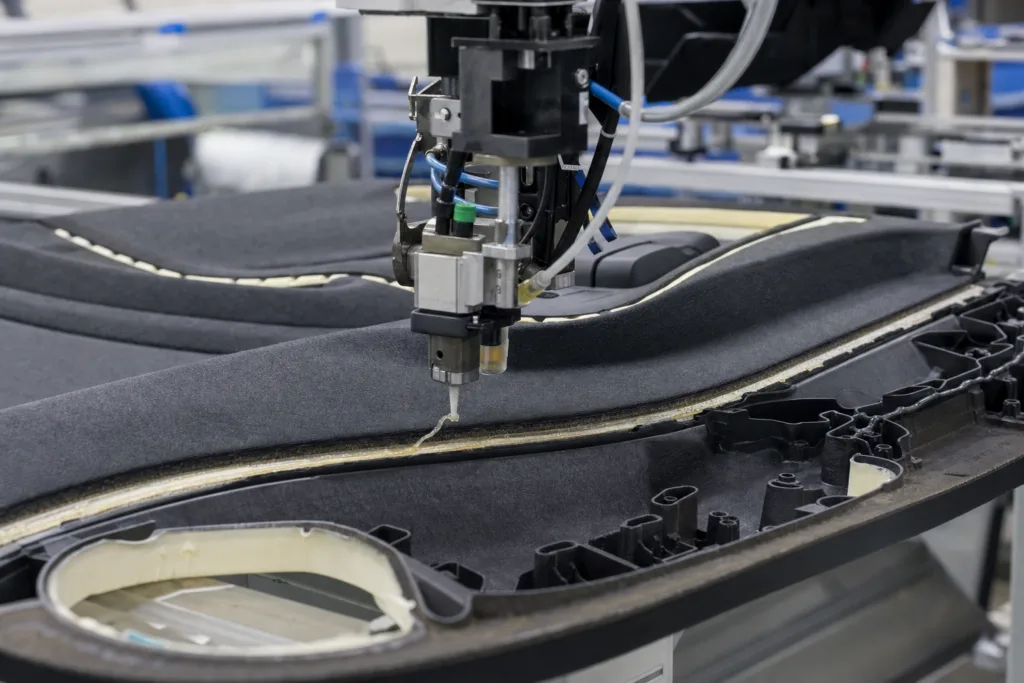
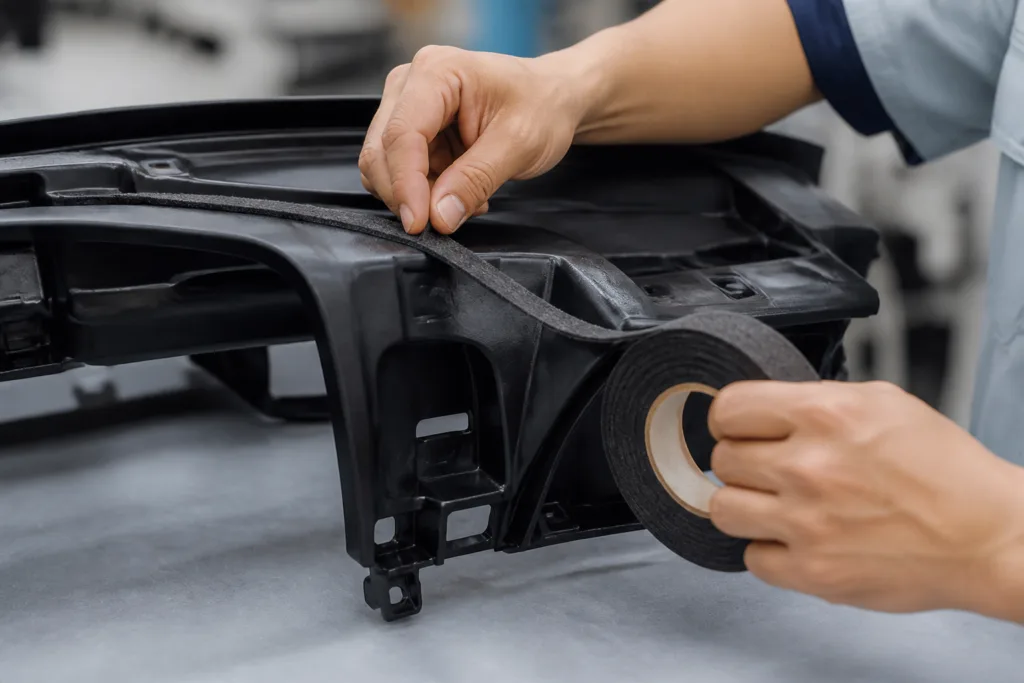
Automotive door trims are engineered multi-layer structures that combine a sturdy plastic substrate, comfort-enhancing foam, and visually pleasing fabric overlays. The quality of bonds between fabric and plastic directly affects vehicle acoustics, tactile feel, and even safety. Manufacturers demand adhesives that can unite textured cloth, vinyl, artificial leathers, and engineered plastics—such as ABS, PP/PE, or PVC—without risk of debonding or distortion over the vehicle’s lifetime.
Challenges in Fabric-to-Plastic Bonding for Door Trims
Bonding fabric to plastics presents unique obstacles. Surface energy disparities between woven or nonwoven textiles and smooth plastics can limit adhesion. Additionally, the presence of plasticizers, process oils, or treated fabrics may interfere with adhesive wetting. Finally, real-world use cases—like summer heat, winter freeze, and ongoing vibration—stress the adhesive joint, requiring advanced formulations to prevent failure. In some cases, process engineers turn to surface preparation technologies—a concept explored in Plasma vs. Corona Treatment: Which Industrial Surface Process Wins in 2026?—to further increase adhesive power on challenging substrates.
Types of Adhesives for Fabric-to-Plastic Door Trim Bonding
Adhesive selection is a science of matching chemistry to substrate and process needs. The main types for fabric-to-plastic assembly are:
- Water-based adhesives (latex, PU dispersions): Eco-friendly, low odor, suitable for heat-activated or roller application.
- Solvent-based adhesives: Higher initial tack, but stricter VOC regulations apply.
- Hot melt adhesives (EVA, PUR): Fast set times, excellent for automated processes, and often selected for foam-to-fabric layers.
- Reactive adhesives (PU, epoxy, acrylic): Outstanding bond strength and durability against extreme conditions.
- Pressure-sensitive adhesives (PSA): Used for repositionable or low-stress trim applications.
From ZDS Adhesive’s application data, water-based and hot melt adhesives dominate volume door trim assembly due to their rapid processing and regulatory compliance.
Key Parameters: Matching Adhesive to Application
To ensure a successful and robust fabric-to-plastic bond, manufacturers weigh several parameters:
- Material compatibility: Will the adhesive bond polyester, nylon, faux leather, or TPO/PP/PVC plastics?
- Ambient resistance: Can it withstand cycles of UV, humidity, salt, and cleaning chemicals without degrading?
- Flexibility and peel strength: Does the adhesive remain resilient during opening-closing cycles or impacts?
- Cure time and open time: Are the process windows well-matched to automated production lines?
- Aesthetic requirements: Will the adhesive show through, stain, or cause wrinkling of the fabric?
Surface Preparation: Maximizing Bond Strength
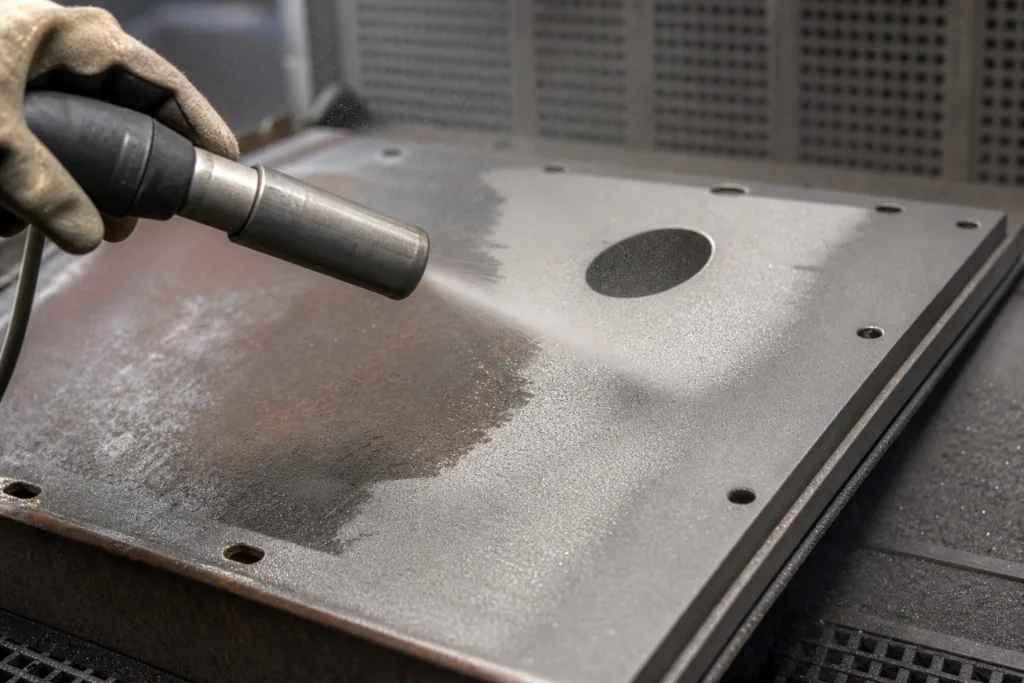
Proper substrate conditioning greatly boosts bond quality. Methods such as plasma or corona treatment modify plastic surfaces, raising their surface energy for maximum adhesive wetting. For a primer-free result in high-speed lines, manufacturers increasingly rely on in-line atmospheric plasma—discussed with practical analysis in Plasma vs. Corona Treatment: Which Industrial Surface Process Wins in 2026?. Additionally, cleaning with isopropanol and anti-static dust removal is essential for consistent results.
Environmental and Regulatory Considerations
Modern interiors must be healthy, quiet, and environmentally friendly. This means strict rules for volatile organic compounds (VOCs), low odor, fire resistance, and recyclability. The adhesive’s composition is now as critical as its bonding power, prompting the rise of low-VOC and low-odor formulations. Interested in the full implications? Read how eco-driven adhesives are transforming manufacturing in Top 7 Transformative Benefits of Low-VOC & Low-Odor Adhesives for Vehicle Interiors.
Testing Requirements: How Are Bonds Evaluated?
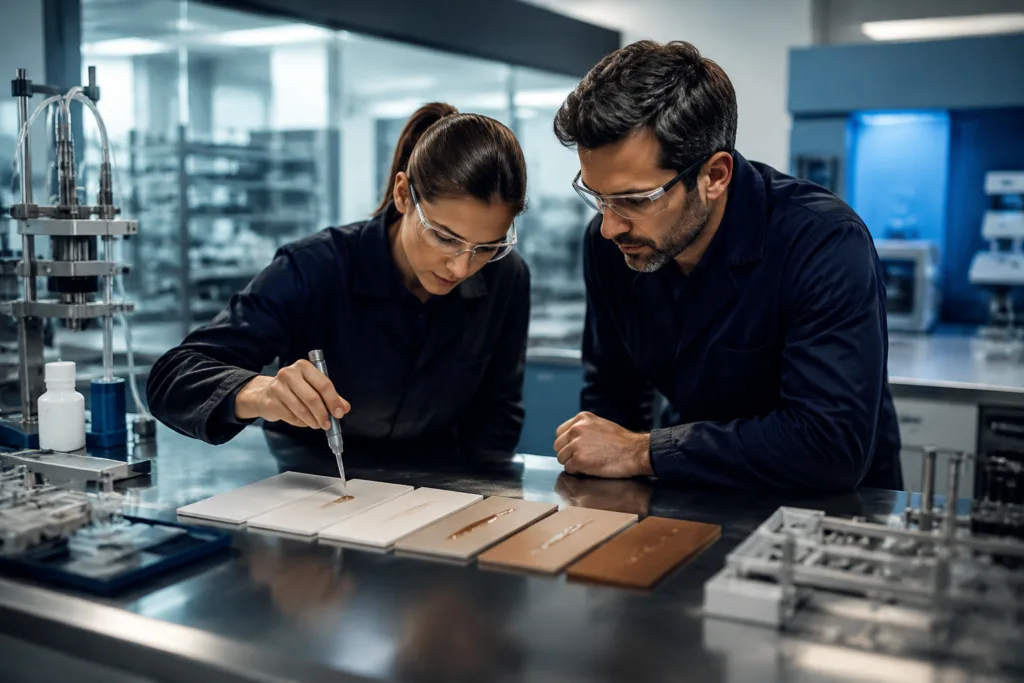
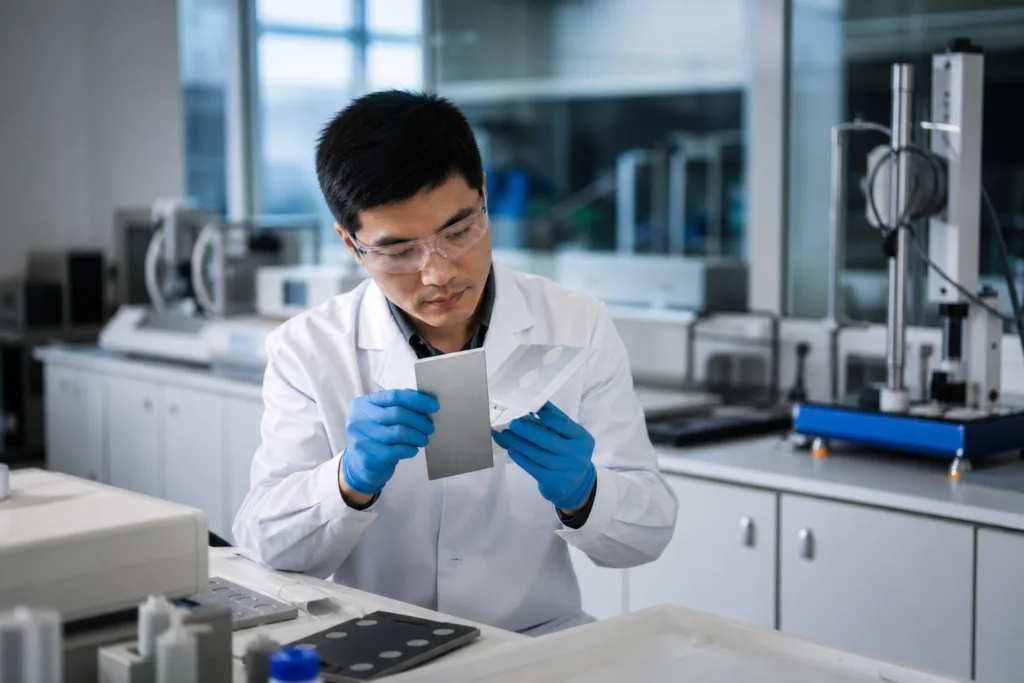
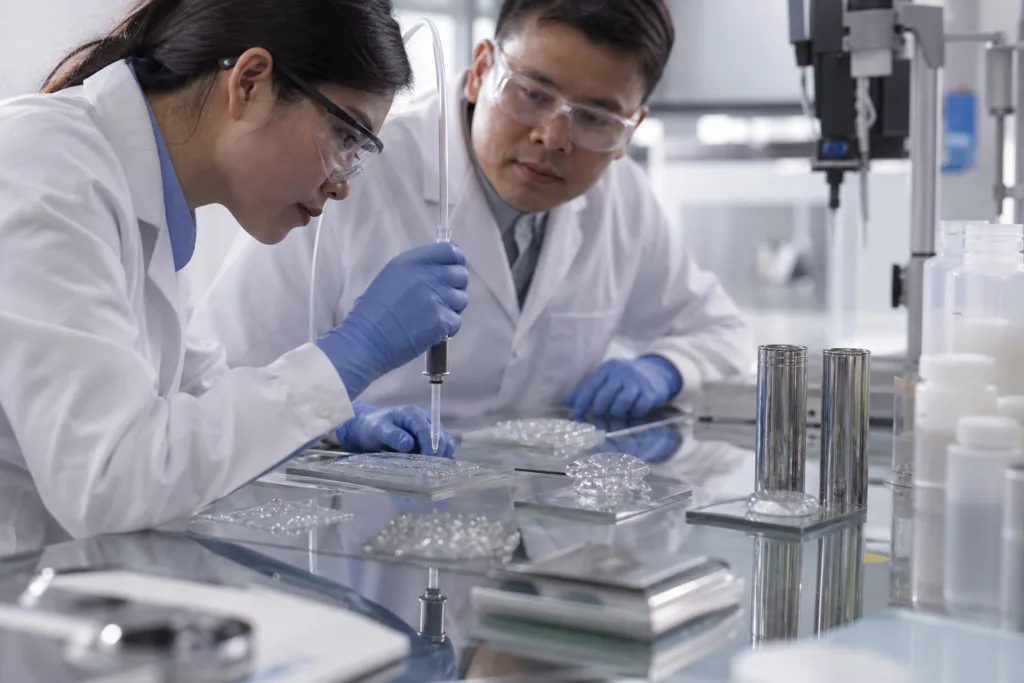
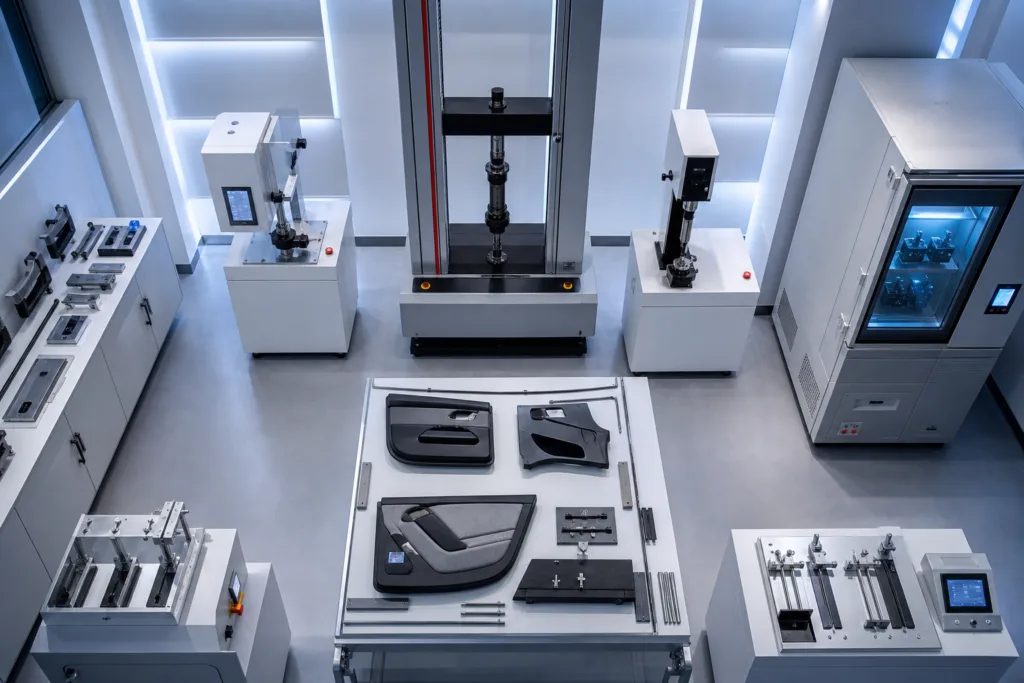
Quality assurance for door trim bonding involves thorough laboratory and real-world validation. Key tests include lap shear, peel strength, humidity aging, and thermal cycling resistance. Only adhesives that survive these gauntlets—without delamination, bubbling, or yellowing—are approved for series production. Every model’s unique shape and chosen textiles mean that regular validation is essential for every new program.
Adhesive Application Methods: From Manual to Automated
Application technologies shape the overall yield and appearance of door trims. For high-volume production, approaches include:
- Spray (manual or robotic): Offers coverage of complex geometries, but requires masking for overspray containment.
- Roller or slot die: Provides uniform bond-line thickness, ideal for flat or gently curved trims.
- Hot-melt extrusion: Delivers fast set and minimal waste; often integrated with automated laminators.
For a deep dive into hot melt equipment setup, see How to Match Hot Melt Equipment with the Right Adhesive and Process.
Flexible Assembly: Tackling Design Trends & Special Cases
New interior trends—such as stitched seams, striking geometries, and touch-sensitive overlays—challenge adhesive performance. Modern formulations must bond across texture transitions without telegraphing, remain robust against point loads, and accommodate both soft and rigid zones in the same trim assembly.
Fabric-to-Plastic Bonding: Adhesives for Door Trims
This section focuses on the precise interplay of adhesives, production methods, and real-world use for door trim bonding. The ultimate goal: an invisible bond line, undetectable to touch or sight, which resists pulling, heat, and humidity for the car’s lifetime. The right adhesive can make the difference between a plush, silent door experience and an annoying rattle or unsightly wrinkle—potentially defining the vehicle’s perceived value.
Innovations in Adhesive Formulation for Door Trims (2026 Update)
The past two years have seen a surge in performance-driven improvements:
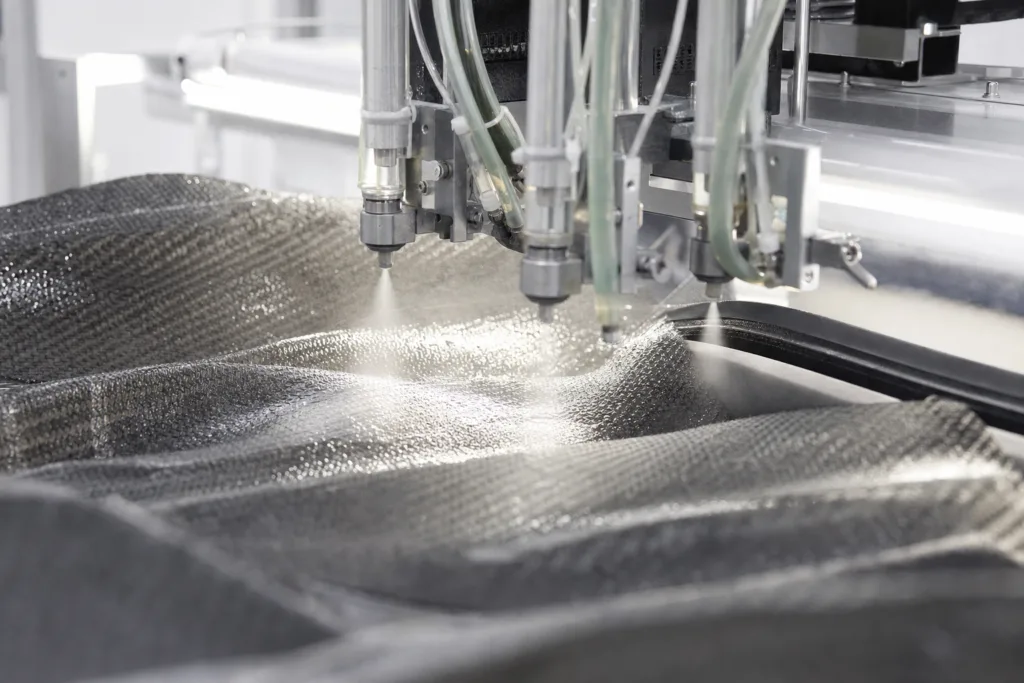
- Low-VOC polyurethane dispersions: Provide safety and flexibility for sensitive passenger areas.
- Hybrid hot-melt PU adhesives: Offer higher heat resistance, better green strength, and faster processing.
- Elastic instant adhesives: Cut cycle time on flexible overlays and edge attachments.
- Smart colorless adhesives: Eliminate “read-through” and visual ghosting under light-colored or thin fabrics.
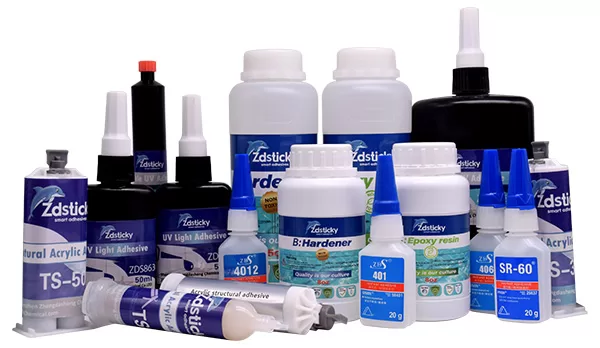
Brands like ZDS Adhesive, an industrial adhesives manufacturer, routinely test and adapt new resin chemistries for exceptional substrate wetting on difficult plastics, offering direct support for custom foam, cloth, vinyl, and TPO blends seen in emerging platforms.
Balancing Aesthetics and Durability
A truly premium vehicle interior must withstand time and touch. Adhesives with optimized flow and just enough open time minimize “show-through” and prevent wrinkles, even under tight calendaring. Specialty adhesive films can also enable seamless wraps, ultra-sharp edge bonding, and invisible seams that designers demand in luxury trims. The ultimate test: fabrics remain smooth and plastics never debond or crack—regardless of heat, sunlight, or heavy use.
Troubleshooting: Common Bond Failures and Root Causes
Despite advances, common faults still occur in door trims:
- Bubbling or blisters: Often linked to moisture, volatile residues, or insufficient cure time.
- Wrinkle formation or “show-through”: Typically caused by excessive adhesive, wrong viscosity, or fabric pre-stress.
- Poor adhesion or peel: Most commonly arises with contaminated substrates, inadequate surface energy, or inappropriate adhesive selection.
Systematic root cause evaluation, paired with test data, quickly points to process or material changes needed to fix these issues for good.
Smart Solutions: Multifunctional Adhesives in Door Interiors
Beyond bonding, next-generation door trims integrate features like acoustic insulation, ambient lighting channels, and smart sensors. Adhesive solutions now often provide additional functions—damping vibration, sealing against dust, or remaining optically clear for embedded LED or display regions. Curious about bonding for new cockpit interfaces? Explore Invisible Bonding for HUD Mirrors: 7 Advances Transforming Cockpit Design for related strategies.
Adhesive Sustainability and Lifecycle Assessment
With the auto industry’s shift to circular economy principles, adhesives’ end-of-life qualities matter more than ever. Modern solutions aim to support material recycling, reduce hazardous content, and minimize carbon footprint—without sacrificing adhesion or the user experience.
Case Study: Implementation Results (2024–2026)
Recent deployments of upgraded hot melt and hybrid reactive adhesives have increased first-pass yield on tricky deep-draw door trims by over 12%. Plants that adopted in-line plasma cleaning saw measurable improvement in long-term peel resistance—especially for PP and TPO-backed assemblies. These process tweaks have led to fewer interior warranty claims, helping both OEMs and suppliers meet quality goals efficiently.
Future Trends: Where Fabric-to-Plastic Adhesive Technology Is Headed
As fabric-to-plastic bonding for door trims advances, new chemistries promise near-instant curing, built-in antimicrobial properties, and even full reversibility for automated disassembly. With AI-driven process control and smarter line integration, every bond will be optimally dosed and verified on the fly—delivering zero-defect interiors for next-generation vehicles.
Conclusion: Lasting Bonds for the Cars of Tomorrow
Choosing the ideal adhesive for fabric-to-plastic bonding in door trims is now a complex yet essential task. Considerations around durability, regulatory compliance, and next-generation features mean engineers must stay informed and ready to innovate. When matched precisely to materials and process, advanced adhesives deliver seamless and long-lasting bonds—ensuring vehicle interiors remain quiet, comfortable, and visually stunning for years ahead.
Frequently Asked Questions
What makes bonding fabric to plastic in door trims challenging?
Differing surface energies and textures, as well as environmental stresses like heat, vibration, or moisture, can complicate long-term adhesion without proper adhesive selection or surface preparation.
Which adhesives are commonly used in automotive door trim assembly?
Most door trims utilize water-based, hot melt, or reactive adhesives. Selection depends on material compatibility, process requirements, and regulatory constraints such as VOC limits.
How do manufacturers ensure invisible bonds without show-through?
By selecting adhesives optimized for low soak-back, using the right application thickness, and properly controlling pressure during lamination to prevent excess adhesive migration.
Is surface treatment necessary for all plastic substrates?
Highly recommended for low-energy plastics like polyethylene or polypropylene. Techniques like plasma or corona treatment greatly improve adhesive wetting and bond reliability.
What environmental factors must fabric-to-plastic bonds withstand in automotive interiors?
Heat cycling, humidity, sunlight exposure (UV), cleaning agents, and prolonged mechanical stress are all key environmental variables that adhesives must resist without losing adhesion.
How are adhesive joints tested before series production adoption?
Bonds are validated through lap shear, peel, humidity aging, and thermal cycle tests—ensuring performance meets automotive standards for long-term success.
Related Reading
- Expert Guide: Achieve Flawless QLED Film Lamination in 2026
- How Edge Sealing Adhesives Prolong E-Ink Display Lifespan
- Unlocking the Power of Smart Surface Bonding for Modern Interiors
- Transparent Bonding Secrets: Clear Adhesives for Optical Clarity and Strength
- Gel vs. Liquid Cyanoacrylates: Reliable Vertical Bonding in 2026