Define the Shell or Box Sealing Task
Choose an EV shell and box sealing adhesive only after defining the enclosure substrates, surface condition, seal path and gap, dispensing method, cure constraints, operating exposure, and required validation evidence. Confirm every product-specific property in the current technical data sheet (TDS), safety data sheet (SDS), application guidance, and representative assembly testing before production approval. For a related technical consideration, adhesive types and documentation.
Start with the joint, not the product label. Record whether the assembly is an outer shell, removable box cover, electronics enclosure, battery enclosure, or another documented housing. Then state what the seal must accomplish: retain a defined barrier, accommodate joint movement, support assembly handling, or contribute to load transfer. An enclosure seal is not automatically a structural bond. If the joint carries structural loads, evaluate that load path separately and do not infer structural performance from sealing capability.
Define serviceability early. A removable cover may require controlled separation, rework, or inspection access; a permanent housing may prioritize process repeatability and long-term joint integrity. The drawing should identify the seal path, corners, interruptions, fasteners, closure sequence, and acceptance criteria. General terminology can be clarified through adhesive types and documentation, but application approval still requires evidence for the specified joint.
Map Substrates and Surface Conditions

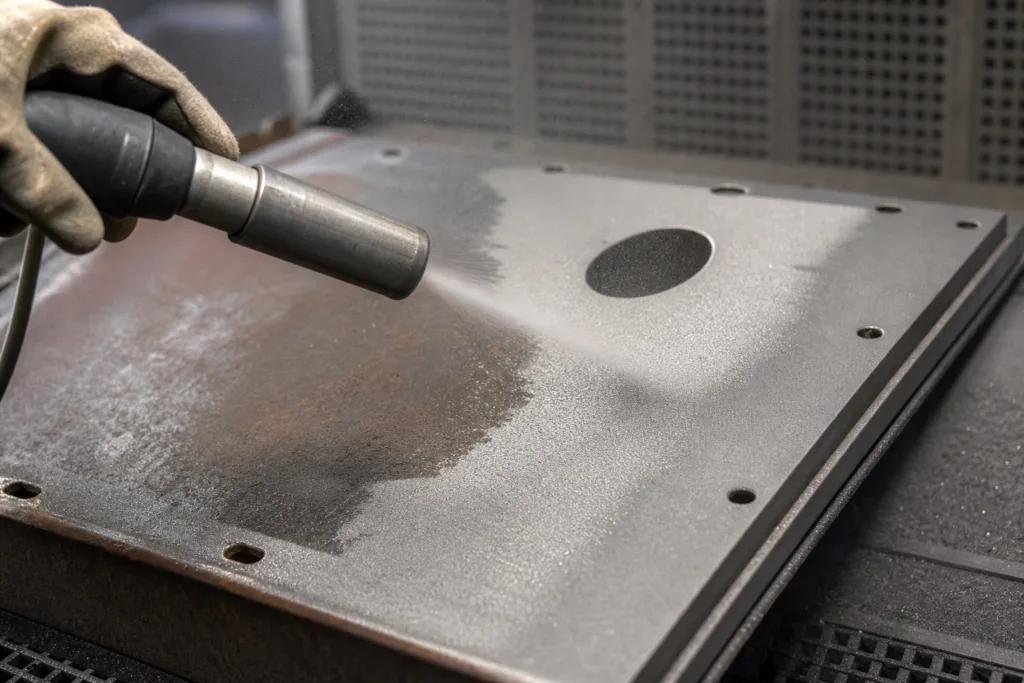
List both adherends and the condition presented to the sealant during production. Possible categories include bare metal, coated metal, engineering plastic, composite, painted surface, conversion-treated surface, or an existing finish. The material name alone is insufficient: coating chemistry, treatment, texture, contamination, moisture, release agents, and storage history can change adhesion.
For each substrate, document the cleaning method, preparation limits, masking requirements, primer or pretreatment instructions, and the time between preparation and dispensing. Do not assume that a sealant compatible with one metal or plastic will adhere to every grade, coating, or composite. Require supplier compatibility information and confirm it with substrate-specific testing using production-representative surfaces.
Surface preparation creates a trade-off. More preparation may improve repeatability, but it can add equipment, labor, drying time, and controls. A process that relies on unusually clean or freshly treated surfaces may be technically suitable yet difficult to hold in serial production. Conversely, accepting an unprepared surface without evidence transfers contamination and aging risk into the joint. The qualification record should therefore identify the permitted surface state and the inspection method used to verify it.
Keep enclosure sealing separate from adjacent applications. Evidence for prismatic battery pack adhesives concerns a different documented assembly scope unless the same substrate pair, geometry, process, and exposure are demonstrated. Likewise, charging pile adhesive applications should not be treated as evidence for a vehicle shell or box joint.
Set the Bond-Line and Seal Geometry
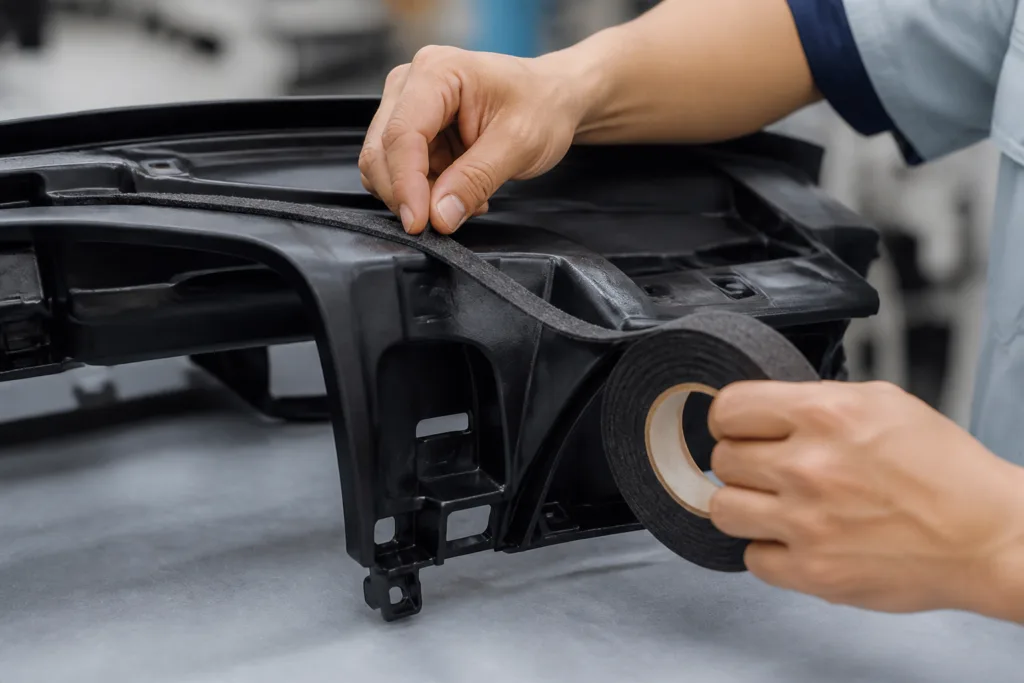
Translate the drawing into measurable seal requirements. Record joint width, nominal and worst-case gap, tolerance stack-up, bead position, corners, fillets, compression or closure method, and any interruption caused by fasteners or access features. Identify whether the sealant must fill a variable gap, remain in contact during movement, or simply wet and close a controlled interface.
Geometry affects both performance and production. A narrow path may reduce material use but demands accurate dispensing and surface alignment. A larger or variable gap may improve tolerance absorption but can change cure behavior, material consumption, handling time, and inspection difficulty. Corners and starts or stops need specific review because discontinuities can create local leak paths even when straight sections appear acceptable.
| Decision area | Requirement to define | Supplier evidence to request | Qualification consequence if unresolved |
|---|---|---|---|
| Substrate pair | Material, coating, treatment, and surface condition | Compatibility guidance and substrate-specific adhesion evidence | Hold approval until the production surface is represented |
| Seal geometry | Path, gap range, movement, closure, and tolerances | Application limits and representative joint results | Resolve geometry or test the worst-case joint |
| Process window | Dispensing, assembly sequence, handling, and cure conditions | Current TDS, SDS, and controlled process guidance | Run process trials before line release |
| Exposure | Temperature, moisture, fluids, vibration, and mechanical loads | Relevant test evidence or an agreed validation plan | Do not convert generic data into an enclosure claim |
At this stage, the selection should produce a documented requirement matrix rather than a premature product nomination. The next review must match the cure mechanism and dispensing process to the available production window, then define environmental and assembly validation.
Match Cure Mechanism to the Process Window
Review the sealant’s cure mechanism against the actual assembly sequence. The requirement is not simply that a material cures; it must reach the required handling state within the available production window while remaining compatible with the substrates, fixture method, closure sequence, and downstream operations. Request current TDS and SDS information covering application limits, cure guidance, handling, storage, and safety controls. Do not fill missing values with assumptions.
Document ambient conditions at the joint, including temperature, humidity, ventilation, and any controlled or accelerated curing step. Record the time between dispensing and closure, the time before handling, and any delay before inspection or subsequent assembly. A material that appears suitable in a laboratory screening may be unsuitable when the line has a shorter takt, different humidity, or limited fixture capacity. Use controlled process trials with production-representative surfaces and the intended bead geometry.
Also define rework. The team should know how an incorrectly placed bead is identified, whether uncured material can be removed without damaging the surface, and how a repaired joint is inspected. These procedures require supplier guidance and internal process approval; they should not be inferred from a generic adhesive family.

Evaluate Dispensing and Packaging Fit
Dispensing must produce a continuous, correctly positioned seal path at the required production rate. Review bead start and stop behavior, cornering, interruption control, nozzle access, material changeover, and the effect of joint tolerances. Equipment compatibility should be verified for the selected package and process rather than assumed from a product name. Review relevant adhesive dispensing equipment guidance alongside supplier instructions.
Request confirmation of the available packaging format, storage controls, batch identification, traceability, and handling requirements for the forecast volume. The procurement review should also cover packaging qualification, delivery continuity, lot acceptance, and change notification. Do not state a cartridge, pail, shelf-life, minimum-order, or lead-time requirement unless it is documented for the exact product and supply arrangement.
Review Environmental, Electrical, and Thermal Exposure

Translate the enclosure specification into measurable qualification requirements. List operating and storage temperature profiles, moisture exposure, fluid contact, pressure or ingress criteria, vibration, mechanical movement, and any expected contact with road or process contaminants. The list should identify duration, sequence, measurement method, and acceptance criteria where these are part of the design requirement. Generic resistance language is not a substitute for evidence on the defined joint.
Check whether the sealant must provide electrical insulation, avoid an unwanted conductive path, limit thermal interference, or meet an optical or outgassing requirement near sensitive components. These properties are application-specific and must be confirmed through current documentation and representative testing. Do not infer battery safety, thermal-management improvement, vehicle efficiency, component longevity, or environmental protection from the fact that a product is marketed for an automotive or energy application.
Build a Validation and Documentation Plan
Before approval, assemble a controlled evidence package: current TDS and SDS, exact product identification, application guidance, substrate and coating descriptions, surface-preparation records, dispensing settings, cure conditions, inspection criteria, and batch information. Add representative assembly results for the intended seal path, gap range, corners, closure method, and production surface state. Screening coupons can identify risks, but they should not replace testing on the actual or representative enclosure joint.
Define the validation plan with engineering, quality, manufacturing, and procurement ownership. It may include adhesion review, dimensional and visual inspection, leak or ingress evaluation where specified, environmental aging, temperature cycling, fluid exposure, vibration, mechanical movement, and post-exposure inspection. The appropriate methods and acceptance limits must come from the enclosure specification or an agreed qualification plan. Record failures, repairs, deviations, and changes to substrate, preparation, bead geometry, equipment, or cure conditions.
Make the Procurement Decision
Use a documented go or no-go review. Technical fit requires a qualified substrate pair, surface condition, geometry, process window, exposure profile, and acceptance criteria. Commercial readiness requires confirmed packaging, storage, forecast capacity, batch traceability, supply continuity, technical support, and change-control terms. Any unresolved item should have an owner, evidence requirement, and decision date before supplier nomination or production release.
For terminology and general documentation questions, use the applicable ZDS information as context, but keep the approval record tied to the defined shell or box joint. A product family, adjacent automotive application, or generic sealant claim cannot replace current product documentation and representative assembly validation. To begin a technical review, contact the ZDS technical team with the substrate pair, process, operating environment, validation needs, quantity, and packaging requirements.
What is the difference between an EV shell sealing adhesive and a structural adhesive?
An EV shell sealing adhesive is selected to close a defined enclosure joint; a structural adhesive is qualified to transfer specified loads. One material may serve both roles only when the joint, load path, and relevant evidence support both functions.
How should an adhesive sealant be evaluated for metal-to-plastic or coated-metal enclosure joints?
Identify the exact grades, coatings, treatments, cleaning process, and production surface condition, then verify compatibility with supplier documentation and representative adhesion and assembly testing.
Which cure and dispensing factors should be checked before selecting an EV enclosure sealant?
Check cure mechanism, ambient limits, assembly and handling window, bead control, equipment compatibility, package format, storage, changeover, and process trials using the intended geometry.
What validation evidence is needed before approving a battery box sealing adhesive?
Require current TDS and SDS documents, substrate-specific evidence, representative assembly results, defined leak or ingress criteria where applicable, environmental aging, process capability, inspection records, and change-control review.
Which ZDS documents should procurement request before ordering an enclosure sealant?
Request the current TDS, SDS, application guidance, exact product identification, packaging and storage information, batch traceability details, supply and change-control terms, and any agreed validation records.
Related technical guidance: charging pile adhesive applications.