Understanding ATF Oil Resistant Adhesives for Electric Drive Units (EDU)
Electric drive units (EDU) are central to the performance and reliability of modern electric vehicles. One critical challenge is ensuring lasting adhesion even when exposed to fluids like automatic transmission fluid (ATF). ATF oil resistant adhesives are engineered to tackle this challenge, offering robust performance under the demanding conditions present in EDU environments. The science behind their resistance, chemical compatibility, and physical durability determines whether an electric vehicle maintains operational efficiency or succumbs to premature failure.
The Role of Adhesives in Electric Vehicle Assemblies
Adhesives in electric drive units serve as mechanical fasteners, sealants, and protective barriers. Their selection gains importance as electric vehicles rely more on compact, integrated drive systems. The need for adhesives that withstand exposure to ATF, brake fluid, coolants, and other aggressive chemicals intensifies as assembly line speeds and complexity increase.
Automatic Transmission Fluid Exposure: A Tough Test
ATF is formulated with additives and synthetic compounds that accelerate degradation of conventional adhesives. Adhesives not specifically engineered for ATF resistance risk softening, swelling, or complete disbondment. For EDU applications, the right adhesive must maintain its mechanical strength and sealing properties even after hundreds of hours submerged in ATF.
Key Performance Factors for ATF Oil Resistant Adhesives
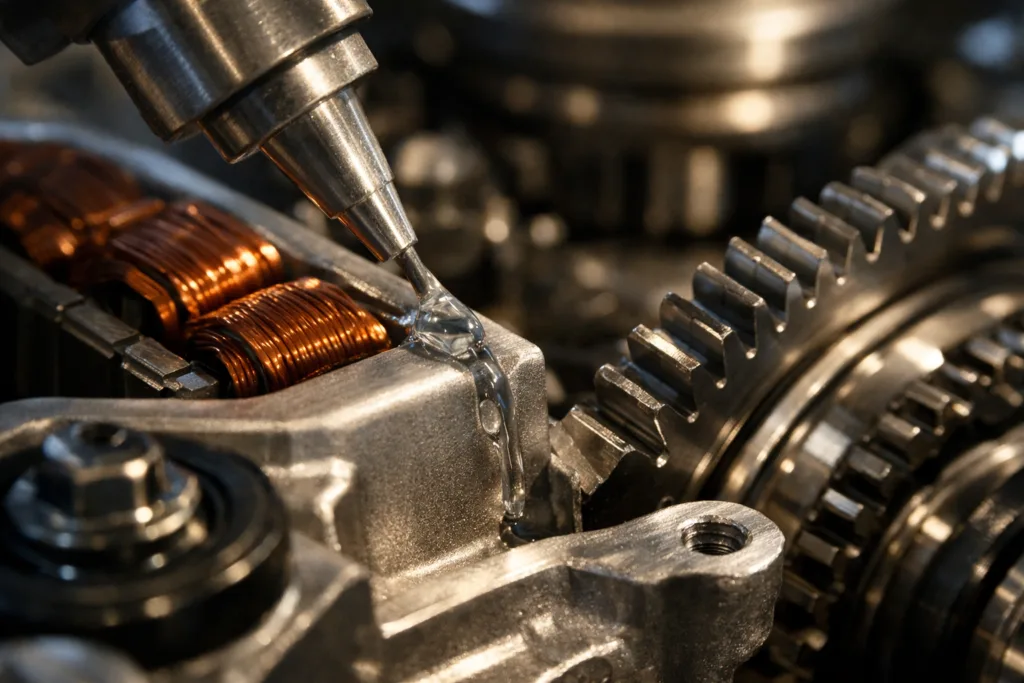
Choosing adhesives for EDU assembly involves evaluating several critical properties:
- Temperature Resistance: Electric drive units operate in high heat, sometimes exceeding 140°C. Adhesives must retain strength and elasticity.
- Chemical Compatibility: Resistance to ATF, brake fluids, and coolants is non-negotiable. Adhesives must not degrade or lose bond strength.
- Durability: Repeated thermal cycles, vibration, and mechanical stresses require adhesives with low shrinkage and persistent integrity.
- Processability: Short open times, reliable fixture, and compatibility with automated dispensing underpin production efficiency.
From an application engineering perspective, adhesives undergo rigorous testing: lap shear, peel, and immersion evaluations are standard to validate ATF resistance. ZDS Adhesive, an industrial adhesive manufacturer, typically recommends product trials under real assembly-line conditions to verify maintenance of bond-line thickness and fixture time in fluid-soaked environments.
Types of Oil-Resistant Adhesives for Electric Drive Units (EDU)
Several adhesive chemistries offer varying levels of resistance to ATF for electric drive units:
- Epoxy Adhesives: High mechanical properties and custom formulations for ATF resistance. Epoxy adhesive solutions commonly pass extended immersion tests.
- Polyurethane Adhesives: Flexible, shock-absorbing, and resilient to fluid ingress. Polyurethane structural adhesives are favored for sealing gaskets and assembly joints.
- Acrylic Adhesives: Fast cure, robust bond, and tuned for high heat stability. 2nd generation acrylics outperform conventional fasteners; see modern alternatives to rivets.
- Silicone Sealants: Used for gasketing and flexible seals, offering longer aging and excellent fluid resistance.
Epoxy vs. Polyurethane: A Practical Comparison
| Property | Epoxy | Polyurethane |
|---|---|---|
| ATF Resistance | Excellent | Very Good |
| Temperature Stability | High (up to 180°C) | Moderate (up to 120°C) |
| Elasticity | Low | High |
| Fixture Time | Variable | Fast |
| Shock Absorption | Moderate | Good |
Choose epoxy for structural joints exposed to prolonged ATF immersion. Polyurethane fits dynamic seals and vibration zones.
Assembly Applications: Where Oil-Resistant Adhesives Make a Difference
ATF oil resistant adhesives are utilized in several areas of EDU construction:
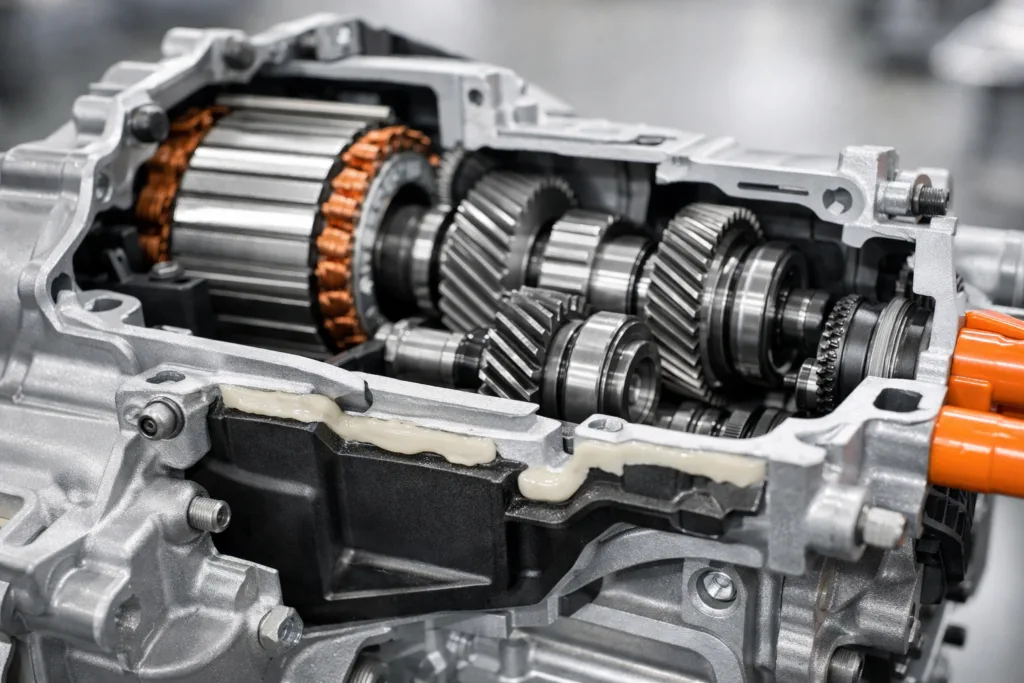
- Bonding stator windings and magnet mounts
- Sealing electric motor housings and drive covers
- Encapsulating PCB modules in fluid-exposed cavities
- Integrating gaskets and flexible seals
For enhanced heat dissipation and reliability in e-motor stators, explore modern stator encapsulation solutions.
Adhesive Selection: Assembly-Line Decision Rules
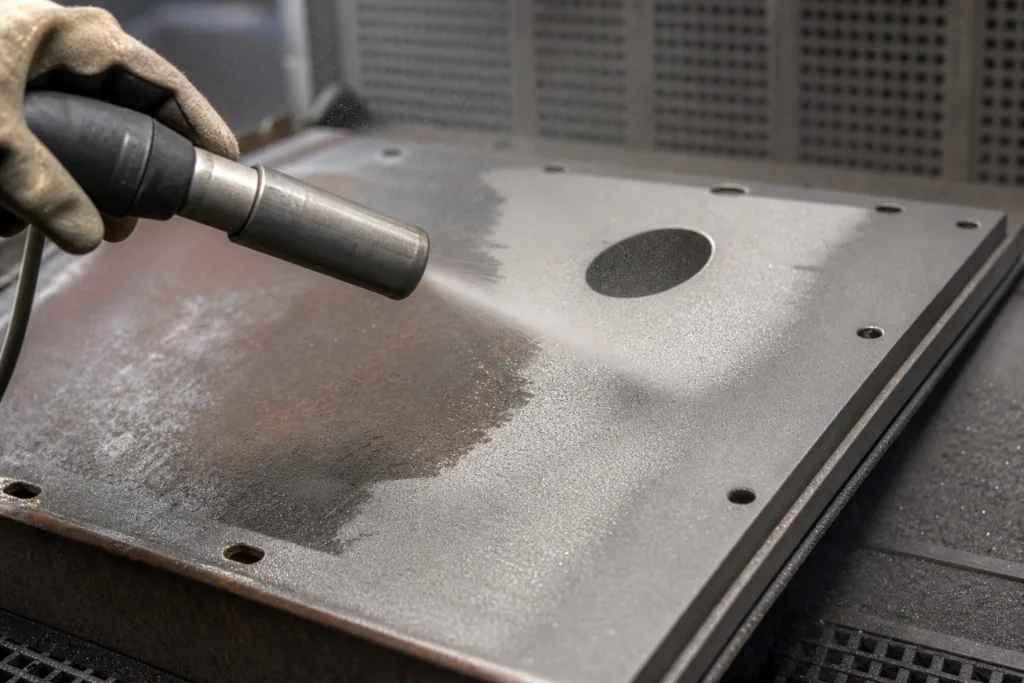
Application engineers advise: match adhesive chemistry to substrate (metal, composite, polymer), factor fixture time, and test for fluid resistance with ATF-soaked mechanical cycling. Surface treatments like plasma or corona activation often improve bonding for low-surface-energy materials.
Recent Advancements in Oil Resistant Adhesives
The year 2026 brings innovations in adhesive chemistry:
- Low-halogen epoxies reduce environmental impact, aligning with stricter eco standards.
- Nano-filler enhanced formulations improve thermal conductivity and fluid barrier properties.
- Delay-cure UV adhesives now outperform conventional metal-bonding in thermal cycling stability (see delay cure UV adhesive advantages).
- Self-healing elastomeric adhesives address micro-cracks and long-term sealing.
Testing and Standards for ATF Oil Resistance
Adhesive manufacturers employ ISO, ASTM, and automotive test protocols:
- Lap shear after ATF immersion (ASTM D1002)
- Peel strength post-fluid aging
- Thermal cycling with fluid exposure
- Test adhesion on substrates representative of EDU components
Results determine qualification for mass production. Failures during these tests flag the need for reformulation or process adjustments.
Operational Efficiency and Reliability: The Adhesive Impact
Reliable ATF oil-resistant adhesives enhance:
- Service life of EDU components
- Maintenance cycles and repair frequency
- Heat management and electrical isolation
- Production speed and defect rate reductions
Proper adhesive selection is not only about material science. It’s about long-term performance and efficiency. Industry experience, like that at ZDS Adhesive, confirms a strong correlation between fluid resistance and reduction in warranty claims and component replacement rates.
Oil Resistant Adhesives for Electric Drive Units (EDU)
For 2026 and beyond, ATF oil-resistant adhesives have become mission-critical for electric drive units. As electric vehicle adoption surges, every assembly-stage decision impacts safety, reliability, and maintenance. From testing new formulations to optimizing cure times, the commitment to fluid resistance continues to influence industry success.
Best Practices for Adhesive Application
- Apply substrate cleaning protocols—ensure removal of oil residues before dispensing adhesive.
- Monitor fixture and cure times to match production speeds.
- Document fluid resistance test data and track batch consistency.
- Audit surface treatments for difficult substrates; plasma activation can boost initial bond strength.
Looking Ahead: Sustainability and Green Alternatives
Eco-conscious electric drive unit designs benefit from adhesives with low-VOC emissions and improved recyclability. Formulations now increasingly focus on minimal halogen content and extended service life. Engineers seek the dual goal: operational reliability and environmental compliance.
Conclusion: What Matters Most in ATF Oil Resistant Adhesives for Electric Drive Units (EDU)

ATF oil resistant adhesives have reshaped electric drive unit assembly, protecting components from chemical exposure and mechanical stress. Their evolution aligns with advancing electric vehicle technology and sustainability trends. Evaluating bond durability, chemical compatibility, and process efficiency remains essential. Engineers who link adhesive choice to fluid environment and production reality achieve greater reliability, fewer defects, and improved up-time—all vital in the electric vehicle era.
Frequently Asked Questions
What makes an adhesive ATF oil resistant?
ATF oil resistant adhesives are formulated with chemical compounds that prevent degradation, swelling, or loss of adhesion when exposed to automatic transmission fluid. They use additives and polymer networks specially designed to endure aggressive fluid environments.
How is adhesive performance tested for electric drive units?
Adhesive performance is assessed through lab tests such as lap shear, peel strength, and thermal cycling after exposure to ATF and other automotive fluids. Assembly-line trials also validate process reliability and fixture times in real conditions.
Can standard adhesives be used in EDU applications?
No, standard adhesives often fail when exposed to ATF and other fluids due to swelling, softening, or loss of mechanical strength. Only adhesives engineered for chemical resistance should be considered for EDU assemblies.
Is there a difference between epoxy and polyurethane adhesives for fluid resistance?
Epoxy adhesives typically offer better long-term resistance to ATF and higher mechanical strength, while polyurethane adhesives excel in flexibility and vibration absorption. The choice depends on location and expected mechanical loads in the EDU.
How do adhesive failures impact electric drive units?
Adhesive failures can cause leaks, electrical shorts, reduced mechanical strength, and even complete drive unit malfunction. This increases repair costs and reduces overall reliability of electric vehicles.
What advances are expected for ATF oil resistant adhesives in 2026?
Continued development of nano-filled, low-halogen, and self-healing adhesives is expected, along with better eco credentials and improved process control to enhance both durability and sustainability in electric drive units.
Related Reading
- Unlocking Reliability: Thermal Compounds for Stable LED Driver Boards
- Discover Why Silver Epoxies Are Game-Changers in 5G Filters
- Expert Guide: Bonding Carbon Fiber to Aluminum for Maximum Strength
- How High-Modulus Adhesives Strengthen Chassis & Boost Crashworthiness
- Next-Level Polyurethane Potting Glue for Custom Applications