Introduction: Why Thermal Management for Liquid-Cooled Charging Cables Matters in 2026
As electric vehicles (EVs) and industrial charging systems power ahead in 2026, the demand for high-speed charging solutions pushes engineering boundaries. Thermal management for liquid-cooled charging cables is at the heart of this revolution. Without effective heat control, cables risk overheating, reduced efficiency, and even catastrophic failure. Liquid cooling technology not only enables faster charging, but also protects cable integrity—making it indispensable for both EV fleets and industrial platforms.
This article explores the science, the practical challenges, and proven strategies behind thermal management in liquid-cooled charging cables. We’ll break down how heat dissipates, what coolant circulation really does, and the breakthrough materials that make these systems reliable and scalable. Along the way, we’ll highlight real-world applications, compare air- and liquid-cooled systems, and cover best practices for design, installation, and maintenance. Whether you’re an engineer, a facility manager, or an enthusiast wanting practical insights, you’ll find actionable guidance here.
Understanding Thermal Management for Liquid-Cooled Charging Cables
The Basics of Heat Generation in High-Power Charging
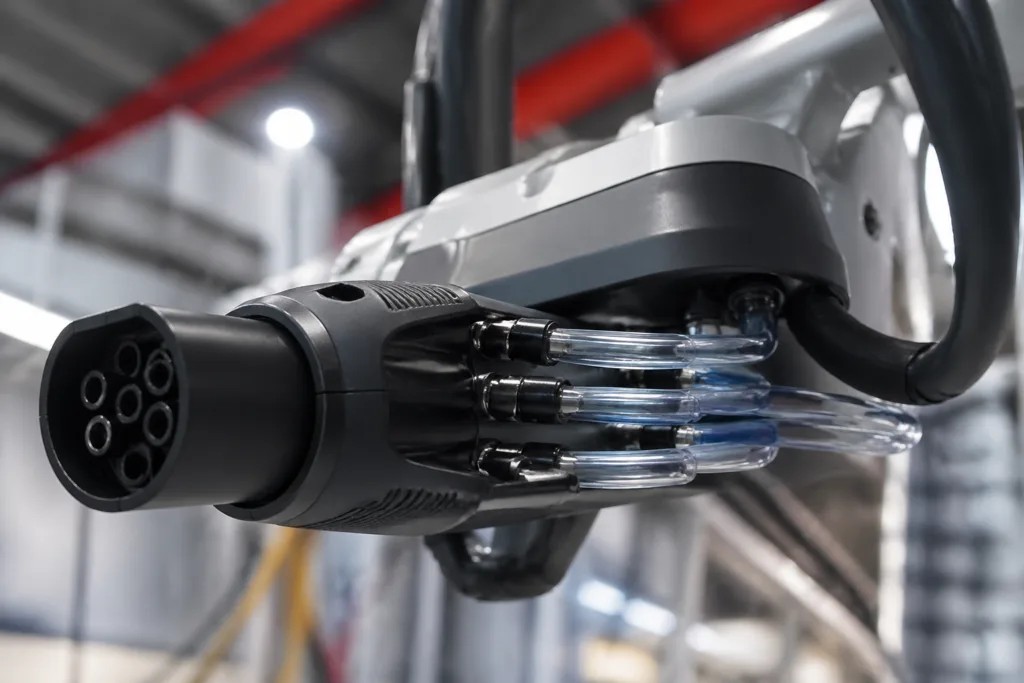
Whenever electricity flows through a cable, some energy transforms into heat due to resistance—especially at high current levels typical in fast charging. Over time, this heat can cause material degradation, safety hazards, and reduced performance.
Why Liquid-Cooling Technology Is Changing the Game
Liquid-cooling uses a circulating coolant to absorb, transfer, and remove heat more effectively than traditional air cooling and passive systems. High-conductivity fluids, like glycol-water mixes, enable direct, efficient heat pickup from the cable’s core.
Key Principles of Heat Transfer in Cable Design
Heat transfer relies on three core mechanisms: conduction (within the cable), convection (from cable to coolant), and sometimes radiation. Optimized cable designs leverage these principles with conductive pathways, smooth surfaces, and efficient insulation placement.
Coolant Circulation: How Liquid-Cooled Charging Cables Stay Safe and Efficient
How Coolant Moves Heat Away
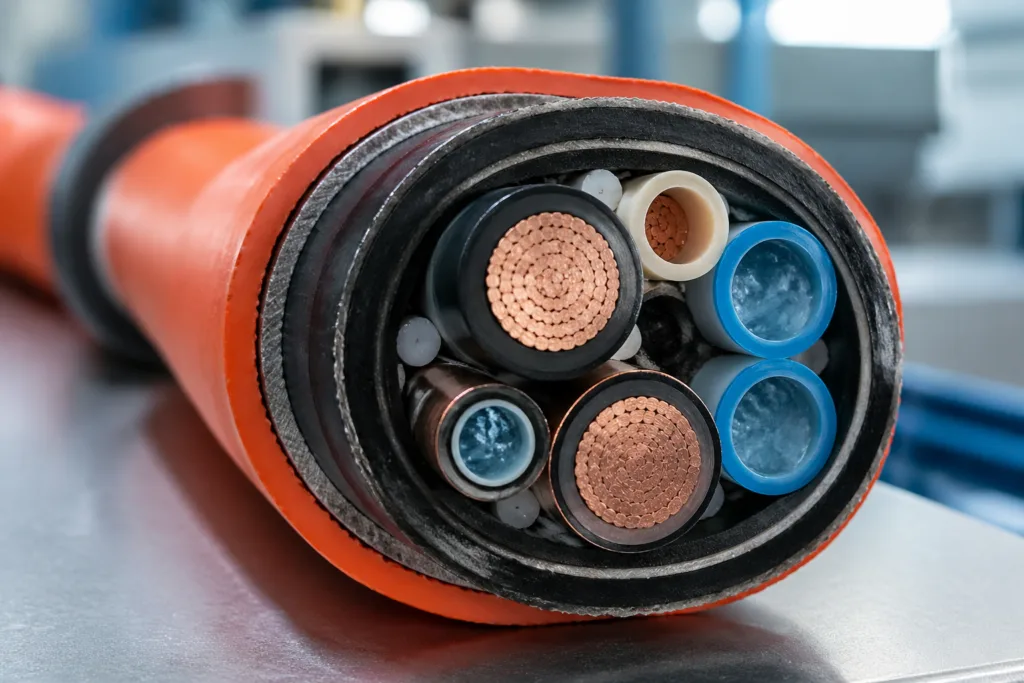
Within a liquid-cooled charging cable, coolant flows through embedded tubes or channels. This continuous movement pulls heat from the conductor, transports it out, and releases it via external heat exchangers. The result: safe, stable temperature profiles even at extreme currents and voltages.
Pump Technologies and Flow Optimization
Most modern liquid-cooled systems use electrically driven pumps, tuned for pressure and flow rate. Variable-speed pumps adapt to changing thermal loads, saving energy and extending system life.
Coolant Selection: Safe, Stable, and Non-Corrosive
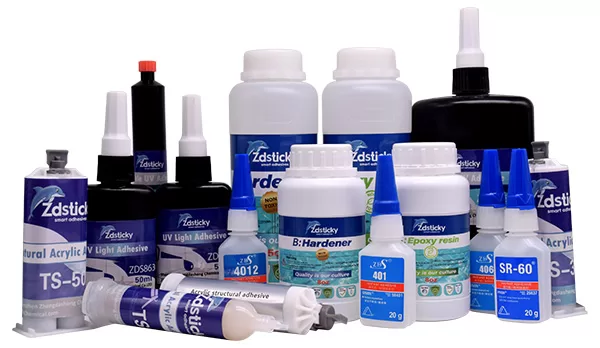
The coolant itself matters—glycol blends, deionized water, and specialty fluids must avoid corrosion, freezing, and chemical breakdown under long-term use. In assembly environments like those at ZDS Adhesive, an industrial adhesive manufacturer, the choice of coolant must also account for material compatibility with cable insulation, adhesives, and seals.
| Coolant Type | Thermal Capacity | Corrosion Risk | Industry Use |
|---|---|---|---|
| Glycol-Water | High | Low (with inhibitors) | EV Charging, Industrial Cables |
| Deionized Water | Medium | Low | Short-Term, Laboratory |
| Dielectric Fluids | Medium-High | Very Low | High-Voltage, Sensitive Electronics |
Innovative Materials and Adhesives in Cable Thermal Management
Breakthrough Insulation and Conductor Materials
Advanced polymers, cross-linked polyethylene, and silicone insulation dramatically improve thermal performance and resistance to breakdown. Such materials allow thin cable walls and high flexibility without compromising safety.
The Role of Industrial Adhesives and Sealants
Sealing cable assemblies and coolant passages requires adhesives with high temperature stability, moisture resistance, and robust bonding strength. Engineers often reference silicone adhesive types for their reliability in wet, hot, or vibration-prone environments.
Testing Adhesive Performance for Long-Term Stability
Assembly engineers rely on standardized tests like lap shear, peel, and thermal cycling to validate adhesives and sealants. Proper test data prevents failures in harsh charging conditions and minimizes downtime.
Case Study: ZDS Adhesive’s Engineering-Led Solution
From an assembly-line viewpoint at ZDS Adhesive, material selection follows a checklist: substrate compatibility, fixture time, open time, cure mechanism, lap shear, moisture protection, and corrosion resistance. Engineers use this evidence-based process to avoid leaks, delamination, and premature aging under repeated heat cycling.
Comparing Liquid-Cooled and Air-Cooled Charging Cables
Air-Cooled Fundamentals: Simplicity vs. Limitations
Traditional air-cooled cables rely on passive heat dissipation or built-in fans. While cost-effective and straightforward, their performance is limited by ambient airflow and temperature.
Liquid-Cooled Advantages: Efficiency and Safety
- Support for higher power charging (up to 500A+)
- Reduced cable diameter and weight
- Stable, lower operating temperatures
- Longer service life and fewer breakdowns
Common Pitfalls in Air Cooling—Industry Insights
Air cooling often suffers from inconsistent temperature, contamination (dust), and restricted airflow. These drawbacks lead to frequent maintenance needs and early cable replacement.
| Feature | Air-Cooled | Liquid-Cooled |
|---|---|---|
| Max Current | ~200A | ~500A+ |
| Cable Diameter | Large | Small |
| Heat Dissipation | Moderate | High |
| Maintenance | Frequent | Less Frequent |
| Safety | Good | Excellent |
Real-World Applications of Liquid-Cooled Charging Cables
EV Fast Charging Stations: Maximizing Uptime
Liquid-cooled cables allow urban and highway EV stations to deliver rapid charging without overheating, enabling quick turnarounds for commercial fleets and private drivers alike. Stations using liquid-cooled cables see fewer failures and longer hardware lifespans.
Industrial Platforms: Smart Thermal Solutions for Continuous Ops
Heavy-duty battery swap stations, robotic arms, and material-handling systems depend on liquid-cooled charging cables for reliable operation. Thermal management helps avoid bottlenecks, overheating shutdowns, and costly downtime. For deeper insight on industrial battery swap durability, consider structural bonding approaches for battery swap stations.
Data Centers and Telecom: Cooling for High Reliability
Modern data centers utilize liquid-cooled charging and power cables to minimize thermal stress and maximize uptime. Cooling efficiency directly impacts server stability and network reliability.
Installation and Maintenance: Making the Most of Liquid-Cooled Charging Cables
Design Considerations for Safe Operation
Successful installations require clear routing for coolant tubing and robust interfaces between cable components. Engineers follow guidelines for minimum bend radius, insulation thickness, and pump placement.
Sealing and Protection: Avoiding Leaks and Failures
Moisture ingress is a critical risk. Weather-resistant adhesive solutions enable secure cable plug assemblies. For practical reliability techniques, explore weather-resistant adhesives for charging plug assembly.
Routine Maintenance Checks
- Inspect coolant levels and purity
- Check for leaks at joints and connectors
- Test pump function and flow rate
- Review insulation and adhesive bonds for degradation
- Audit temperature sensors and monitoring systems
Optimizing Performance: Best Practices for Thermal Management
Smart Monitoring and Predictive Maintenance
Advanced charging cables integrate sensors to track temperature, pressure, and coolant flow. Predictive analytics alert technicians to early warning signs, preventing downtime and damage.
Choosing the Right Materials, Adhesives, and Coolant
Material selection follows strict testing for high-temperature stability, moisture resistance, and electrical insulation. Adhesive systems are evaluated for open time, fixture time, lap shear, peel strength, and cure mechanism for every new cable project.
Ensuring Compatibility and Longevity
Assembly teams cross-check material data sheets and compatibility charts, often referencing industry blogs such as the guide to conformal coating in charging stations, to avoid chemical conflicts and extend cable service life.
Pitfalls and Failure Modes: What Can Go Wrong in Thermal Management?
Common Cable Failures Linked to Poor Thermal Design
- Insulation melting under high current
- Coolant leaks due to poor sealing
- Pump failures leading to overheating
- Accelerated aging from moisture ingress
How to Diagnose and Prevent Thermal Issues
Early warning signs include persistent high cable temperatures, uneven coolant flow, chemical discoloration, and visible cracks. Regular thermal scans and adhesion testing minimize surprises in the field.
Industry Standards and Testing for Liquid-Cooled Charging Cables
Relevant Standards in 2026
Charging cables must comply with standards such as IEC 62911, ISO/IEC TS 23050, and local electrical codes. Certification bodies test for durability, thermal resistance, leakage, and environmental performance.
Bench Testing and Simulation Approaches
Lab tests include accelerated aging, thermal cycling, humidity exposure, and mechanical bending. Simulation tools predict real-world performance and guide engineering tweaks.
Future Trends in Thermal Management for Liquid-Cooled Charging Cables
AI-Driven Diagnostics and Self-Adjusting Coolant Flows
In 2026, artificial intelligence is transforming maintenance—monitoring cable sensors, interpreting trends, and dynamically modulating pump speeds to optimize thermal protection.
Sustainable Materials and Environmental Imperatives
R&D is ramping up for biodegradable cable insulation, recyclable coolant formulations, and adhesives with sustainable chemistries. Expect growing pressure for greener, longer-lasting thermal management solutions.
Conclusion: Key Takeaways for Thermal Management for Liquid-Cooled Charging Cables
Effective thermal management for liquid-cooled charging cables is a must-have in high-power EV and industrial applications. By leveraging innovative materials, reliable industrial adhesives, and advanced coolant circulation, engineers can achieve higher efficiency, greater safety, and longer cable lifespans. Design discipline and maintenance planning are essential for avoiding common pitfalls. As standards evolve and new technologies emerge, staying informed and vigilant will ensure optimal performance. Future trends point toward smarter, more sustainable systems—fueling safer charging everywhere.
Frequently Asked Questions
How does liquid cooling improve charging cable efficiency?
Liquid cooling removes heat faster and more effectively than air cooling, allowing higher currents and faster charging without overheating or damaging cable materials.
What kind of coolant is used in liquid-cooled charging cables?
Most systems use glycol-water blends or specialized dielectric fluids, chosen for their thermal capacity, low corrosion risk, and compatibility with cable insulation and adhesives.
How often do liquid-cooled charging cables require maintenance?
Routine maintenance checks are recommended every six months, focusing on coolant levels, pump function, leaks, and adhesive or insulation degradation to ensure reliable operation.
Are liquid-cooled cables safer than air-cooled variants?
Yes, liquid-cooled cables maintain lower, more stable temperatures during charging, reducing risks of insulation breakdown, fire, and failure—especially at high power levels.
What role do adhesives play in thermal management?
Adhesives and sealants are critical for moisture protection, leak prevention, and reliable bonding of cable components, directly impacting the cable’s durability in harsh environments.
Can liquid-cooled cables be installed in outdoor charging stations?
Absolutely. With proper sealing, material selection, and routine maintenance, liquid-cooled cables work reliably in outdoor charging environments—withstanding moisture, temperature fluctuations, and mechanical stress.
Related Reading
- How Deep Potting Silicones Improve Industrial Cable Protection
- 9 Ways Die Attach Adhesives Transform Charging Cable Heat Management
- Uncovering Phase Change Materials for Ultra-Efficient Cable Heat Sinks
- Mastering IP68 Potting for Outdoor DC Cable Reliability
- Get Expert Insights on High-Pressure Sealant Solutions for Subsea Charging Cables