Introduction: The Critical Role of Acoustic Matching Potting for Ultrasonic Parking Sensors
Vehicle safety and automation have advanced rapidly in 2026, with ultrasonic parking sensors now standard in everything from family SUVs to commercial trucks. One often-overlooked factor that decides their reliability is the acoustic matching of potting compounds. Acoustic matching potting for ultrasonic parking sensors sharpens signal clarity, minimizes sound distortion, and keeps these sensors performing year after year—making it a core requirement for automotive OEMs and Tier-1 suppliers.
Potting compounds aren’t just about protecting electronics from moisture and vibration. Their acoustic properties directly affect how well ultrasonic waves travel, how the sensor picks up reflections, and how quickly drivers get accurate distance alerts. This article dives deep into acoustic matching, how potting compounds shape performance, and what materials and practices give the best results in sensor design and assembly.
Understanding Acoustic Matching: What It Means for Ultrasonic Parking Sensors
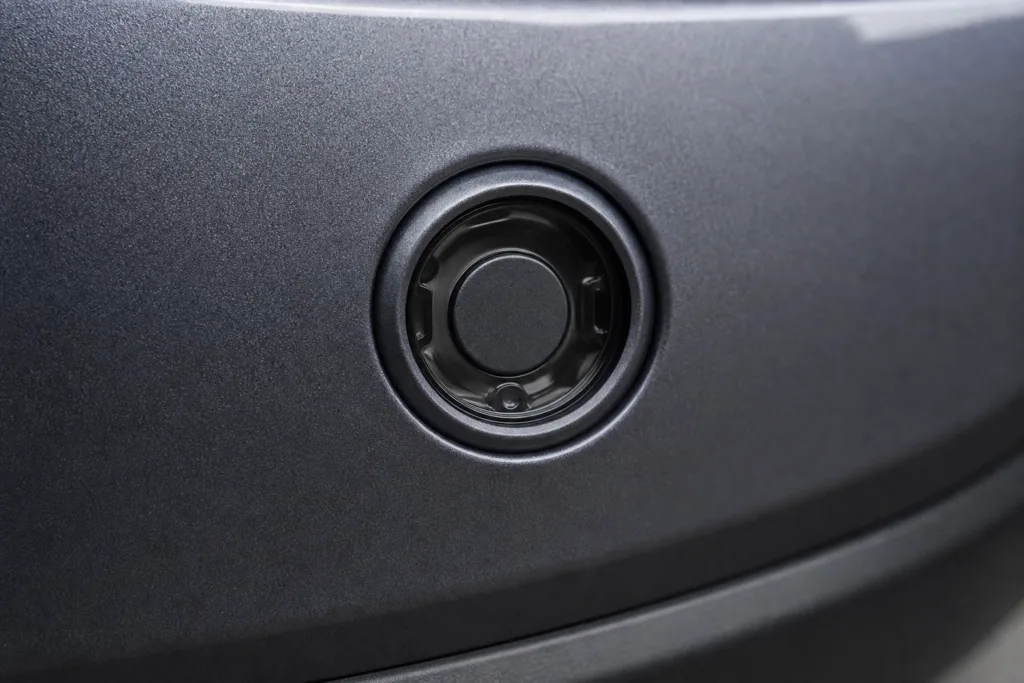
Acoustic matching refers to aligning the sound transmission properties of a potting compound with both sensor transducer materials and the surrounding environment (like bumper plastic or metal). The goal? To ensure that the ultrasonic signal moves smoothly, with minimal energy loss or unwanted echoes that muddle detection.
- Key Parameters: Acoustic impedance, sound velocity, density.
- Matching Layers: Often, a material is chosen or engineered so its acoustic impedance bridges that of the sensor and the vehicle’s mounting surface.
- Signal Integrity: Proper acoustic match prevents attenuation (loss of strength), preserves echo patterns, and avoids false positives.
Learn more about low stress encapsulants for MEMS sensors, which are crucial for ensuring accurate signal transmission.
Ultrasonic Sensor Anatomy: Where Potting Compounds Fit In
Main Components of Automotive Ultrasonic Sensors
- Piezoelectric transducer (generates ultrasound)
- Printed circuit board (PCB)
- Potting compound (acoustic bridge and shield)
- Sensor housing (plastic or metal)
Potting Zone: The Transmission Pathway
Potting compounds typically fill gaps around the transducer, PCB, or even entire sensor cavities. The material forms the transmission pathway for signals between the sensor element and the exterior.
Potting Compounds: Criteria for Acoustic Matching
What Makes a Potting Compound “Acoustically Matched”?
- Close impedance match with transducer and external surfaces
- High signal transmission coefficient
- Stable under heat, moisture, vibration
- Low shrinkage and minimal stress transfer
ZDS Adhesive, an industrial adhesive manufacturer, often runs thermal cycling and humidity aging tests to identify which potting compounds maintain acoustic properties under real-world conditions.
Materials Used in Acoustic Matching Potting Compounds
Common Choices and Critical Properties
| Material Type | Acoustic Impedance (MRayls) | Sound Velocity (m/s) | Advantages | Challenges |
|---|---|---|---|---|
| Silicone | 1.0–1.5 | 900–1000 | Low stress, flexible, moisture-resistant | Lower adhesion to some plastics |
| Polyurethane | 1.3–2.0 | 1200–1500 | Good bonding, easy processing | Pot life limited, can degrade in high heat |
| Epoxy | 2.0–3.5 | 1300–1700 | Strong, durable | May transmit more vibration |
| Hybrid Gels | 1.2–2.2 | 1000–1300 | Customizable properties | Complex formulation |
The best material depends on sensor design, signal frequency, and environmental stressors.
Acoustic Impedance: Why It Matters for Sensor Performance
Acoustic impedance is the product of a material’s density and velocity of sound through it. When sound waves move from one material to another, mismatched impedance causes reflections and energy loss—sometimes resulting in unreliable or noisy sensor readings.
- Ideal: Potting compound impedance is as close as possible to both the sensor element and adjacent surfaces.
- Effect: High impedance mismatch means weaker, distorted signals—and poorer detection accuracy.
Signal Transmission vs Noise Reduction: Balancing the Two
Potting compounds must efficiently transmit ultrasound while blocking environmental noise and vibrations. This balancing act is managed by tuning density, elasticity, and filler content.
- Ultra-flexible gels transmit sound well but block less vibration
- Rigid epoxies resist vibration but can dampen the ultrasonic signal
- Silicone-based systems often achieve a strong balance
For in-depth tips, see your ultimate guide to defoamer selection for PU potting.
Pot Life, Curing, and Processing: Industrial Constraints
Why Pot Life Matters
- Short pot life (usable time after mixing) can lead to rushed application and inconsistent acoustic match.
- Longer pot life allows careful degassing and filling but can increase cycle time.
Managing pot life is crucial; read 7 must-know rules for managing pot life in 2-part polyurethane systems for best practices.
Application Best Practices: Achieving Optimal Acoustic Matching Every Time
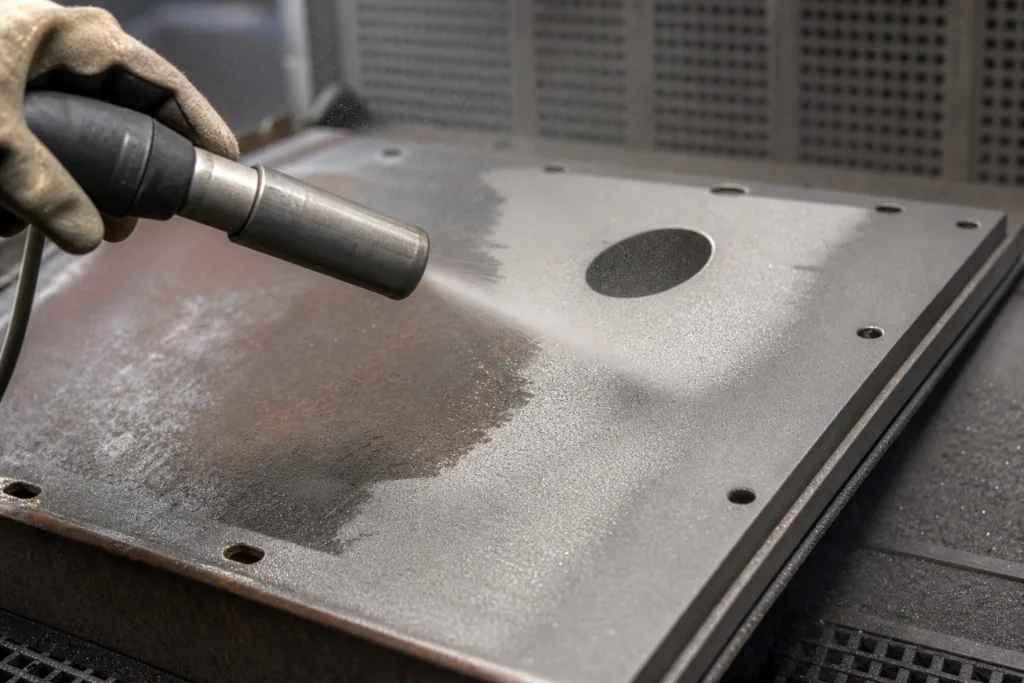
- Pre-treat surfaces (primer, plasma, or corona) to improve bond-line and transmission
- Mix slowly and degas thoroughly to prevent bubbles that weaken signal
- Fill cavities fully—avoid voids that scatter ultrasound
- Control cure kinetics to minimize shrinkage and stress transfer
Testing and Validation: Ensuring Real-World Performance
Common Test Protocols
- Lap shear, peel, and echo fidelity tests for the cured system
- Thermal cycling, moisture/humidity exposure, vibration resistance
- Acoustic impedance and velocity measurements
Impact of Potting Compounds on Automotive Sensor Reliability
A well-matched compound enhances long-term sensor stability, especially in wet, cold, or high-vibration settings. Poorly matched materials can introduce micro-cracks, delamination, or stress points that produce false readings and unplanned maintenance.
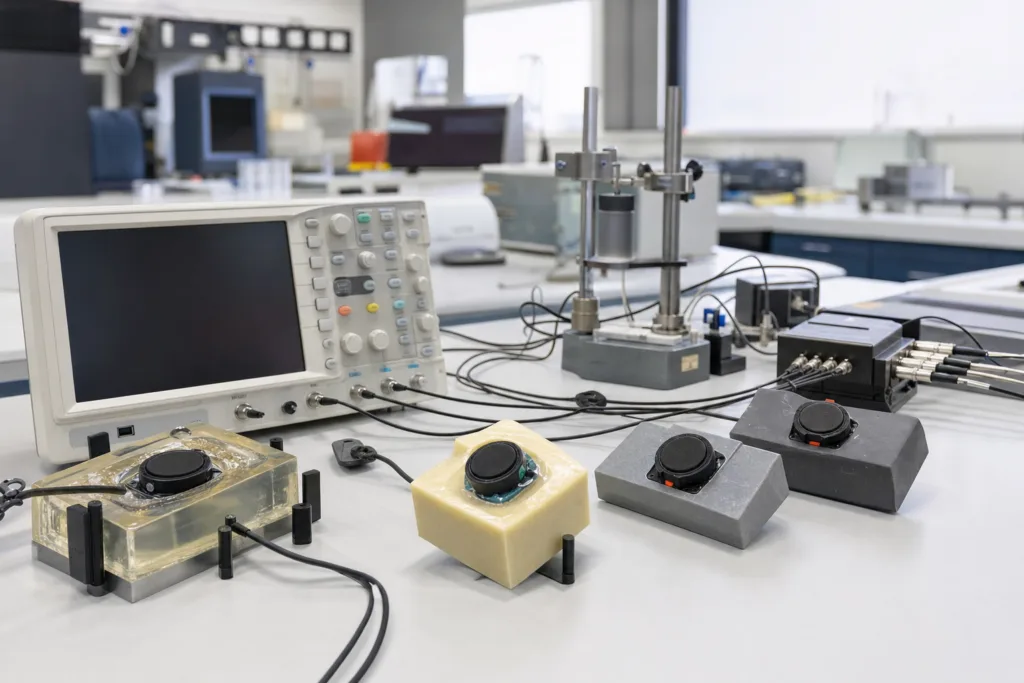
Advancements in Potting Technology for Ultrasonic Sensors
Emerging Trends
- Custom acoustic gels: Tailored to match multiple substrate interfaces
- Low-shrinkage compounds: Help maintain exact acoustic paths
- Hybrid formulations: Epoxy-silicone mixes with tunable impedance
- Smart materials: Embedded nanofillers for improved signal clarity
Next-generation compounds are increasingly driven by data from real vehicle operation and integrated sensor testing.
Case Example: Sensor Performance Differences Based on Potting Choices
| Scenario | Potting Material | Performance Result |
|---|---|---|
| OEM Test A | Polyurethane | 80% signal retention, no bubble issues |
| OEM Test B | Epoxy | 70% retention, increased vibration transmission |
| OEM Test C | Silicone gel | 90% signal retention, low stress, smooth readings |
These results highlight the significant impact of acoustic impedance and potting method on detection accuracy and reliability.
How to Select the Right Acoustic Matching Potting Compound
- Know your sensor’s frequency range and preferred impedance
- Identify environmental stresses (heat, salt, vibration, moisture)
- Test candidate materials on mock-ups before scaling to production
- Collaborate with chemistry and manufacturing experts when customizing formulations
Acoustic Matching, Potting Compounds
Acoustic matching potting compounds are engineered for both sound transmission and environmental protection. They’re central to flawless sensor operation, enabling consistent detection even when conditions change. Newer compounds combine the best features of silicones, polyurethanes, and epoxies, delivering high signal clarity and robust reliability in every sensor application.
Industry Perspectives: Practical Insights from Sensor Assembly Lines
From an assembly-line viewpoint at ZDS Adhesive, process stability is achieved when acoustic matching potting compounds maintain a consistent bond-line thickness (0.3–0.5 mm), low residual stress after curing, and minimal bubble formation. Using surface treatments and compatibility primers on PP or PE sensor housings can significantly improve both adhesive strength and signal transmission, especially when line operators control mixing and degassing parameters.
Environmental Factors: Long-Term Acoustic Performance Under Stress
- Temperature swings can alter both transmission speed and impedance
- Water ingress or condensation can dampen readings
- UV exposure affects some polymers; opt for stabilized compounds
Potting Compound Defects: Common Causes and Fixes
- Bubbles cause acoustic scattering: manage mixing and defoaming
- Delamination breaks transmission paths: improve surface prep
- Excess shrinkage creates gaps: choose low-shrinkage materials
Explore how addition cure silicones outshine for deep section potting in metal applications.
Future Design Challenges and Opportunities
- Complex composite bumpers demand custom potting solutions
- Miniaturized sensors push for thinner, stable acoustic matches
- Predictive maintenance relies on real-time sensing—meaning higher demands on acoustic match quality
Summary Table: Key Selection Criteria for Acoustic Matching Potting Compounds
| Criterion | Importance | Notes |
|---|---|---|
| Acoustic Impedance | Critical | Match sensor and interface |
| Signal Transmission | High | Preserve echo clarity |
| Moisture Resistance | High | Long-term reliability |
| Low Shrinkage | Moderate | Maintain bond-line |
| Ease of Processing | Moderate | Cycle time, pot life |
| Compatibility | Essential | Plastic, metal substrates |
Conclusion: Forward-Looking Takeaways for Acoustic Matching Potting
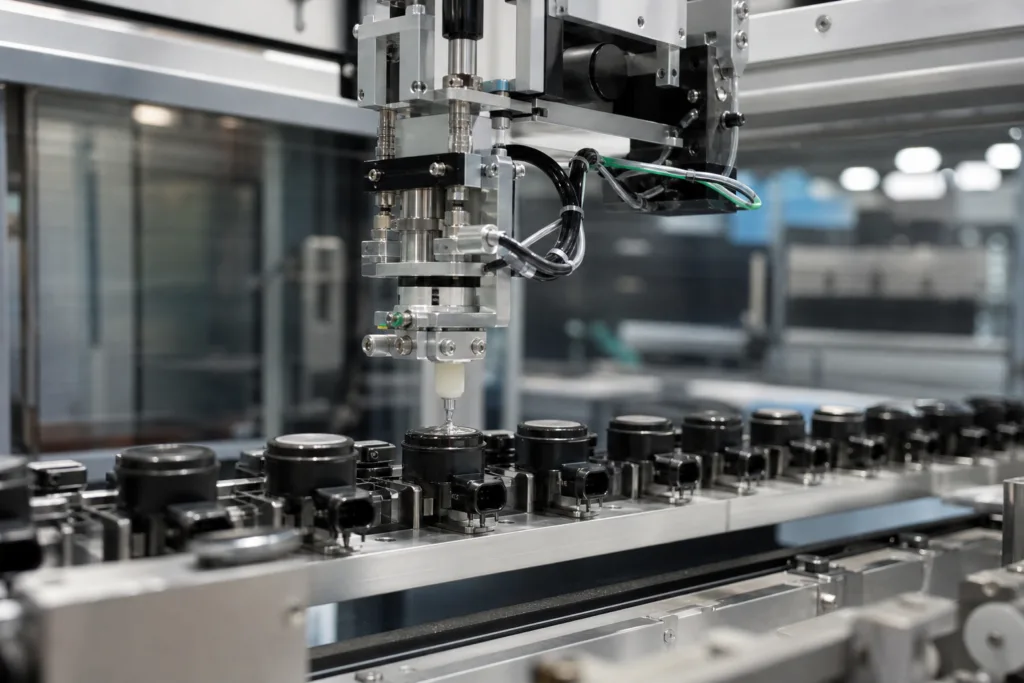
Acoustic matching potting compounds are more than sealants—they’re the secret to ultrasonic parking sensor accuracy and durability. Choose materials with the right acoustic impedance, test rigorously, and demand process stability from your compound suppliers. As sensors get smaller and environments harsher, acoustic matching will stay front and center in automotive safety innovation. Smart choices now mean reliable sensing—and safer parking—for years to come.
Frequently Asked Questions
What is acoustic matching in potting compounds?
Acoustic matching aligns the sound transmission characteristics of potting compounds with sensor and surface materials, ensuring precise ultrasonic signal flow.
How does acoustic impedance affect parking sensor performance?
Mismatched acoustic impedance causes signal reflections and losses, reducing the accuracy and range of ultrasonic sensor readings.
Which potting materials are best for acoustic signal transmission?
Silicone gels, low-shrinkage polyurethanes, and custom-formulated hybrids offer reliable signal transmission and low stress for automotive sensors.
How can defects in potting compounds be avoided?
Defects are prevented by degassing, careful surface preparation, and using low-shrinkage, bubble-resistant materials in controlled assembly conditions.
Do environmental factors impact acoustic performance?
Yes, temperature, moisture, and UV exposure alter transmission properties; using stable, moisture-resistant compounds minimizes long-term issues.
What are the latest trends in potting compound technology?
Trends include custom acoustic gels, nanofiller enhancement, hybrid epoxy-silicone blends, and materials for thinner, highly miniaturized sensors.
Related Reading
- Discover the Best Polyurethane Bonding Methods for Automotive Assemblies
- Building Strong Structural Bonds: Epoxy Adhesive Performance in Industry
- Silicone Adhesives Explained: Guide to Industrial Types and Uses for 2026
- Find the Right Adhesive for Every Plastic—2026 Buyer’s Guide
- 7 Game-Changing Benefits of Low-Shrinkage Adhesives for Precision Sensor Assembly