Understanding Cyanoacrylates: A Versatile Class of Adhesives
Cyanoacrylates, often recognized as “super glues,” represent a family of fast-acting adhesives with wide-ranging uses. At their core, these adhesives bond quickly to various surfaces through a unique polymerization process that activates in the presence of moisture. Their versatility means they’re found everywhere from household repairs to critical medical and industrial applications.
But there’s more beneath the surface—especially when comparing medical grade and industrial grade cyanoacrylates. This guide uncovers the distinct features, industry expectations, and technical requirements that set these two adhesive types apart.
The Origins and Chemistry of Cyanoacrylates
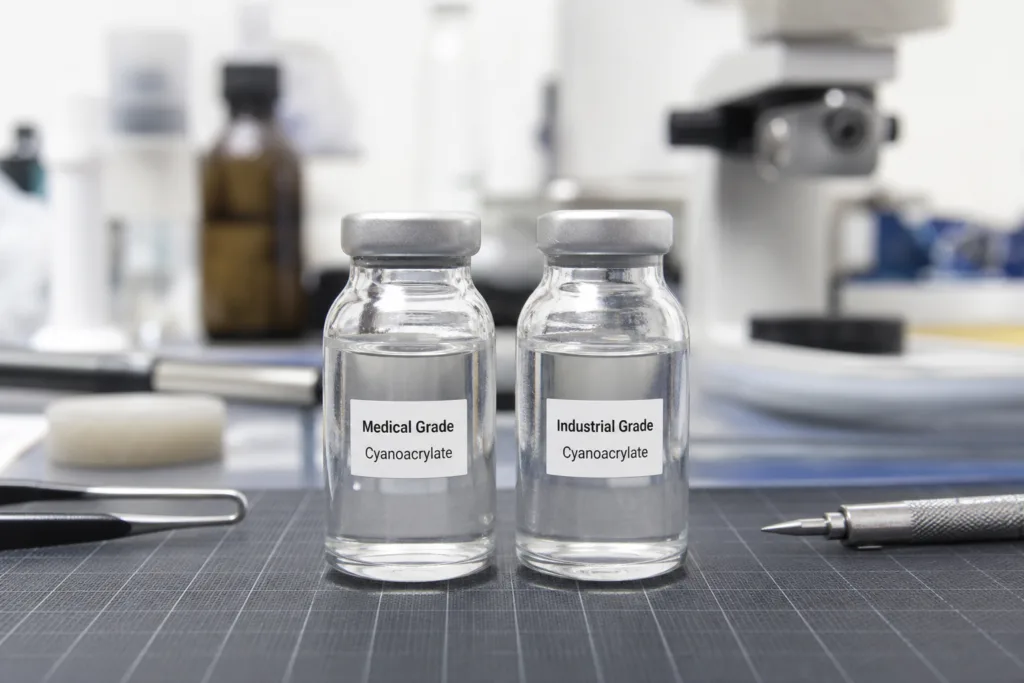
Cyanoacrylates were first discovered in the 1940s, initially for military optical applications. Today, their chemistry has advanced to address targeted performance demands. All cyanoacrylates share a similar backbone, but subtle changes in formulation—such as the type of monomer or the addition of specialty stabilizers—allow them to excel in specific industries.
Medical Grade Cyanoacrylates: What Sets Them Apart?
Medical grade cyanoacrylates are formulated and manufactured to meet strict health and safety standards. Their defining features include:
- Biocompatibility: Designed to minimize tissue reaction and toxicity. Only select monomers (e.g., 2-octyl-cyanoacrylate) are used because they break down gently in or on the human body.
- Sterility: Manufactured under controlled environments, often supplied in sterile packaging suitable for direct application on skin or internal tissues.
- Regulations: Must comply with internationally recognized medical device standards, like ISO 10993 or FDA 21 CFR 878.4010.
Because of these requirements, their production is more stringent, and batch traceability becomes mandatory—a factor especially critical in wound closure, surgical gluing, and other clinical uses.
Industrial Grade Cyanoacrylates: The Backbone of Assembly Lines
Industrial grade cyanoacrylates are tailored for performance, processing speed, and cost-efficiency in manufacturing environments. They are the workhorses for:
- Assembly of electronics, plastics, metals, and rubbers
- Automotive components
- Woodworking and general purpose repairs
Industrial formulas may contain a broader selection of monomers and additives than their medical counterparts, prioritizing fixture speed, moisture resistance, and cost control over biocompatibility. This flexibility also allows variations like rubber-toughened cyanoacrylates for enhanced shock and heat resistance.
Key Differences: Medical vs. Industrial Grade Cyanoacrylates
| Attribute | Medical Grade CA | Industrial Grade CA |
|---|---|---|
| Biocompatibility | High, validated | Not evaluated for body contact |
| Sterility | Sterile packaging | Not sterile |
| Regulatory Compliance | FDA/ISO certified | Industrial standards |
| Setting Time | Moderate | Fast, adjustable |
| Additives | Minimal, body-safe only | Functional for process needs |
| Cost | Premium | Economical (varies) |
| Typical Use | Wound & surgical closure | General assembly |
Biocompatibility: The Heart of Medical Grade Adhesives
The main reason medical grade cyanoacrylates command premium pricing is their proven biocompatibility. Extensively tested for cytotoxicity, hemolysis, and irritation, these adhesives can be safely applied to skin or internal tissues. 2-octyl and n-butyl cyanoacrylate are frequently chosen for their slower, safer degradation profiles and lower heat release.
Sterilization and Packaging Standards
All medical grade formulas are packaged sterile, sometimes by gamma irradiation or aseptic filling. This is critical to avoid introducing contaminants into wounds or the body. Contrast this with industrial products, which are simply filled and bottled, since sterility isn’t a requirement for assembly environments.
Performance Benchmarks: Medical vs. Industrial Applications
In use, both grades deliver strong, fast bonds. However, the performance targets differ:
- Medical Grade: Bonds skin or tissues under mild stress, prioritizing safety and comfort over ultimate mechanical strength. Often used for sealing small wounds, surgical incisions, or suture replacement.
- Industrial Grade: Bonds a wide range of plastics, metals, and composites—sometimes under high stress, vibration, or dynamic load. Speed, process reliability, and durability are essential.
Where Medical Grade Cyanoacrylates Excel
Some prime examples of medical grade cyanoacrylate use include:
- Emergency room wound closure (skin adhesives)
- Surgical incision sealing (internal or topical)
- Ophthalmic and dental repairs
- Pediatric lacerations and low-tension skin procedures
Where Industrial Grade Cyanoacrylates Dominate
Automated assembly lines in the automotive, electronics, and consumer goods sectors rely heavily on industrial grade CA adhesives. Their rapid set times and ability to bond hard-to-join materials make them invaluable for:
- Speaker assembly and sealing (acoustic sealing applications)
- Bonding dissimilar plastics, like POM and PTFE, especially when paired with adhesion promoters
- Securing electronic housings, camera modules, and even automotive radar brackets
Regulatory Compliance: A Non-Negotiable for Medical Grade
Medical grade cyanoacrylates must pass comprehensive regulatory reviews before market approval. Standards such as ISO 10993 (biological evaluation of medical devices) and FDA device regulations apply. Industrial grade products, by comparison, only adhere to general safety and chemical regulations suitable for workplace exposure but not for body contact.
Common Formulations: Monomer Selection Matters
The specific cyanoacrylate monomer chosen has a major impact on the final application. Medical adhesives trend toward 2-octyl or n-butyl cyanoacrylate for their slow, controlled polymerization. Industrial adhesives span from ethyl to methyl, isopropyl, or even specialty rubber-modified versions, tuned for the right balance of flexibility and strength. The choice of monomer also affects odor, bloom (white residue), and heat generation during cure.
Bond Strength Comparison
Performance-wise, industrial grade cyanoacrylates often achieve higher ultimate bond strengths—exceeding 20 MPa (megapascals) lap shear on metals and rigid plastics. Medical products, however, focus on safe, predictable adhesion to moist skin or internal tissue where the stresses are lower and safely controlled mechanical failure is preferable to tissue damage.
Setting and Curing Profiles: Why Speed Matters
Industrial production benefits from ultra-fast fixture times (as low as 3–10 seconds) and variable open times depending on substrate and humidity. Medical grade adhesives usually set in 20–60 seconds, allowing precise application over delicate tissues.
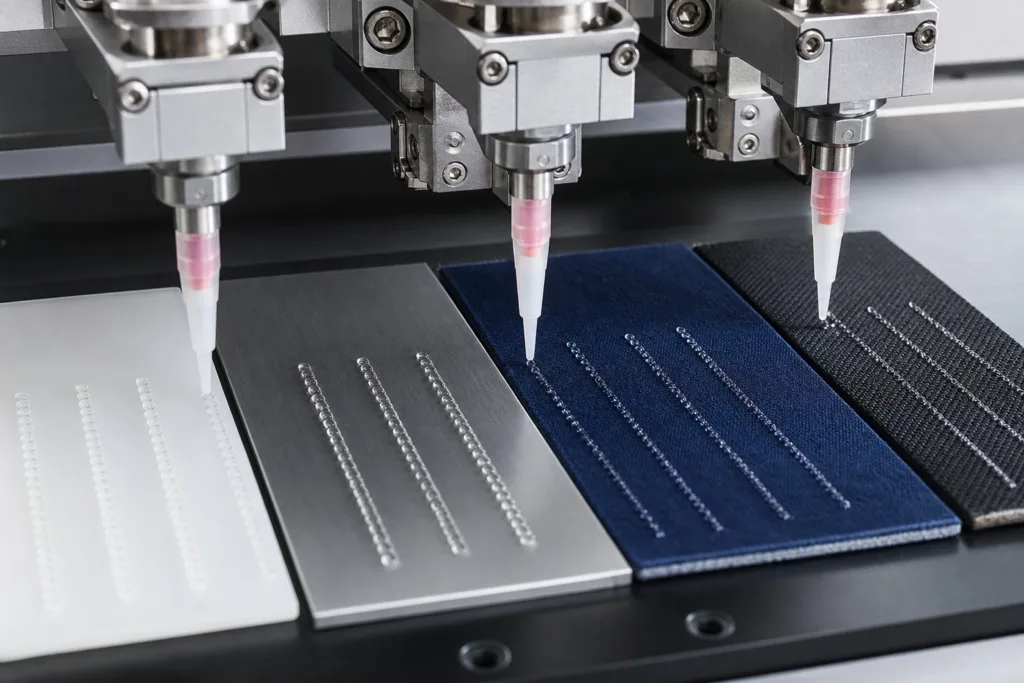
Process control tools—like precision dispensing systems—help manufacturers consistently achieve optimal bond lines, another critical distinction between clinical and industrial settings.
Durability: Environmental, Thermal, and Chemical Resistance
Industrial environments stress adhesives with temperature cycling, solvents, and vibration. Industrial ca formulas may include toughening agents for shock and improved peel resistance. Medical grade formulations must instead resist body fluids and degradation, remaining flexible during the healing process without leaching harmful by-products.
Cost Considerations: Premium vs. Practical Choices
It’s no surprise that medical grade cyanoacrylates cost significantly more—they require stringent controls, traceability, and certification. For most structural, manufacturing, or assembly processes, industrial grade options offer a more economical solution with process flexibility.
ZDS Adhesive Experience: Choosing the Right Cyanoacrylate in Production
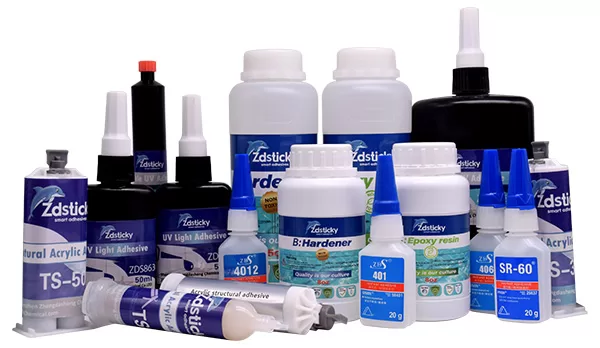
From a technical perspective at ZDS Adhesive, an industrial adhesive manufacturer, selecting the correct cyanoacrylate always starts with application requirements:
- For skin, tissue, or body fluid exposure: Choose only certified medical grade adhesives—never substitute with industrial CA, regardless of cost or speed.
- For plastics, composites, or metals under mechanical load: Assess fixture time, substrate compatibility, and environmental resistance. Tailor the formula to meet both material and process requirements.
- Always validate the bond through mechanical and environmental testing (lap shear, peel, humidity, temperature cycling) before large-scale rollout.
Manufacturers need to balance performance, safety, and cost—biocompatibility is non-negotiable in clinical environments, while tailored properties and throughput matter most for industrial users.
Quality Control and Traceability
Traceability is vital in medical adhesives: every batch must be fully documented and linkable to raw materials and production parameters. For industrial grades, batch controls ensure product consistency—but the documentary chain is less strict unless required by specific customer or market standards.
Application Methods and Equipment
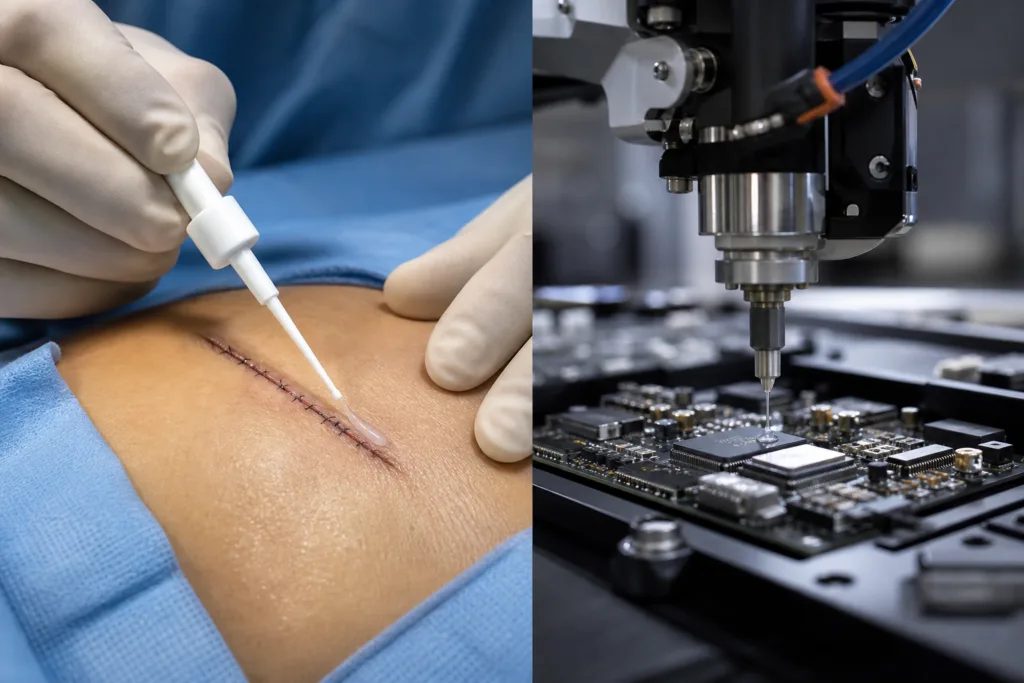
In medical settings, cyanoacrylates are often applied via sterile, single-use applicators. Industrial users deploy automated dispensers, jetting valves, or precision robots—especially important for electronics or component sealing. Automated dispensing maximizes consistency and reduces operator variability, crucial for efficient modern manufacturing.
Cross-Industry Use Cases: Healthcare vs. Manufacturing
Medical-grade cyanoacrylates enable non-invasive, rapid closure for minor wounds and surgical procedures. Conversely, their industrial counterparts allow for high-throughput assembly of devices, consumer items, and automotive components—speeding up operations and reducing costs where biocompatibility isn’t necessary.
The Risks of Misapplication: Why Mixing Grades Is Problematic
Using industrial grade adhesives on the human body is dangerous and potentially illegal—risks include tissue toxicity, excessive heat, and unpredictable allergic reactions. Conversely, using medical grade adhesive in an industrial context may be safe but is usually unnecessary and expensive. Specifiers should match grade to application at all times.
Advice for Specifiers and Decision-Makers
- Start with use context: Human body contact mandates medical grade adhesives, regardless of part size or stress profile.
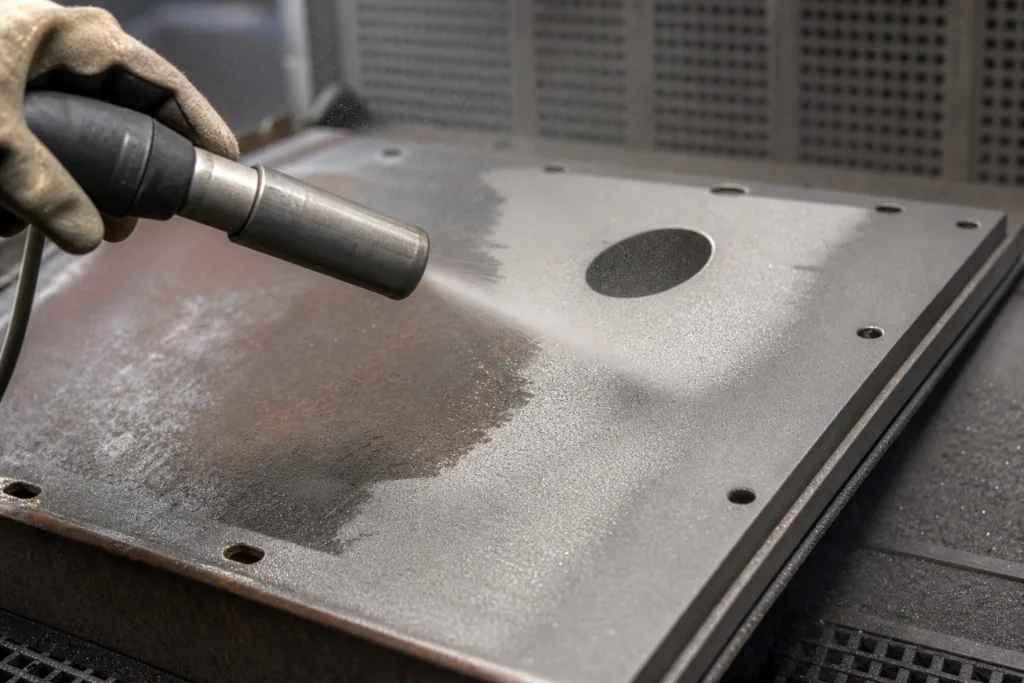
- Assess substrate materials—some plastics and rubbers require surface treatment or use of primers for optimal bonding.
- Understand regulatory responsibilities—document all material choices for medical devices and critical assemblies.
- Validate process suitability with production trial runs using the intended dispensing equipment and environment.
Future Directions: Innovation in Cyanoacrylate Technology
Research continues to improve both classes—medical adhesives with lower exothermic reaction and improved flexibility; industrial adhesives with wider substrate adhesion and greater environmental resistance. As both markets evolve, regulatory and performance benchmarks remain on the rise in 2026.
Medical Grade vs. Industrial Grade Cyanoacrylates
The distinctions between medical and industrial grade cyanoacrylates are not just regulatory—they’re a matter of performance, safety, and economic logic. By understanding their unique strengths and application boundaries, professionals can make informed choices about which type to specify for their project or process.
Conclusion
Medical grade cyanoacrylates deliver on safety and regulatory requirements where direct or indirect contact with the human body is possible. Their strict production controls support confidence in clinical settings. On the other hand, industrial grade cyanoacrylates allow manufacturers to achieve fast, strong, and cost-effective bonds for a wide array of materials and assembly processes.
Adhesive selection should always be driven by application context and the need for compliance, safety, and reliable performance under real-world conditions.
Frequently Asked Questions
Can industrial grade cyanoacrylates be used for medical skin closure?
No, industrial grade cyanoacrylates are not biocompatible or sterile and can cause tissue damage, burns, or allergic reactions. Only medical grade adhesives are safe and approved for skin or tissue use.
How do I distinguish between medical and industrial grade cyanoacrylates?
Medical grade adhesives are clearly labeled, certified by regulatory agencies (FDA, ISO), and sold in sterile packaging, unlike industrial grades, which focus on performance for assembly but not human body contact.
What are typical bond strengths for these adhesives?
Industrial cyanoacrylates can achieve bond strengths above 20 MPa on rigid substrates. Medical grades are strong, but their primary concern is predictable, comfortable adhesion rather than maximum load-bearing capability.
Are there specific testing requirements for medical grade adhesives?
Yes, medical grade cyanoacrylates undergo biocompatibility, cytotoxicity, irritation, and sterilization tests, as specified by ISO 10993 and related health regulations.
What substrates are best suited to industrial grade cyanoacrylates?
Industrial cyanoacrylates bond plastics, metals, composites, rubbers, wood, and ceramics, especially when paired with surface treatments or primers for low surface energy materials.
Can the same dispensing equipment be used for both grades?
While some dispensing principles overlap, medical grade adhesives require sterile, often single-use applicators. Industrial processes favor automated, high-precision dispensing for speed and consistency.
Related Reading
- Why Precision Dispensing Equipment Transforms Medical & Electronics Manufacturing
- Configure Your Dispensing Machines for Epoxy, Silicone, and UV Adhesives
- 11 Ways Activators Supercharge Instant Adhesive Cure on Metals
- How to Choose the Right Adhesive Dispensing Equipment for Fast, Reliable Production